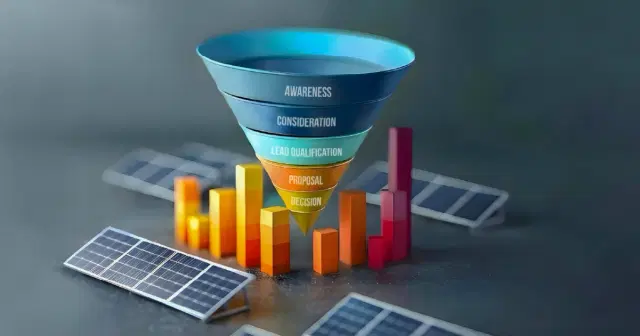
Did you know that according to McKinsey research, solar customer acquisition costs (CAC) in the US can reach almost $10,000 per sale, making up nearly 25% of the total cost of a residential solar system installation? This is a 13% increase since 2023.
However, the same research also mentions that CAC can be reduced by up to 70% via a comprehensive sales and marketing strategy.
If you’re struggling with your solar lead generation as well, then you’ve landed in the right place.
In this article, we’ll go through some proven methods on how to generate solar leads in 2026. From local SEO and PPC campaigns to CRM automation, including lead capture and proposal automation tools like SolarGenix - we’ve covered it all to help you build a consistent pipeline of qualified leads.
Key Takeaways
- In 2026, lead generation for solar companies works via the implementation of a combination of strategies: PPC ads, local SEO, and social media channels.
- Your Google Business Profile plays a huge role in solar lead generation as it helps you appear in local search results and Google Maps.
- A CRM automates and simplifies lead management, follow-ups, and eventually leads to better conversion rates as it makes sure no prospect goes unnoticed.
- Referral programs have the potential to bring in the best leads with the help of your satisfied customers.
- Solar lead capture software, like SolarGenix, speeds up the sales process by capturing leads via almost instant, personalized quotes.
What Challenges Do Solar Companies Face in Solar Lead Generation?
You may think you’re well aware of your solar lead generation challenges; they’re always somewhere in the back of your mind. However, it’s one thing to sense these issues and another to name them clearly.
Below, we’ve laid out the most common challenges that solar companies face, making them visible, concrete, and potentially easier to address:
- Rising CAC and longer decision-making timelines.
- Heavy competition and price shopping.
- Unqualified leads that are resold multiple times.
- Confusing financial and regulatory environment for homeowners.
- Inconsistent marketing and low online visibility.
- Lack of CRM and automation.
However, don’t get too overwhelmed with these challenges. We know just how to help you. Here are all the required strategies to guide you through your solar sales process.
Use Local SEO to Reach People Searching for a Solar Company
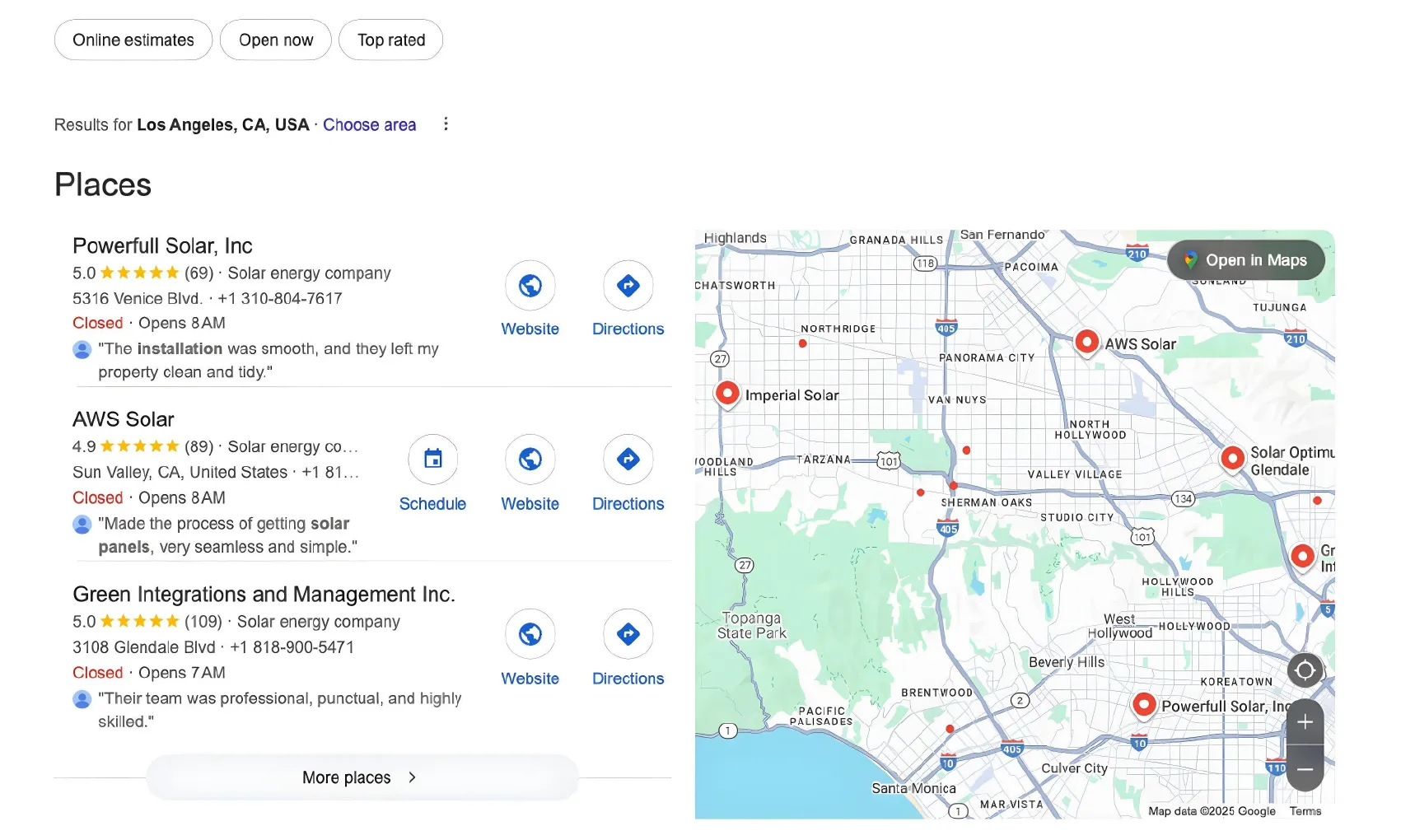
Local SEO makes sure your website is visible for people looking for solar companies in your specific area. Homeowners often search for “solar company near me” or, let’s say, “solar panel installation in Los Angeles”, so if your company operates in LA, you surely want your business to appear at the top of those search results.
Here’s how you can optimize your website for local search:
- Target keywords that include your service area.
- Create landing pages for each city or region you serve.
- Include information about local solar incentives, regulations, and climate conditions.
- On a slightly technical note, don’t forget to include schema markup on your website to help search engines understand your business information better.
- Create content and answer local solar questions. For example, write an article on “How much do solar panels cost in [your area]?”
- Try to get backlinks from local environmental organizations or offer to write guest posts for local news websites.
Always track performance via Google Search Console and other analytics platforms.
Run Pay-Per-Click (PPC) Advertising to Drive Qualified Solar Leads
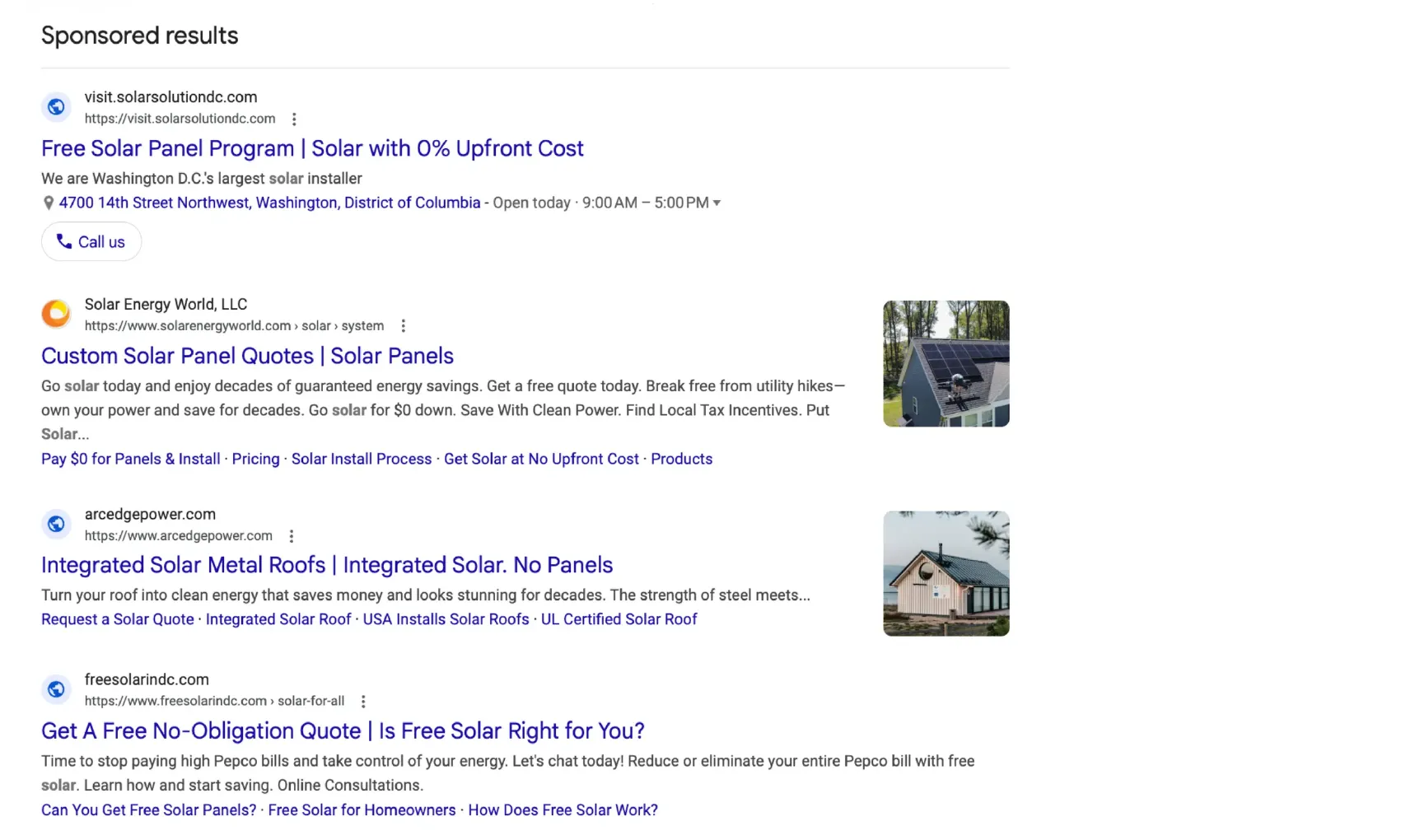
PPC ads are one of the go-to ways when you’re learning how to generate leads for solar sales. They can start bringing qualified leads within days of launch.
Google Ads is the primary PPC platform for solar lead generation.
We’ve made a short step-by-step guide to help you navigate the PPC field with a clearer understanding:
- Target high-intent keywords, such as “solar panel installation near me,” “residential solar company,” “home solar panel quotes”, etc.
- Include negative keywords to filter out job seekers, students, and other unqualified leads.
- Add your location, phone number, and service area. This will help increase the click-through rate (CTR).
- Create custom landing pages and include information about incentives, solar benefits, a lead form or an instant quote tool, trust badges, customer reviews, and a strong CTA.
- Run a remarketing campaign. Show your ads to potential customers; those who visited your website but didn’t convert.
- Set appropriate bids and budgets based on the value of solar customers. Don’t cut corners just to save a few bucks.
If you have the chance, use Bing Ads too. Though Bing has a lower search volume than Google, it can offer cheaper clicks, less competition, and older, more well-off demographics with a better solar customer potential.
Claim and Optimize Your Google Business Profile to Attract Potential Solar Customers
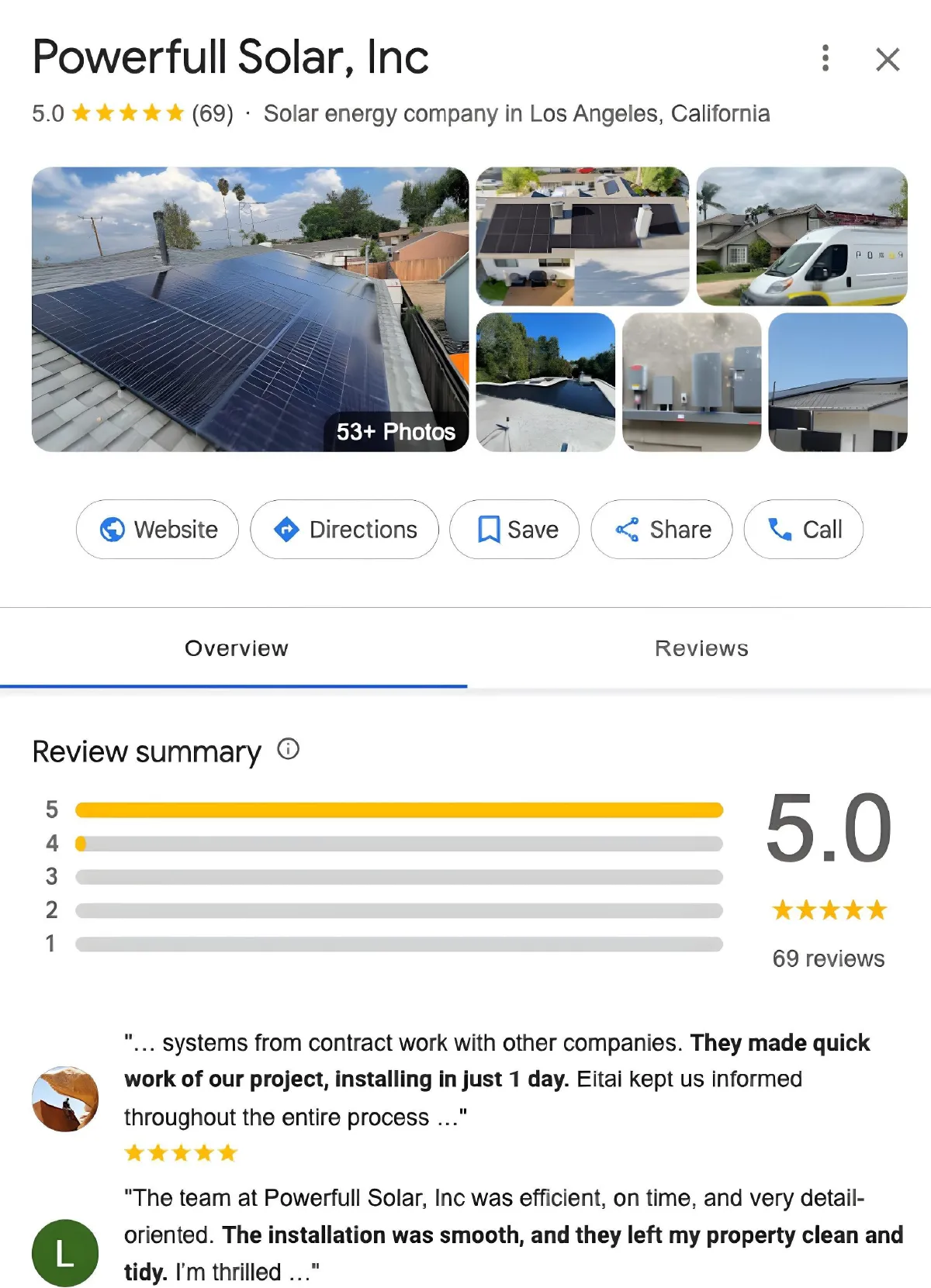
If optimized correctly, your Google Business Profile will appear in Google Maps and the Local Pack.
Here is a step-by-step guide on how to set up your Google Business Profile:
- Claim your profile. Do so by visiting google.com/business and following the verification process.
- Complete each section of your profile with the required information. Add your business name, address, phone number, and website link.
- Upload high-quality photos. Do this regularly. It can be images of past installations, your team at work, and before-and-after pictures. This makes you human and increases reliability in the eyes of homeowners.
- Write a to-the-point and compelling business description. Don’t forget to include your target keywords and a CTA.
- List all your services and add detailed descriptions for each.
- Business hours should be accurate and regularly updated, especially during holidays.
- Update your profile regularly. It’s almost like a social media channel by now.
- Always respond to customer feedback and questions.
- If your area offers the booking button or lead form features, make good use of those too.
And last but not least, always track the performance of your profile and improve accordingly.
Get Listed on Local Service Directories to Attract Solar Leads
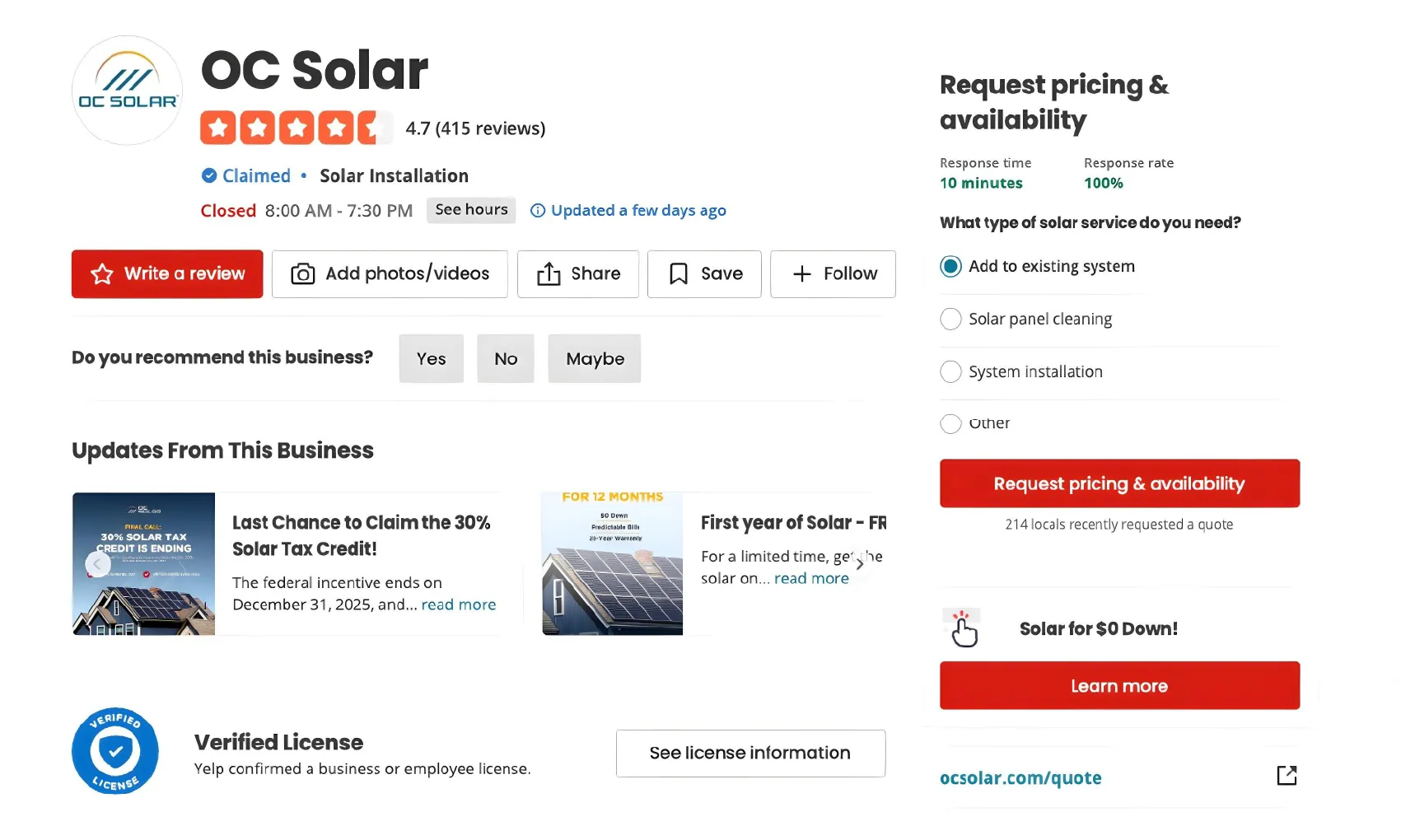
Getting listed on reputable directories should be a no-brainer for solar businesses. Check out the following directories:
- Yelp
- Angi
- EnergySage
- SolarReviews
- HomeAdvisor
- Thumbtack
In order for your listing to be effective and help you get solar leads, you need to:
- Maintain a consistent NAP (name, address, phone number).
- Complete your profile with photos, business descriptions, service areas, certifications, and reviews.
- Respond to reviews.
These listings will highly expand your digital footprint and brand awareness.
Use Social Media to Generate Qualified Solar Leads

Social media channels, like Facebook, TikTok, Instagram, LinkedIn, and YouTube, can support solar lead generation through organic content, like before-and-after photos, installation videos, testimonials, as well as paid ads that target homeowners, all backed by strong landing pages.
Here are a few additional tips to help you build a successful social media presence:
- Post consistently, at least three times a week.
- Adapt your content to each social media. Facebook is more text-friendly, Instagram works well for visual storytelling (pictures and reels), while LinkedIn leans toward a more professional side.
- YouTube can be used for educational video content. Post short videos answering customer questions or lengthy informative webinars and interviews with industry experts.
- Always respond to comments.
- Use social media ads to retarget website visitors who didn’t convert.
- Track social media performance. Monitor leads, cost per lead, and conversion rates.
Create Lead Capture Opportunities on Your Website
Offer your potential clients free, valuable resources in exchange for contact information.
Feature free solar estimate forms on every page of your website and use interactive solar savings calculators to gather such details as name, address, average electricity bill, and roof characteristics.
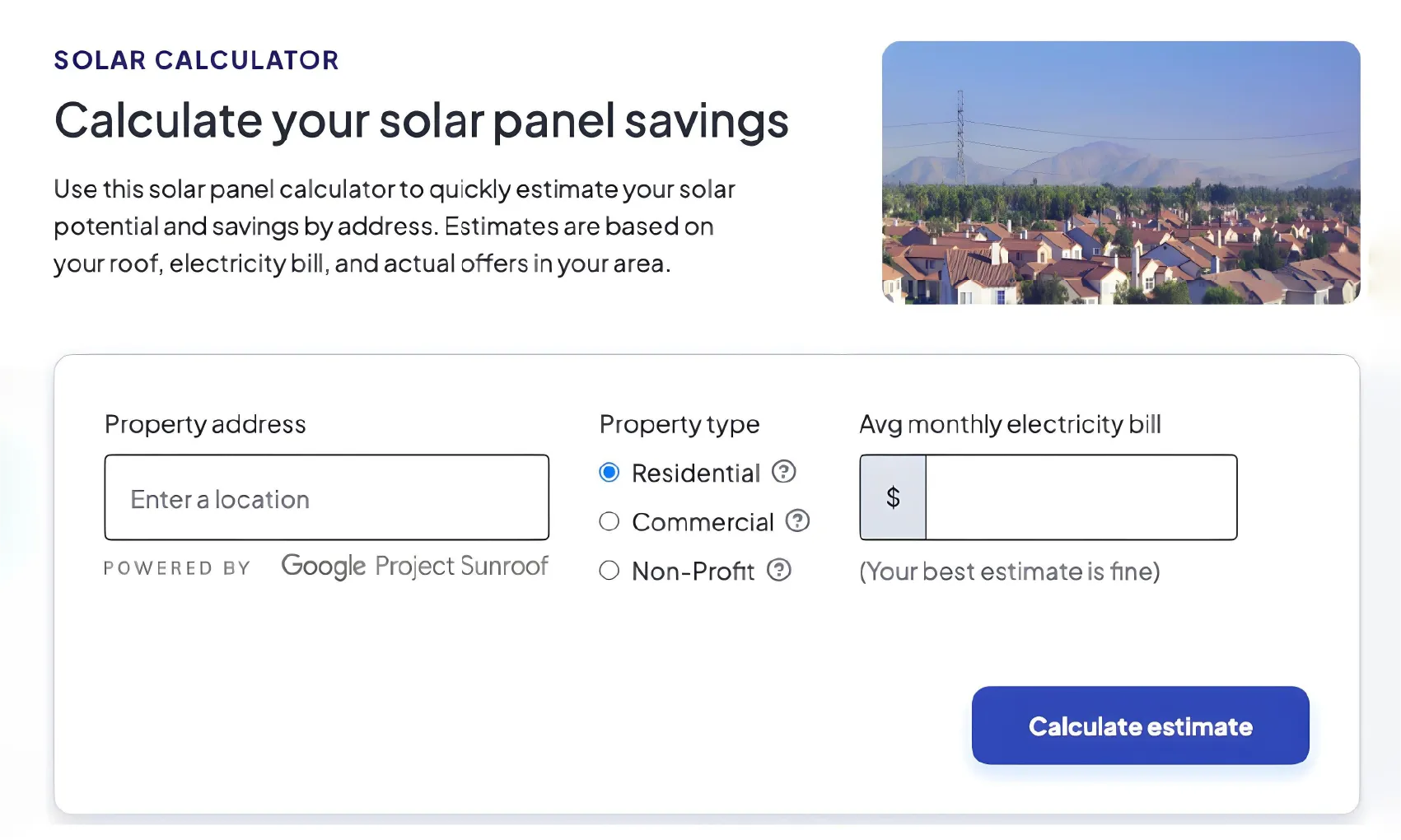
Capture more leads by offering downloadable guides and resources in exchange for emails, improving your CTAs with action-focused language and contrasting colors, investing in live chat widgets and exit-intent popups, and adding videos with embedded lead forms on landing pages.
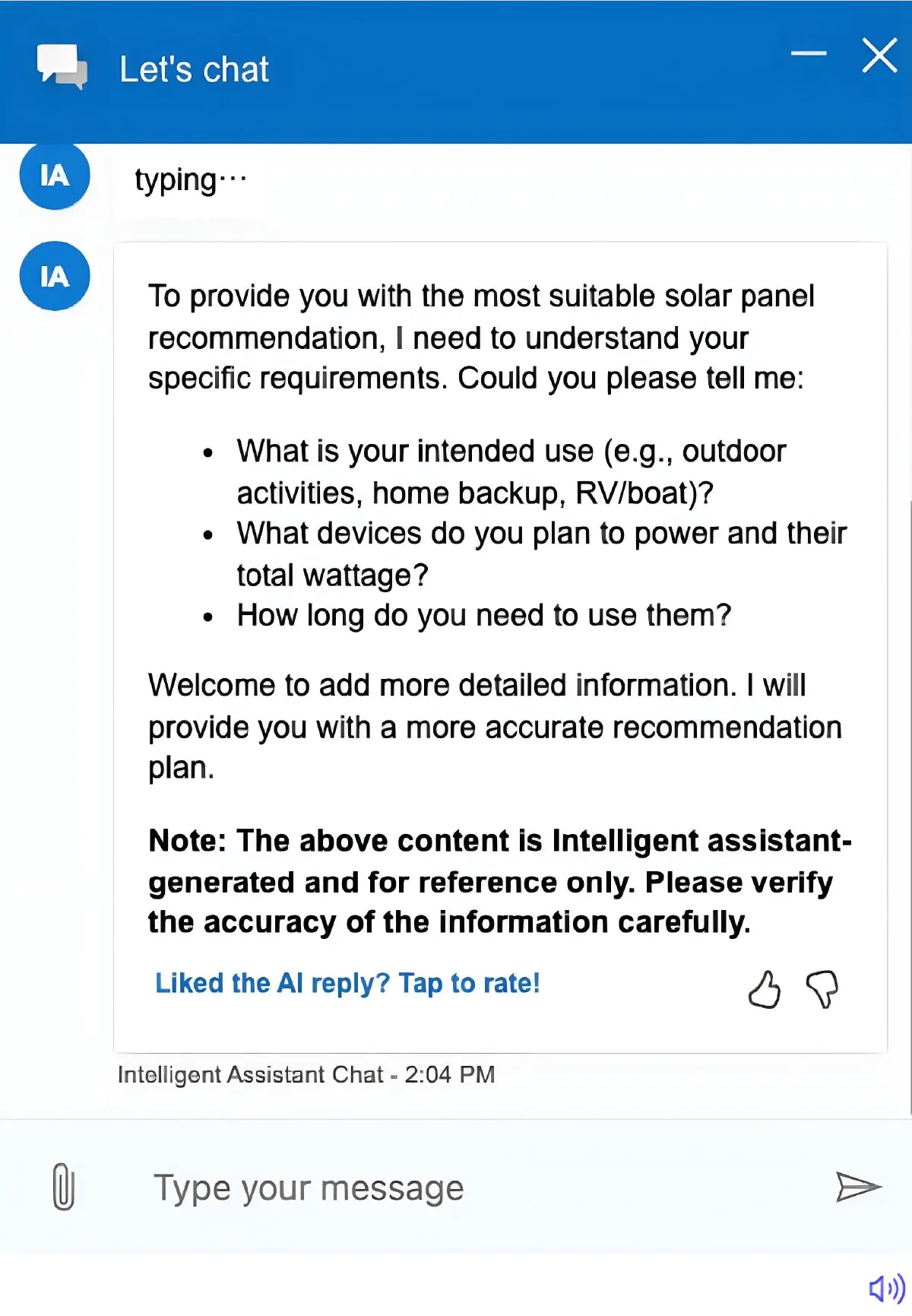
Most people search on mobile, so be sure to also optimize your website for smartphones and tablets.
And as always, monitor performance for each lead capture mechanism with analytics.
Create a Referral Program to Earn New, Qualified Leads
Referral programs bring in some of the highest-quality leads. When happy clients recommend your services to friends, family, and neighbors, those referrals convert at much higher rates than cold leads from advertising or purchased lists.
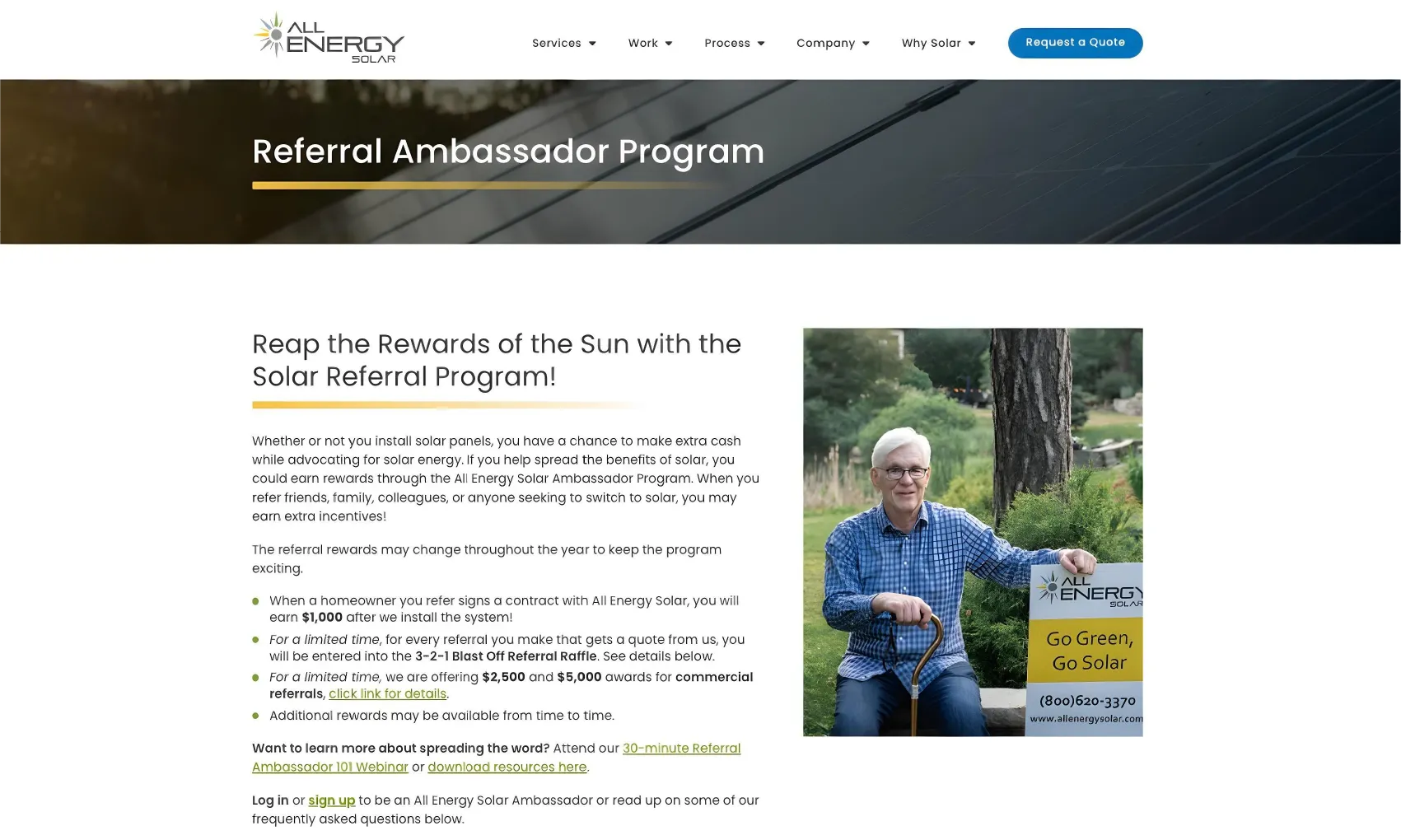
Here are a few ideas for referral programs for your solar business:
- $250-$1000 cash rewards
- Gift cards
- Charitable donation offers in your clients’ names
- Free system upgrades
- Tiered rewards, i.e., more referrals will bring more bonuses
Make referrals easy by giving clients referral cards they can hand to neighbors and friends, or unique links to share via email.
Note: The best moment to ask for referrals is right after the completion of installation, when clients are most excited about their solar panels. Promote your referral program across multiple channels and display it on your website.
Get Involved in Homeowner Communities and Offer Free Advice to Attract Solar Leads
Another way to build trust locally is through local community engagement.
Engage in Facebook and Nextdoor groups to share information about incentives, utility rates, and solar 101. Be responsive and answer questions. Go to HOA meetings, sponsor community events, support local environmental groups and sustainability initiatives. And lastly, connect with roofers, HVAC companies, and remodelers to build a referral network.
Just like any other organic strategy, community engagement takes time and sometimes, unpaid efforts, but it can produce unexpected results and help you build long-term brand loyalty.
Set Up a Solar CRM to Track and Nurture Leads
Homeowners often need multiple touchpoints before they convert. To manage this process easily, you need a CRM.
Here is why a solar CRM is important for your sales processes:
- Faster follow-ups and better conversion rates.
- Automated workflows; from email sequences and SMS reminders to appointment confirmations.
- Easier lead scoring. A CRM helps you prioritize homeowners based on engagement, budget, and property type.
- Better visibility into your solar sales pipeline. It becomes easier to track new leads, proposals, pending site assessments, and follow-up tasks.
Using the lead capture and AI proposal generation tools offered by SolarGenix, you get a comprehensive CRM system that captures your leads, helps you nurture them along the way, essentially cutting down the work of your sales team, and delivering instantly personalized proposals whenever needed.
As a result, you are able to close more deals and capture leads that might otherwise slip away.
Choose Your Quotation Tool Wisely for Solar Lead Generation
SolarGenix’s lead capture software can come in handy with your marketing efforts. We provide you with a landing page that contains a short form requesting your potential leads to fill in some quick information (full name, address, email, and last month’s electricity bill). Nothing complicated.
This way, we capture your leads while providing them with highly personalized information on what they can expect from a solar installation. The data usually includes an image of their roof with the most optimal panel placement recommendation (based on shading analysis and available roof obstacles), along with annual energy production, estimated monthly savings, estimated 25-year savings, and more.
As a result, you get the contact information of your leads and a starting point for nurturing and turning them into actual customers.
Down the line, if you need a detailed proposal, our AI software will handle that for you as well by creating a personalized solar proposal for each of your prospects within a matter of minutes.
SolarGenix combines high quality with the speed of an AI automation tool - two things valued most by your potential clients.