“Sales is not about selling anymore, but about building trust and educating.” - Siva Devaki, co-founder of MassMailer.
Nowhere is this more true than in solar.
Solar is a high-ticket, research-heavy, and long-decision product. Homeowners need time to research, consider their options, financing opportunities, and long-term benefits before they buy from you. And even then, they won’t say yes unless they trust you.
Many solar sales reps often grapple with keeping a consistent follow-up schedule in a long sales cycle, educating and nurturing homeowners without overwhelming them, and sending out timely proposals.
All of this sounds complicated until you start using the right tools and strategies. Think of implementing trustworthy solar design software to show homeowners accurate solar panel layouts, savings estimates, and energy production data. This can be your shortcut to building trust with your customers.
In this guide, you’ll learn how to sell solar panels more effectively, combining modern software solutions with proven solar sales strategies and guiding homeowners through every stage of the buying process.
Key Takeaways
- Know your product by heart. From panel types and warranties to efficiency ratings and financing methods. This helps you become a reliable advisor.
- Educate homeowners and provide value, instead of just selling.
- Be conscious of seasonal demand spikes in summer when the utility rates increase.
- Know your customer. Lay out your ideal customer profile clearly.
- Build trust through showcasing your certifications, testimonials, and other social proof.
- Simplify and speed up the creation of your solar proposals via the right software solutions.
- Address objections about price, timing, and roof issues with confidence.
- Turn your happy customers into sources of qualified leads.
Discover What Makes Your Solar Solution Stand Out
Before you start selling solar panels, you need to get down to the nitty-gritty of your product. What makes your solution better than others in the market? Homeowners will compare prices, no doubt about that. But they will also compare warranties, energy output, long-term savings, and customer treatment.
We’ve made a list of the main points that you should be able to clearly communicate to your potential customers.
Panel Technology
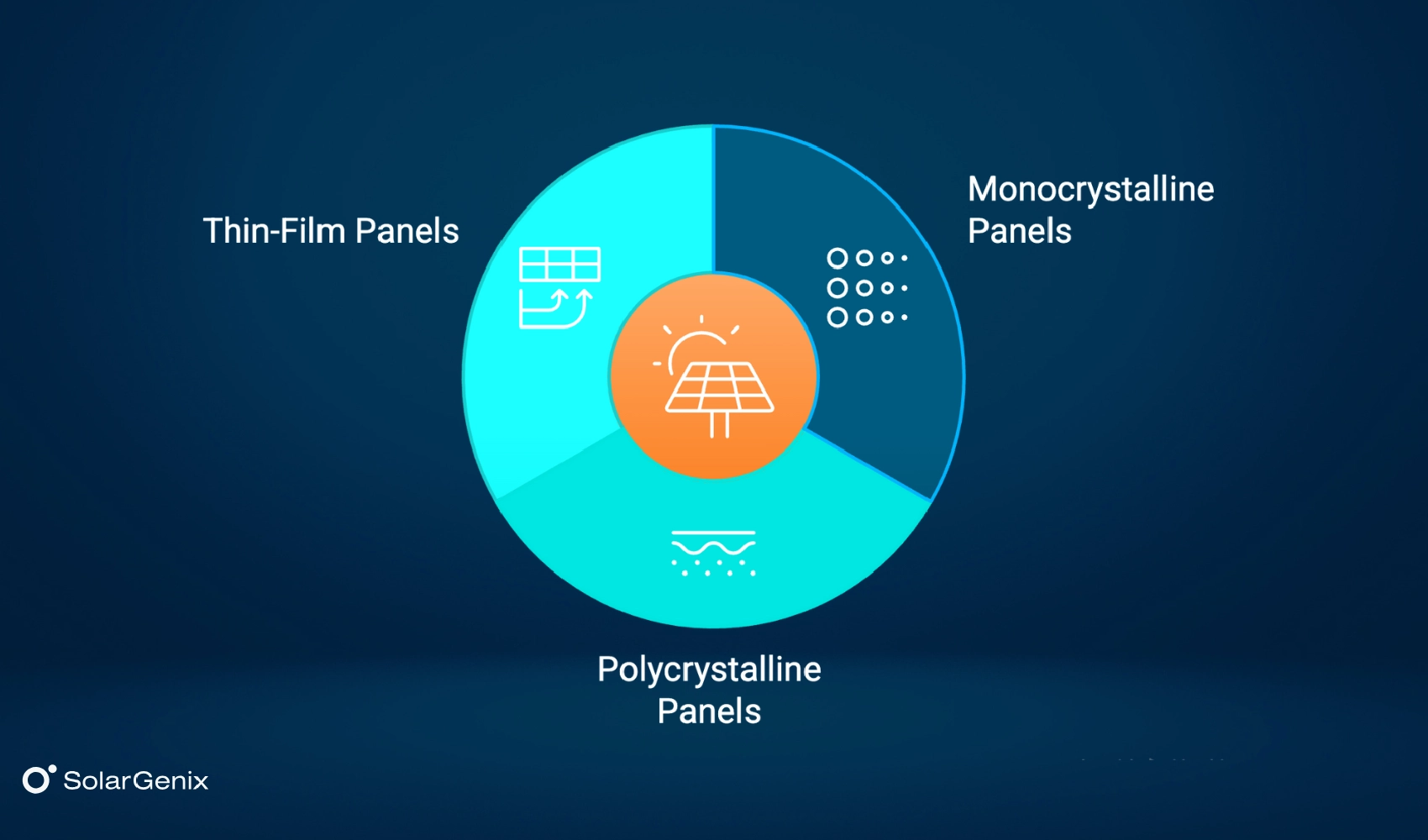
There are a few types of solar panels out there. Let’s break them down:
- Monocrystalline solar panels are considered the most efficient ones, offering 18-22% efficiency. They’re made of monocrystalline silicon and have a uniform dark look and rounded edges. These panels have quite a high power output and are the most expensive among others. They are also the best options for homeowners with complex layouts and shading issues.
- Polycrystalline panels come with a blue, speckled look and are made through melting raw silicon, which makes them more affordable than monocrystalline panels, but also less efficient (15%) and more vulnerable to high temperatures.
- Thin-film panels are produced by laying one or more films of photovoltaic material, e.g., silicon, copper, or cadmium, over a substrate. These panels are the cheapest to produce; however, they require lots of space, which makes them incompatible with residential buildings.
As a solar sales representative, you should be able to explain these panel types to the homeowner and help them choose the right one.

Warranty Options
There are three types of warranties for solar panels:
- Product Warranty: 10-25 years, covering defects and/or replacement.
- Performance Warranty: 25-30 years, guaranteeing 80-90% output after 25 years.
- Installer Workmanship Warranty: 2-10 years, covering installation issues, like leaks.
Educate your customers about warranties. Teach them how to tell good from bad and what to look for when checking solar panel warranties.
Why Efficiency Matters
Panels with higher efficiency produce more power per square foot. Tell your customers during calls or even before, via different types of visual content, why higher efficiency matters in small or shaded roofs.
Financing, Rebates, and Incentives
Solar panel installation is expensive, and choosing the best financing option is often the deciding factor for homeowners.
Now that the 30% solar tax credit will not be available anymore starting January 1, 2026, homeowners need more reassurance of the benefits of solar panels in order to make the leap.
Inform your customers about all the financing options they have, from cash purchases to solar loans and Power Purchase Agreements (PPAs). Make sure you know which financing option works best for different types of customers.
What’s Your Competitive Edge?
A major part of selling solar panels is being able to identify your differentiators. Why should people choose you over others? Maybe you offer better workmanship, longer warranties, or partner with trusted manufacturers. Whatever it is that sets you apart, speak up about it.
Research Competitors and Learn How to Position Yourself for Success
Before you can sell solar panels online, you need to have a thorough understanding of the market and your competitors. Homeowners will compare your offer with 2-3 other offers, sometimes even more.
Here’s how to sell solar panels the smart way:
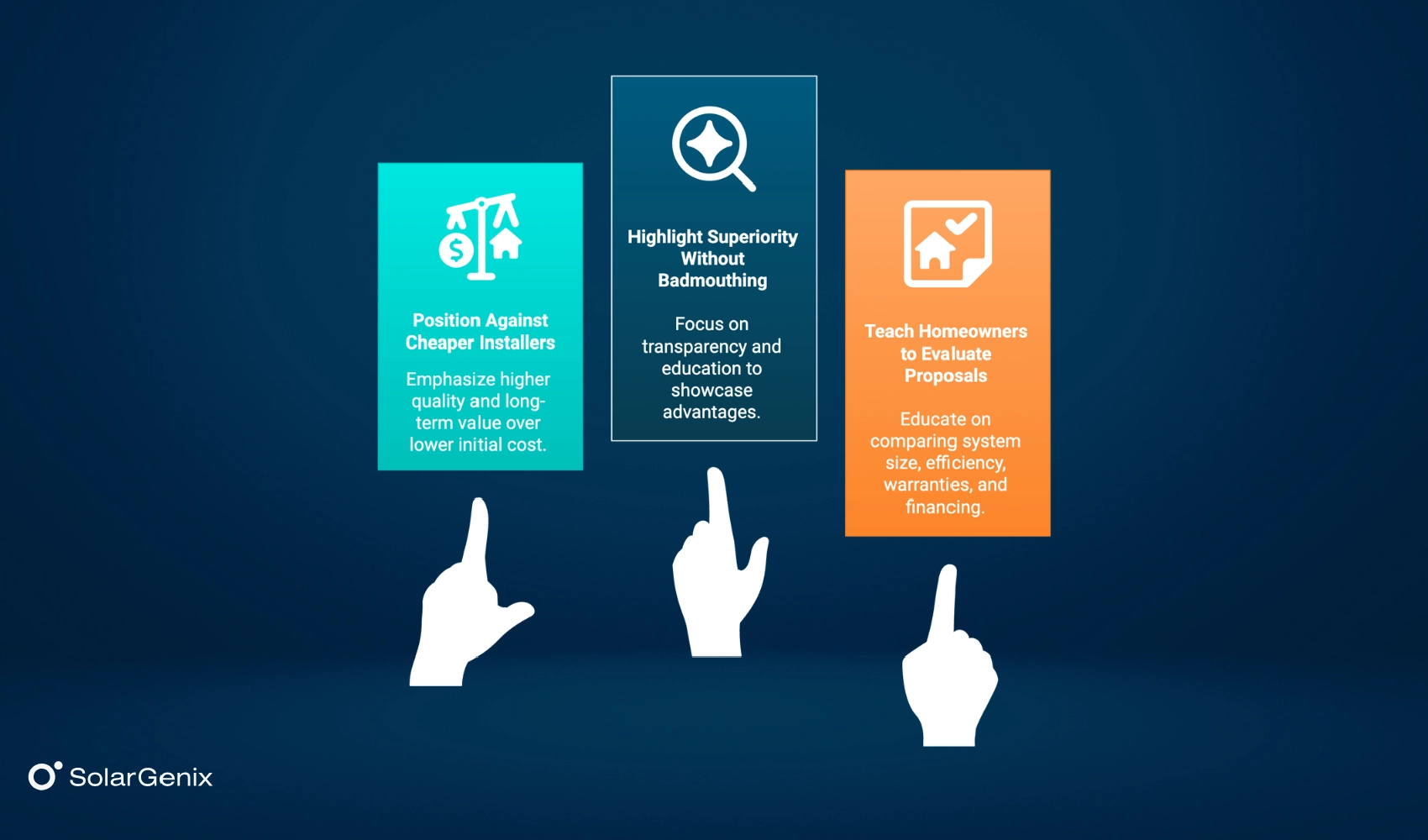
- Position yourself against cheaper installers, but don’t be defensive. Show homeowners clearly what they get for the price they pay, from higher-quality panels or inverters and better warranties to more reliable financing options and certified installers. Tell homeowners why cheaper options can end up costing more in the long run.
- Highlight your superiority without bringing down or badmouthing your competitors. Be transparent and educational.
- Teach homeowners how to evaluate proposals. Sometimes, homeowners look at the prices in proposals and think they’re comparing apples to apples. While in reality, they’re looking at quite different systems. Teach them to compare system size vs. actual energy production, panel brands, efficiency, warranties, financing, and installation timelines.
Supercharge Your Solar Panel Sales with Seasonal Strategies
As you master the ways how to sell solar panels, it’s important to understand seasonal trends and allocate your resources accordingly.
The Summer Rush
Solar panel demand rises in late spring and early summer because energy costs become visible in this period due to the excessive use of air conditioning. Prepare for the summer season by increasing your marketing budget, pre-scheduling installation crews, and creating relevant campaigns that focus on solar savings.
Utility Bill Cycles
Try to access data on local utility rate peak months and schedule your campaigns around this timeline. Track rate change announcements. Once rate increases start, market yourself as an alternative solution.
Slow Seasons
Autumn and winter usually see lower solar sales. Don’t settle for this. Keep generating leads and nurturing them, create special offers for winter, and discuss the common misconceptions around snow and clouds, eliminating the benefits of solar. Keep your marketing going, regardless of the season.
Keep an eye on seasonal patterns and start closing more deals during peak months while remaining productive during the slower ones.
Find Your Perfect Solar Panel Customer
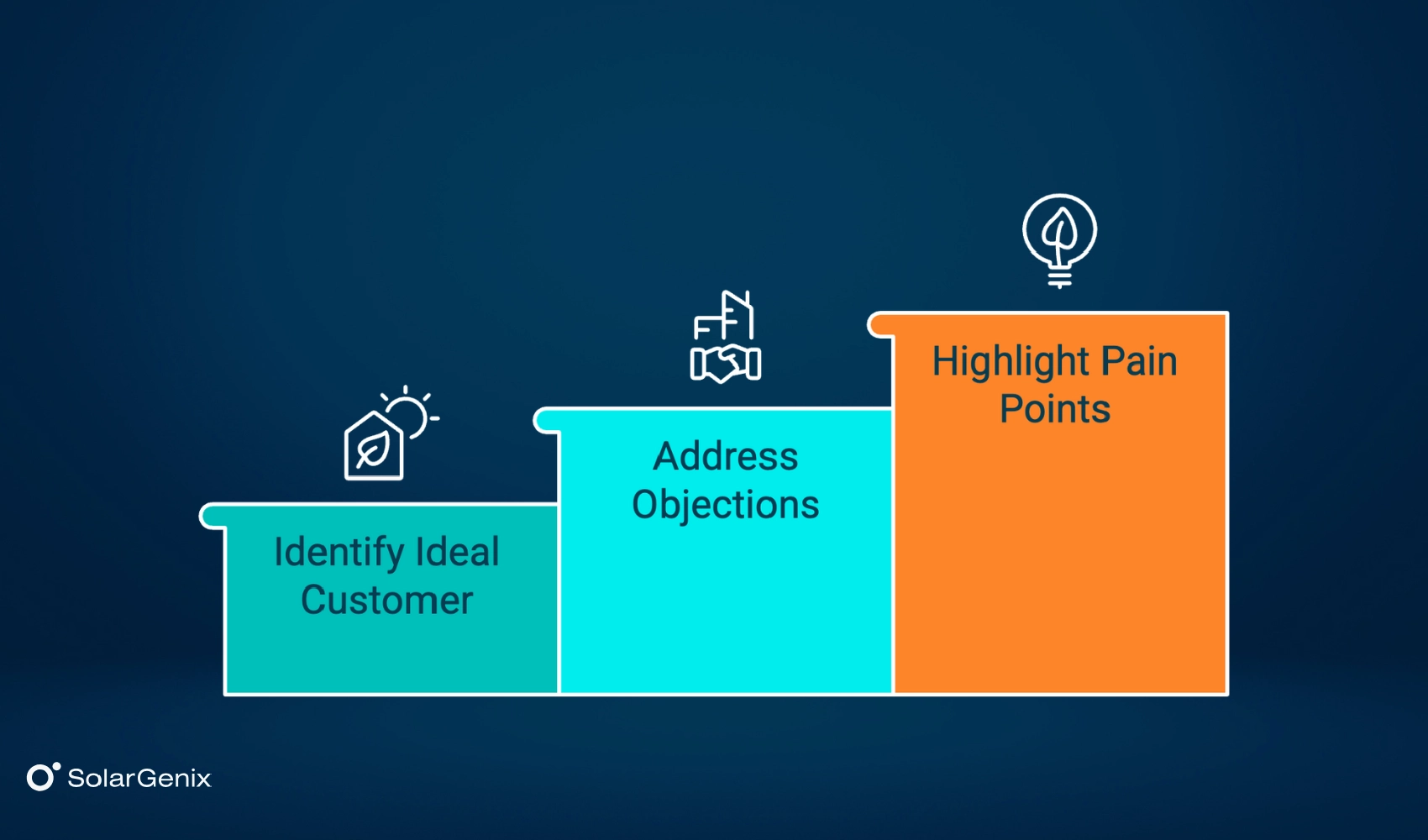
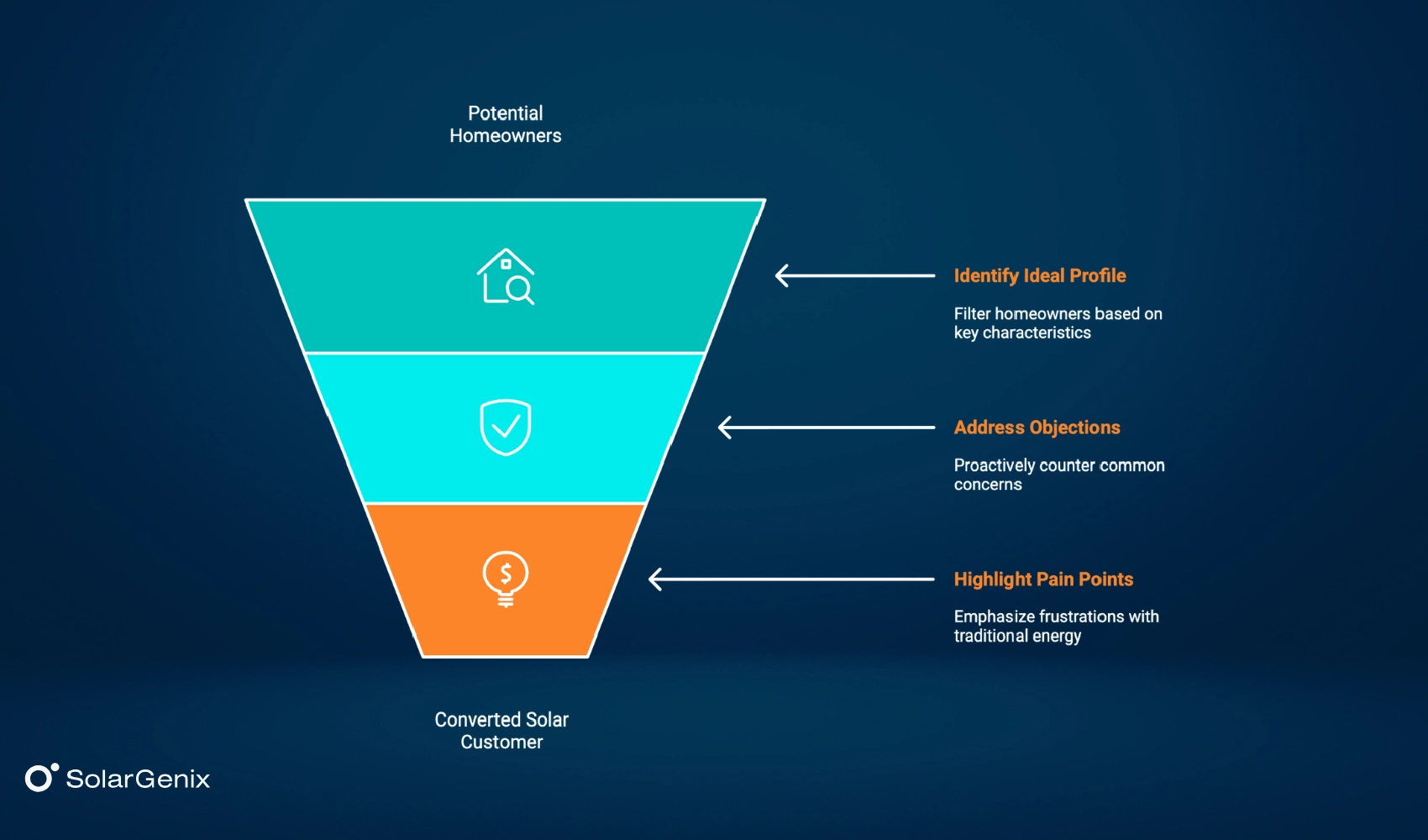
Not all homeowners are qualified solar leads. Direct your efforts to the right ones; otherwise, you risk wasting your time and finances.
Ideal Customer Profile
There are certain characteristics that solar customers come with. Let’s look at the main ones:
- High electricity bills.
- Suitable roof conditions, facing south, southwest, or southeast, with minimal shading.
- Roof age and condition - go for roofs that have over 10 years remaining life expectancy.
- Homeownership plans of 5 years or more.
- Positive credit score.
- Environmental concerns and motivation.
Common Objections
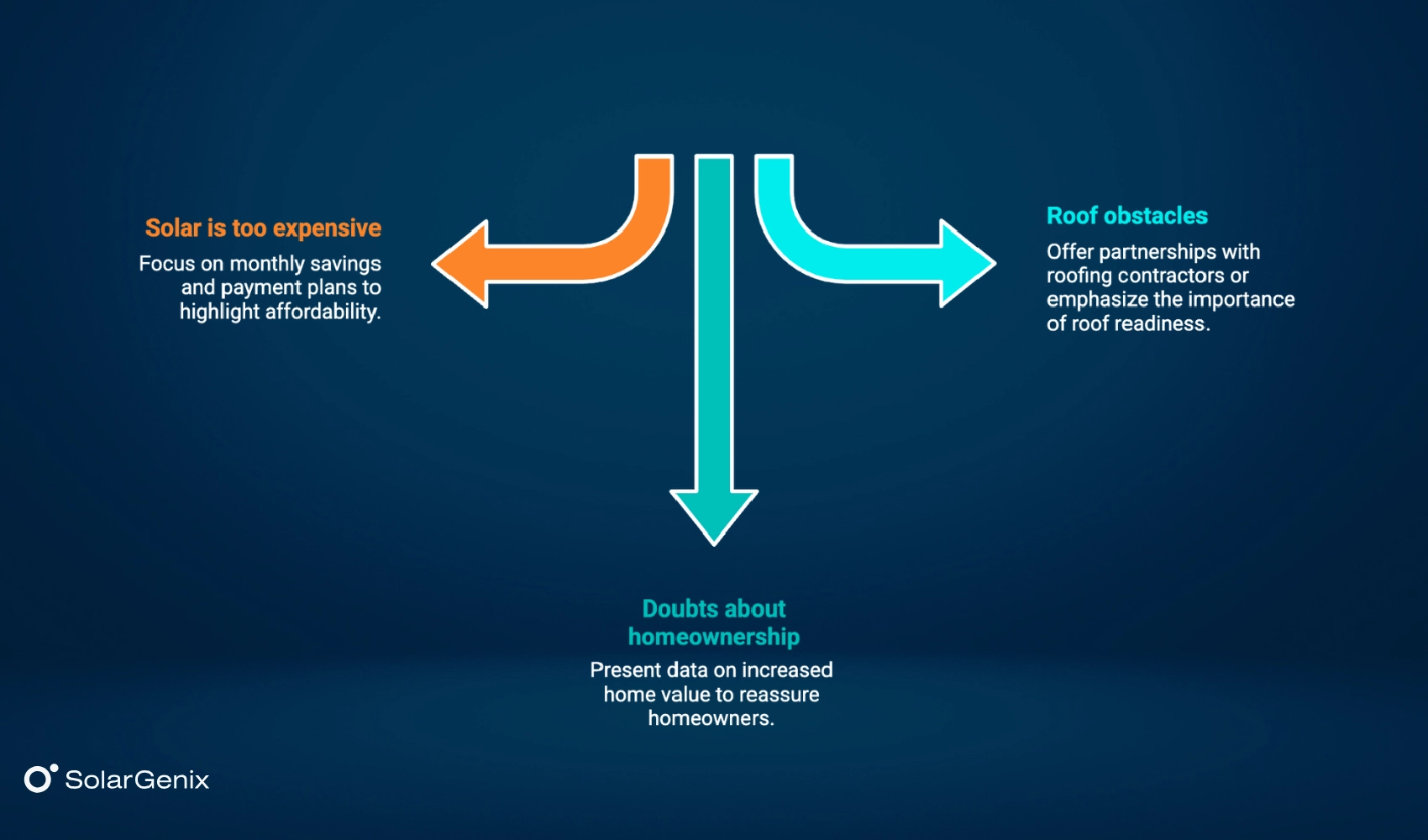
Even if you find the right potential customers, they’re not going to convert right away. You’ll have to deal with objections, which are quite natural. These objections are often instinctive; you just need to address them proactively.
- Solar is too expensive. This is a common response from most people who’ve considered going solar at least once. Show them that solar systems start saving money from month one. Focus on monthly payments with solar as opposed to current utility costs.
- Doubts about homeownership plans. A great way to address this objection is by presenting data on how going solar increases home value.
- Roof obstacles and issues. Many homeowners hesitate because they think their roofs need work first. As a way out, you can partner with roofing contractors and offer bundles. Or show why it’s important to address roof issues and be prepared for solar installation.
Pain Points
So, what is it that motivates homeowners to go solar? Basically, everything that frustrates them about traditional energy sources can be a motivation to look for alternatives.
Here are the main pain points of potential solar buyers:
- Unpredictable and volatile utility costs
- Lack of control over utility companies
- Desire to reduce carbon footprint
Try to determine which pain point resonates most with each prospect and act accordingly.
Invest in Marketing to Generate High-Quality Solar Panel Leads
Selling solar panels and closing deals successfully starts with consistent lead generation. There are several approaches you can take to generate qualified leads. Let’s have a look at the main ones:
- Organic Leads: Referrals, community engagement, and strategic partnerships with roofers, real estate agents, HVAC contractors, and home improvement companies.
- Digital Lead Sources: Google Ads, social media advertising, SEO, and content marketing (blog articles, ebooks, guest posts, etc.).
- Lead Pre-Qualifying: Before you visit the site, confirm homeownership, verify approximate monthly electricity bill, check roof suitability, assess timeline and motivation, and identify decision-makers.
Focus on the right leads instead of spending time pursuing leads that are just browsing and not actually planning to buy solar panels.
Master the Solar Panel Discovery Call
Selling solar panels cannot be carried out without a discovery call, where you set the right tone for the whole process.
Don’t try to sell aggressively during the call; rather, understand the homeowner’s needs and build trust with them.
Ask the right questions. Learn about their average electricity bill, the type of roof they have, shading issues, timeline, etc. Knowing these details will help us understand if they need solar panels and make an offer that fits their home.
Engage in a conversation as you go, explain how your process works, and how accurate information will help you create a personalized solar proposal.
Before the call ends, set clear expectations and walk them through the upcoming steps. Don’t leave any uncertainties.
And finally, confirm that all decision-makers (e.g., couples) will be present for the proposal review to avoid delays and miscommunication.
Build Trust and Credibility Early
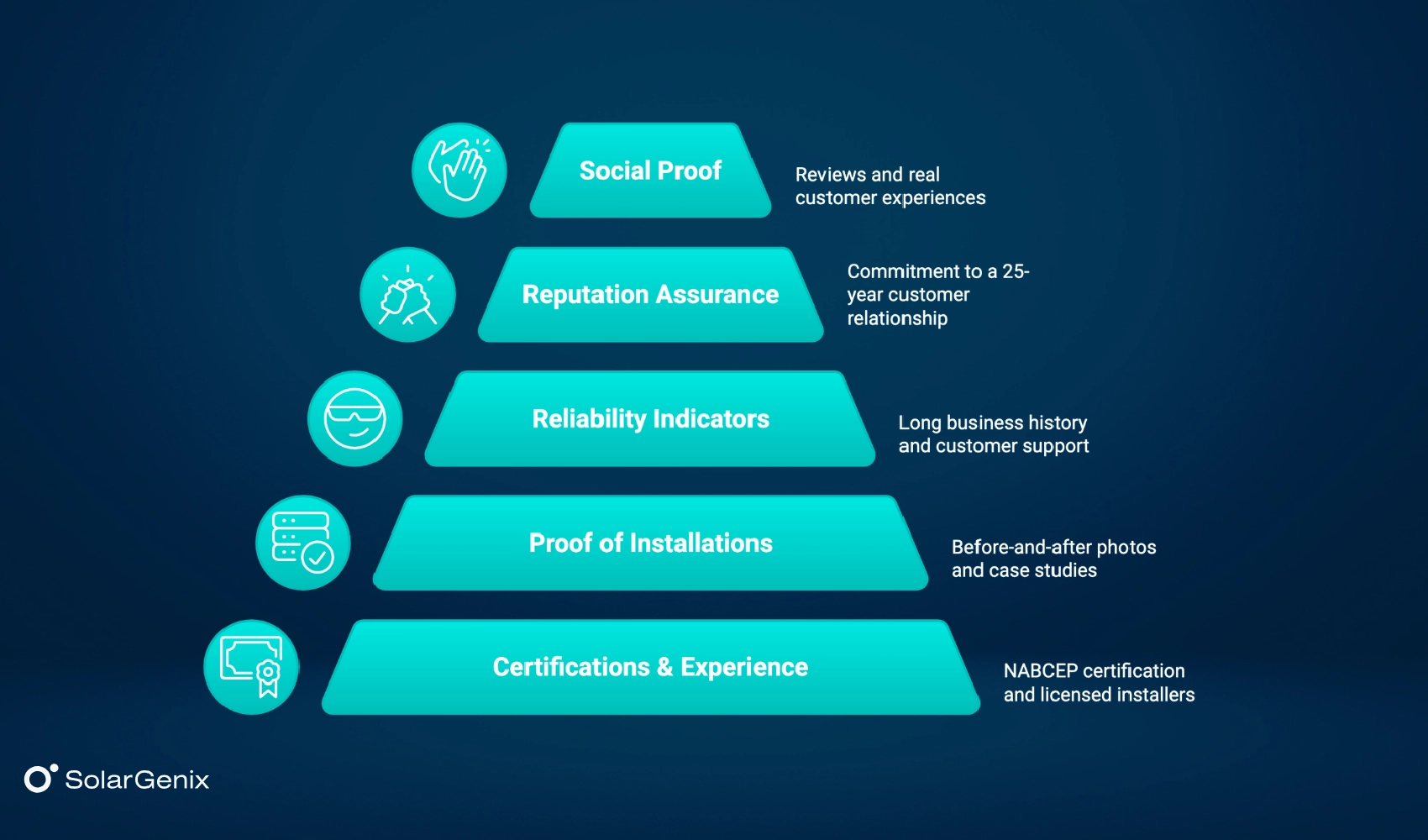
As we’ve already established, trust is a crucial factor when it comes to selling solar panels. Use all means to prove that you’re a trustworthy and reliable solar provider.
- Certifications and Experience: Have all the necessary expertise in place - NABCEP certification, licensed installers, and local permits and inspections.
- Proof of Past Installations: Display before-and-after photos, case studies, and testimonials.
- Indicators of Reliability: Let people know about your long years in business, warranty details, and provide customer support that is built around addressing the needs of homeowners with utmost care and understanding.
- Importance of Reputation: Reassure your potential customers that by buying solar panels from you, they’re entering a 25-year relationship and that you’re not going to ghost them in a few years and go out of business.
- Social Proof: Show reviews, ratings, and real customer experiences. This way, you’ll pre-sell the prospect way before they know the price of your solar panels.
Don’t just randomly list these credentials. Have a comprehensive strategy where you showcase them in detail across all types of content, from websites and marketing materials to proposals.
Create a Compelling Proposal for Installing Solar Panels
Knowing your way through the proposal stage is a core part of learning how to sell solar panels. You can’t get this wrong.
Here’s how you can start creating and sending out professional and personalized solar sales proposals:
- Use modern solar proposal generation software, like SolarGenix, to create accurate system designs with satellite imagery, shading analysis, and generate proposals within minutes. Don’t make homeowners wait more than a day, and they’ll be more likely to proceed with you.
- Show savings and financial benefits without using technical jargon.
- Break down the utility rate inflation. Electricity bills keep increasing 3-5% annually. Mentioning this, you’ll prove that solar savings will be essentially amplified over time. Use graphs to display more vividly the growing electricity costs as opposed to the stable solar payments.
- Explain incentives in detail, be they credits, rebates, or tax benefits.
- Present pricing and ROI transparently. Solar installation is a financial asset - prove it by showing the yearly investment returns.
A clean, visually appealing, and personalized proposal that’s sent in a timely manner will significantly increase your close rates.
Present Your Offer Clearly and Confidently
Presenting your offer matters no less than the proposal itself. Be confident and believe in what you’re selling.
- Walk step-by-step through the system design.
- Explain the financial benefits in simple terms: what they’re currently paying, what the future will be like without solar, and with solar.
- Answer questions before they arise, e.g., talk about warranties, weather damage, home value with solar panels, etc.
- Compare utility vs. solar, both daily costs and long-term calculations.
If you’ve come this far in selling solar panels online, it means you’re just a few steps away from closing a deal. Just keep being transparent and reliable.
Handle Objections Like a Professional
Take objections as buying signals and handle them with care and understanding. Most objections come down to price, roof condition, timeline, or trust.
Reframe the objection and bring the focus back to the long-term value, like 25-year savings, as well as the stability as opposed to the increasing electricity costs, and the overall safety. If it’s the roof, mention your inspection process or roofing partners who can help fix the roof or replace it. If it’s a trust issue, just go with social proof and past successful cases.
Know when to push and when to pause. Push when their objection comes from a misunderstanding or when they’re comparing you with other solar providers. And pause, when they want to consult absent decision-makers, or a financial situation requires a delay, or when there’s an emotional resistance. The latter means that they still need to build trust with you.
To navigate this process in the best possible way, write down scripts for strong objections beforehand.
Close the Deal
Close the deal naturally. Here are the steps you can take at this stage:
- Soft-close techniques test the readiness of your prospects without additional pressure. Here’s an example: “How do you feel about what we’ve discussed so far?” Asking such questions, you show that you’re ready to proceed while at the same time, are open to further objections.
- Use direct-close techniques once there are no objections left. Ask directly whether they want to have the paperwork started.
- Create urgency through expiring incentives, seasonal bill increases, or installation timelines. Don’t ever do this through manipulation.
- Confirm the next steps, like site survey, paperwork, timeline, and permits.
- Try to get commitment and finalize the decision on the same call.
Build Lifelong Relationships and Turn Customers into Solar Advocates
Don’t think that your job is over once the panels are installed. That only marks the beginning of your relationship with your customer. Follow up with post-installation check-ins and be sure the system is working as needed. Make the homeowner feel supported.
Remember that happy customers become your brand’s best advocates. Ask for referrals when the time feels right and make the process easy - offer a shareable link or a card with your name on it, provide an incentive. Referrals that come from your satisfied customers can fuel your solar sales pipeline for years to come.