Let’s start the conversation with an important figure: the right CRM software can help cut the average sales cycle by 8-14 days.
And knowing how lengthy and complex the solar sales process is, what can be more important for a solar company than a shortened solar sales cycle?
Beyond speed, CRMs also significantly reduce your sales team’s administrative burden: tighter follow-ups, fewer dropped leads, and increased predictability.
From first contact to site assessment and system design, from financing discussions to final proposal generation through solar proposal software: friction can be present at any of these stages.
Solar CRM solutions minimize this friction, keeping everything from lead tracking to post-installation communication in a single streamlined process.
In this guide, we’ll go over the 11 best CRMs for solar businesses to help you work through this phase of your company's growth more easily.
Key Takeaways
- The best CRMs for solar businesses handle the entire customer lifecycle, not just basic contact management.
- Solar-specific CRMs like SPOTIO and Shape offer features built around field sales and project workflows, while general platforms like HubSpot can be customized to meet the needs of solar.
- Small and mid-size businesses need easy-to-use and more affordable CRMs, while enterprise companies should look for deeper customization and integration capabilities.
- CRM adoption tactics matter as much as CRM feature set or relevance to your business. Choosing a system your team will actually use on a daily basis makes all the difference.
- Integration with your existing tools (solar design software, accounting and financing platforms, etc.) is a crucial factor in the solar CRM selection process.
- The right CRMs for solar companies bring measurable ROI: faster follow-ups, fewer lost leads, shorter sales cycles, and more closed deals.
What is a CRM and Why Solar Companies Need One
A CRM, or customer relationship management system, is software that centralizes everything related to your leads, customers, communication, and sales pipelines in one platform.
A good CRM is basically the backbone of any business, solar included. It’s what connects your internal operations, from marketing and sales to project management and customer service.
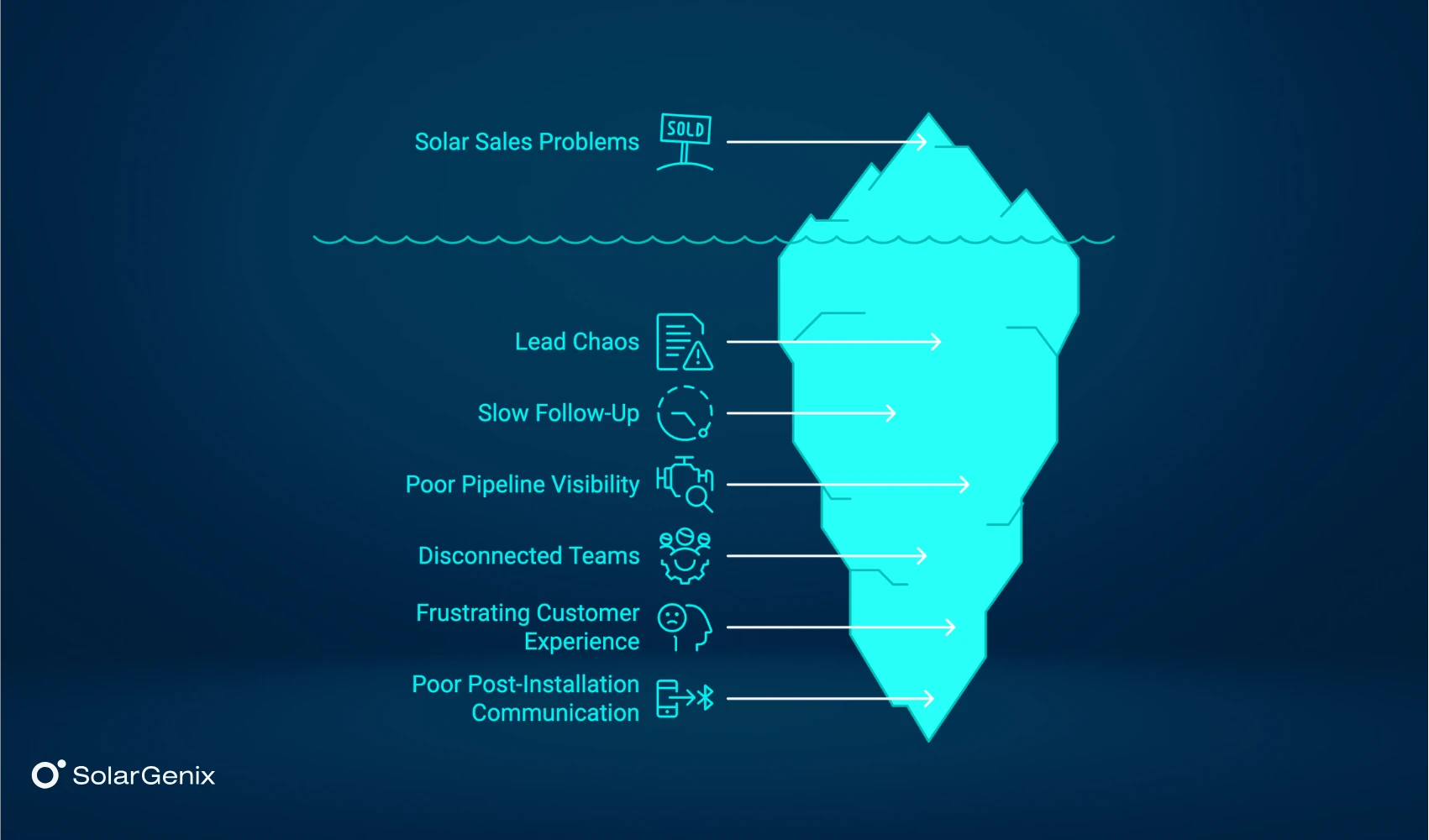
In our day and time, refusing to invest in a solar CRM can end up being quite costly. Let’s look at some of the most common issues that the lack of CRM can lead to:
- Lead Chaos: Solar lead generation happens via different channels: paid ads, referrals, door-to-door solar sales, events, emails, solar lead capture software, social media channels, and more. Without a centralized system, your leads will slip through the cracks: a sales rep forgets to follow up, or the same prospect is contacted by two different reps, or a hot lead goes cold because nobody noticed it was waiting to be contacted. There are many such scenarios - a CRM will help you bypass them.
- Slow Follow-Up: If you don’t contact a lead on time, they’ll lose interest or worse, they’ll be ‘snatched’ by a competitor. Without automated workflows and instant notifications, most solar sales teams respond hours or days later.
- Poor Pipeline Visibility: Without a proper solar CRM in place, managers don’t get a clear view of where their deals stand, who in the team is underperforming, or which marketing channels are delivering the best ROI. Lack of such important data can lead to ill-advised business decisions.
- Disconnected Teams: Field reps, sales specialists, design teams, and project managers often work in silos. A CRM provides a shared system that prevents important details from getting lost in long email chains or text messages.
- Frustrating Customer Experience: When you make your customers repeat themselves every time they talk to a new sales representative, you damage your company's reputation and trustworthiness. Your prospects expect continuity throughout the months-long solar sales funnel stages.
- Poor Post-Installation Communication: Most companies put the most effort into the pre-sale phase and look down upon the importance of post-installation relationships. This can result in missing referral opportunities, service upsells, battery storage updates, and eventually, revenue loss.
How the Right CRM Transforms Solar Business Operations
The best solar CRM solutions can help you address the above-listed problems and become a single source of truth for all your operations:
- Centralized customer data means that all your leads, call notes, proposals, financing details, and installation updates live in one place. More specifically, every interaction will be attached to a single customer record. Anyone on the team can look up that record and know immediately where the customer is in the journey.
- Automated follow-ups help you ensure no lead goes unnoticed. You set the rules: follow-up frequency, proposal reminders, review requests, and the system handles all of it automatically.
- Shared pipelines, internal notes, task assignments, and real-time notifications improve team collaboration, ensuring that sales, operations, and installation teams are aligned with timeliness and status updates.
- Data-driven decision-making allows you to determine the best lead sources, the best-performing sales reps, deal progress, average time-to-close details, and revenue forecasts.
As a result, you are able to significantly improve your deal cycles, achieve higher close rates, and scale at a reasonable pace.
Top 11 Best CRM Systems for Solar Businesses in 2026
Now that we’ve covered the importance of CRMs for solar companies, it’s time to go through the platforms that are considered the best solar CRMs currently available in the market.
SPOTIO
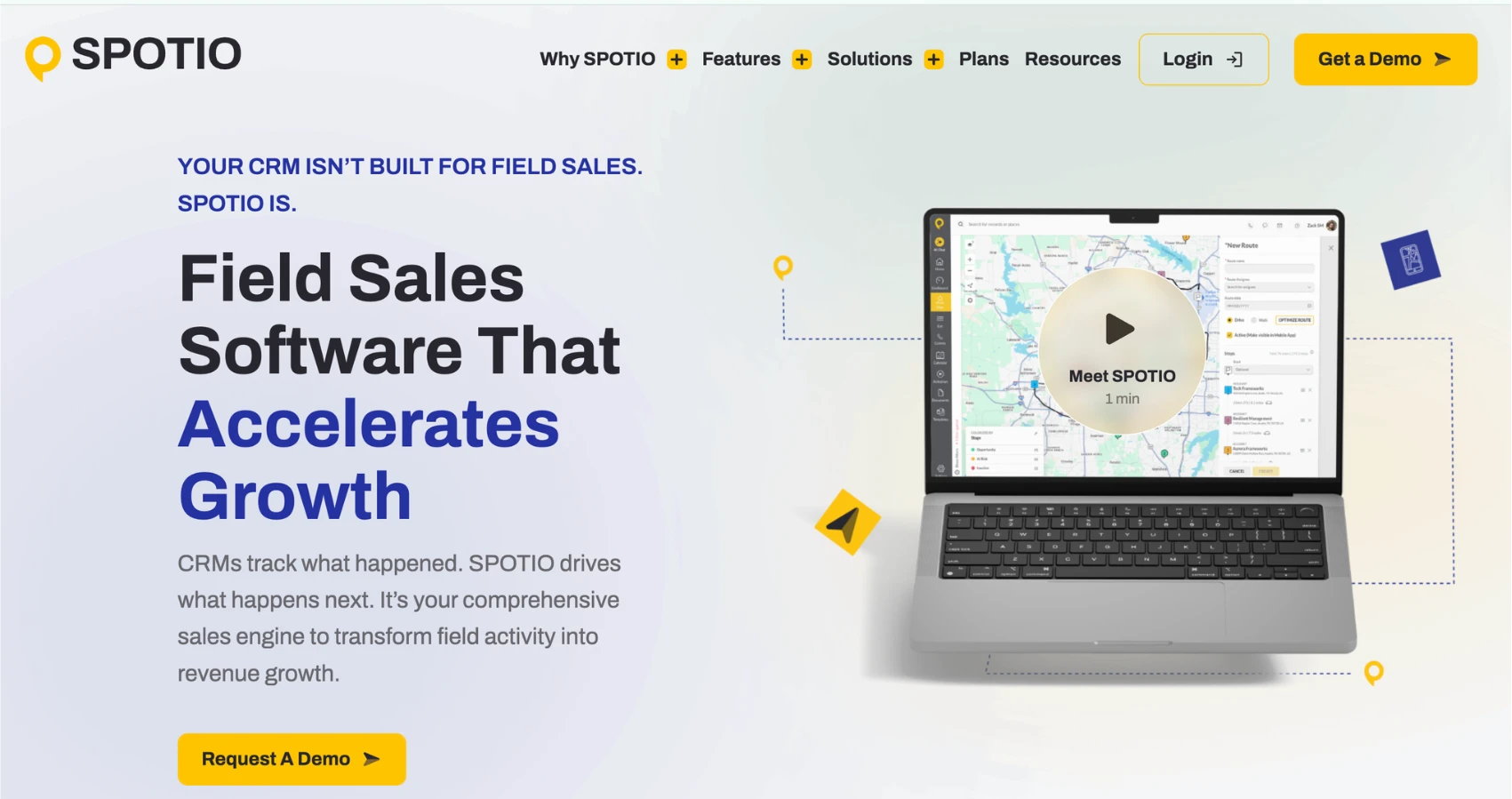
SPOTIO is field sales software built purposefully for outside sales teams. From territory tools and live tracking to simple reporting and lead management, SPOTIO has everything that solar sales teams focused on door-to-door sales need. The platform offers both B2B and B2C solutions.
Key Features
- SPOTIO AI
- Route optimization and task automation
- Lead management and activity tracking
- Territory management and sales prospecting
- Sales intelligence and pipeline management
- Sales coaching and sales gamification
- Sales leaderboards and performance analysis
- Sales rep onboarding
- Integrations
- Security and compliance
Best for: Solar companies with large canvassing or field sales teams.
Limitations: Not necessarily the best option for a full-cycle CRM that covers design, financing, permitting, and installation. If you need an end-to-end solar CRM, you’ll need to look for other platforms or integrate SPOTIO with a separate back-office platform.
Salesforce
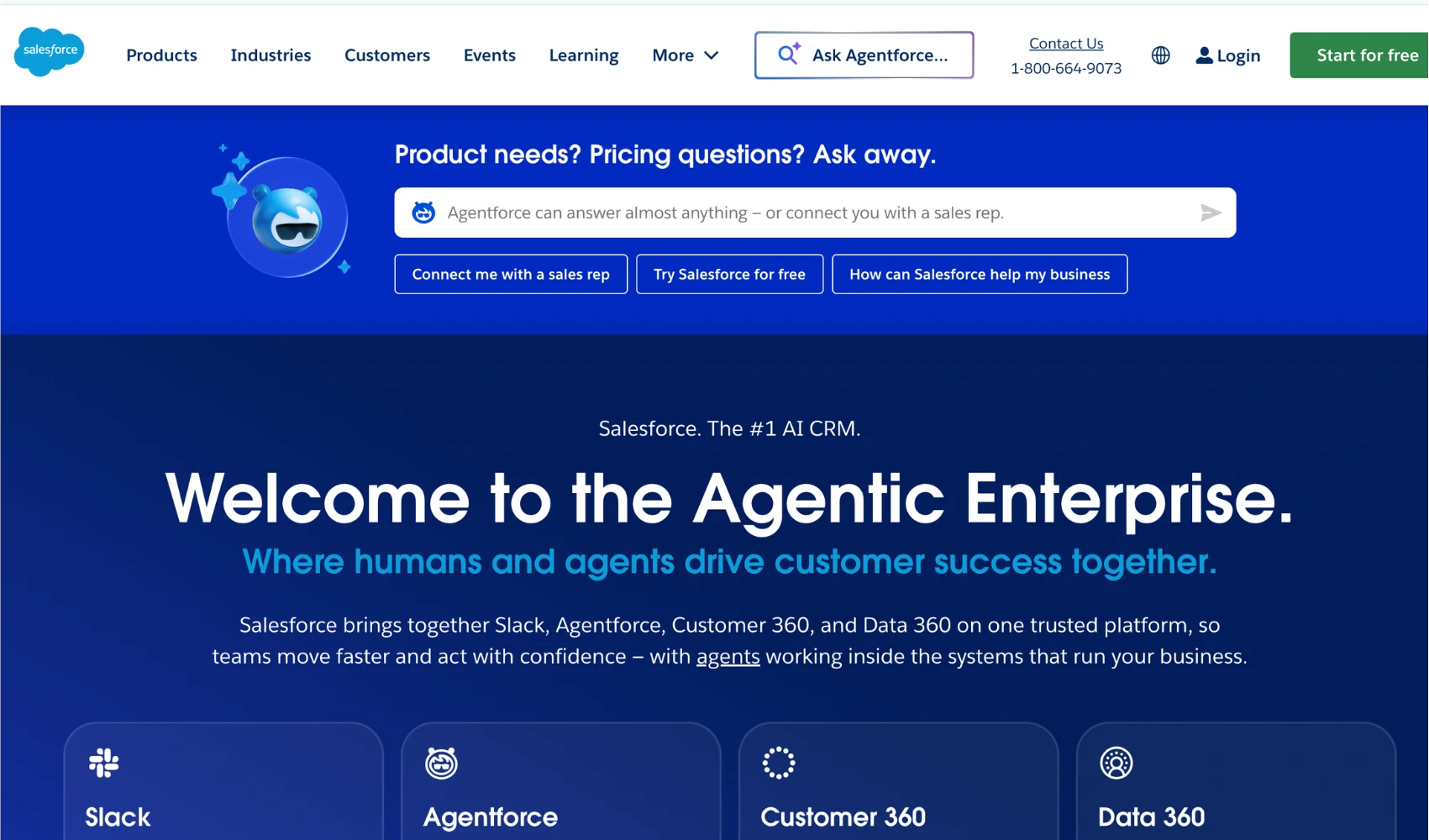
Salesforce is the world’s largest CRM platform that holds about 20% of the global CRM market share and combines Slack, Agentforce, Customer 360, and Data 360 in one place. It uses data and AI agents to help different teams collaborate, serve customers, and be more productive.
Key Features
- Sales AI and agents
- Deep customization
- Sales performance management
- Revenue lifecycle management
- Partner Cloud
- Customer service management
- Field service
- IT service and self-service
- Digital engagement
- Service analytics
- Customer service AI and contact center
- Voice and phone support
- HR service
- Marketing AI
- Email marketing, mobile, and advertising
- B2B marketing automation and analytics
- Customer data platform
- Loyalty management
- Small business marketing
- B2C and B2B commerce
- Order management and payments
This is only a part of all the services that Salesforce offers across different sectors and for different purposes.
Best for: Enterprise-grade solar companies that are scaling nationally.
Limitations: Salesforce is quite expensive and complex to implement. It also requires dedicated admin support. Might not be the best option for small solar businesses.
HubSpot CRM
Next up in our list of the best CRMs for solar businesses comes HubSpot, an all-in-one, AI-powered customer platform that helps businesses simplify and centralize their sales, marketing, and relationship management.
With 288,000 customers in more than 135 countries, the platform offers connected data and tools along with built-in AI agents that work for you 24/7 and can handle over 65% of your customer inquiries. Solar companies often choose HubSpot CRM thanks to its flexibility and extensive integration library, as well as the generous free tier.
Key Features
- Free CRM with unlimited users and basic contact management, CRM import, deal management, tasks and activities, pipeline management, and a reporting dashboard.
- Free HubSpot Marketplace: data sync, user management, ticketing, payment links, and a mobile app.
- Free Breeze AI assistant: AI content writer, chatbot builder, shared inbox, email tracking, and email templates.
- Marketing Hub: premium versions of all free tools, plus AI lead generation tools, SEO, omnichannel marketing automation, Breeze social post agent, campaign management, and custom reporting and analytics.
- Sales Hub: premium versions of all free tools, plus AI-powered Smart CRM, sales workspace, Breeze prospecting agent, sales sequences and automation, custom objects, forecasting, predictive lead scoring, playbooks, and more.
- Service Hub: premium versions of all free tools, plus help desk workspace, customer success workspace, multiple ticket pipelines, knowledge base, and more.
- Content Hub: premium versions of all free tools, plus landing pages, brand voice, blog software, website builder, and other additional features.
- Data Hub: premium versions of all free tools, plus programmable automation, data quality automation, data studio, scheduled workflow triggers, and more.
- Commerce Hub: premium versions of all free tools, plus HubSpot payments, e-signature, custom billing automation, simple revenue reporting, and more.
- Smart CRM: premium versions of all free tools, plus custom data model, sensitive data, custom reporting, team governance, and other features.
- Breeze: premium versions of all free tools, plus Breeze marketplace, customer agent, data agent, custom assistants, and more.
Best for: Small to mid-size solar companies that need a scalable platform with strong marketing and sales tools.
Limitations: Advanced features can become costly as you scale. The platform also lacks solar-specific features like project management, permitting workflows, and field operation tools.
Shape
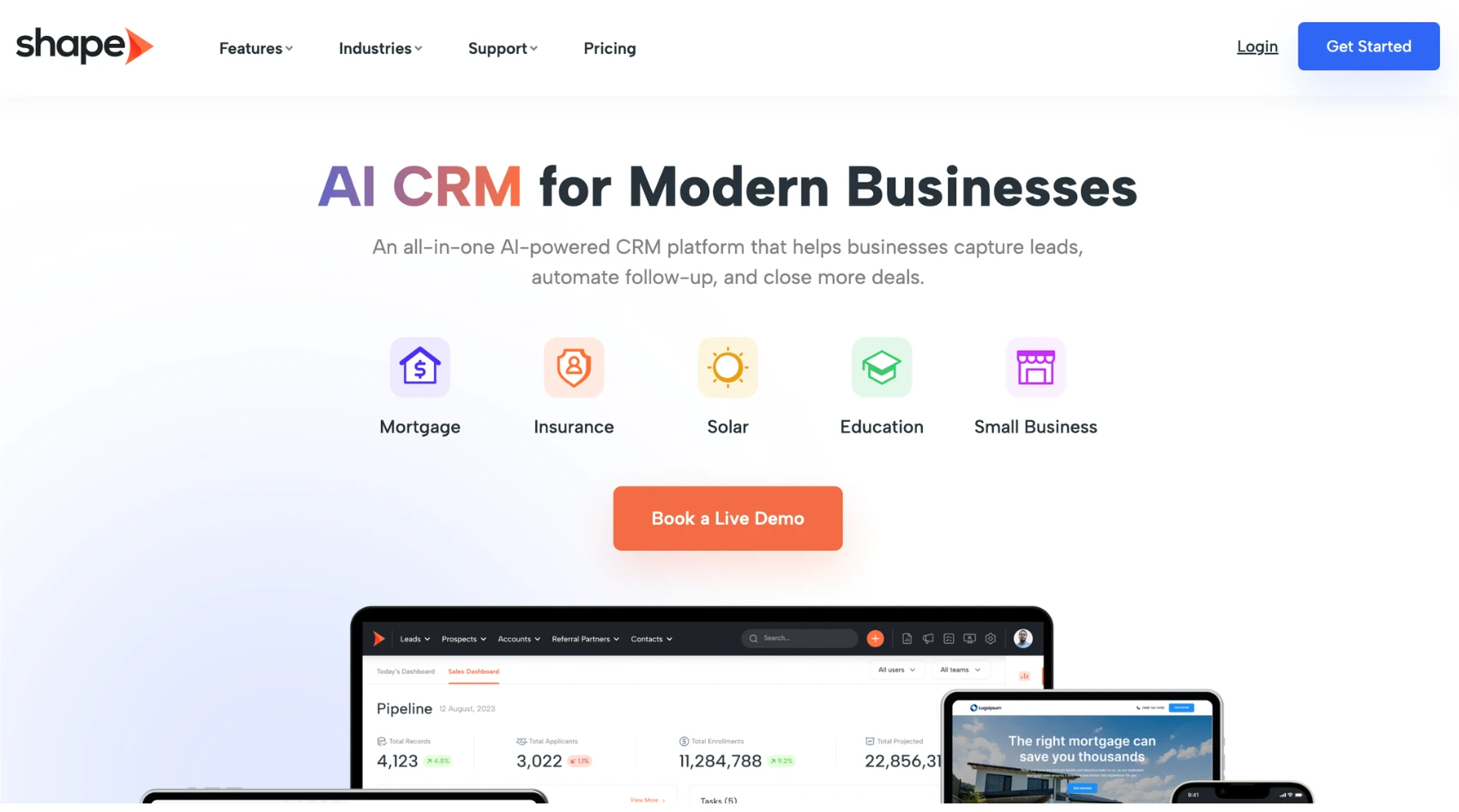
Shape is an AI-powered CRM software solution that centralizes lead capture, follow-up automation, sales management, and deal closing in a single system. The platform is a great choice for high-volume industries like mortgage, insurance, solar, and education, as well as for small businesses.
Key Features
- Pre-made flyers, texts, emails, and landing pages
- Social media tools and campaigns
- AI lead scoring
- AI inbound answering
- AI outbound dialing
- AI call analytics
- AI text messaging
- AI automation
- Survey-based lead funnels
- Easy document collection
- Lead management
- APIs, bulk file imports, and HTTP post
- Automated drip campaigns
- Monitoring and triggered opportunities
- Easy onboarding and compliance
Best for: Mid-sized and growing solar companies with in-house sales teams that need strong automation and built-in communication tools.
Limitations: For companies with highly customized or uncommon sales workflows, Shape may feel slightly rigid.
Pipedrive
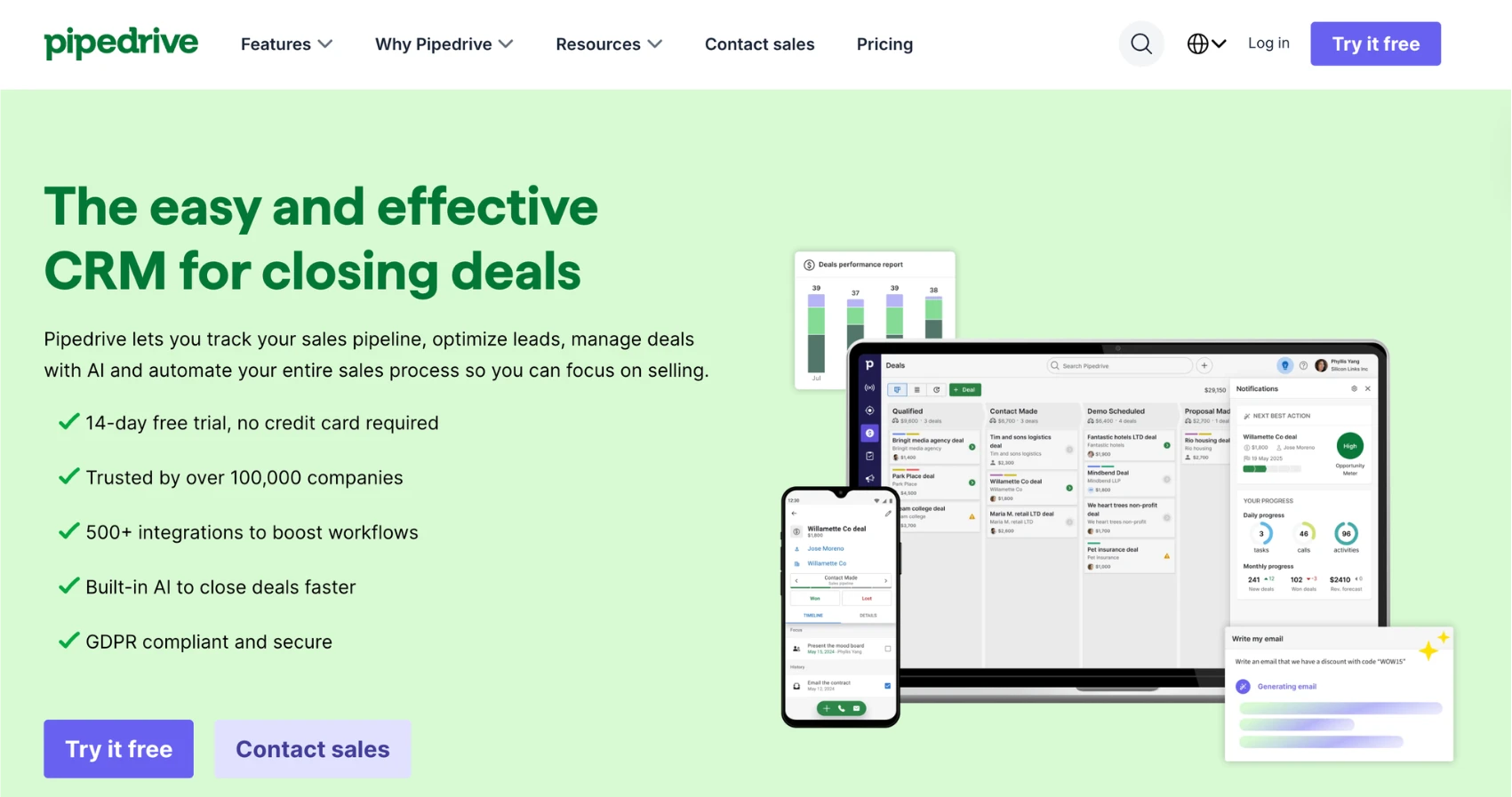
Founded in Estonia, Pipedrive is a multinational cloud-based SaaS company offering a CRM platform that lets you track your sales process, improve and manage leads with AI, as well as automate your whole sales pipeline. The platform is used by over 100,000 companies and offers a 14-day free trial.
Key Features
- 500+ integrations
- Built-in AI
- GDPR compliance and security
- Pipeline management
- Lead management
- Sales inbox
- Sales automation
- Reporting and analytics
- Email sync and tracking
- Leadbooster - lead generation tool
- Mobile app
Best for: Small to mid-sized solar sales teams looking for a focused CRM for pipeline management with a low learning curve.
Limitations: No native project management, field operations, or other solar-specific features.
Contractors Cloud
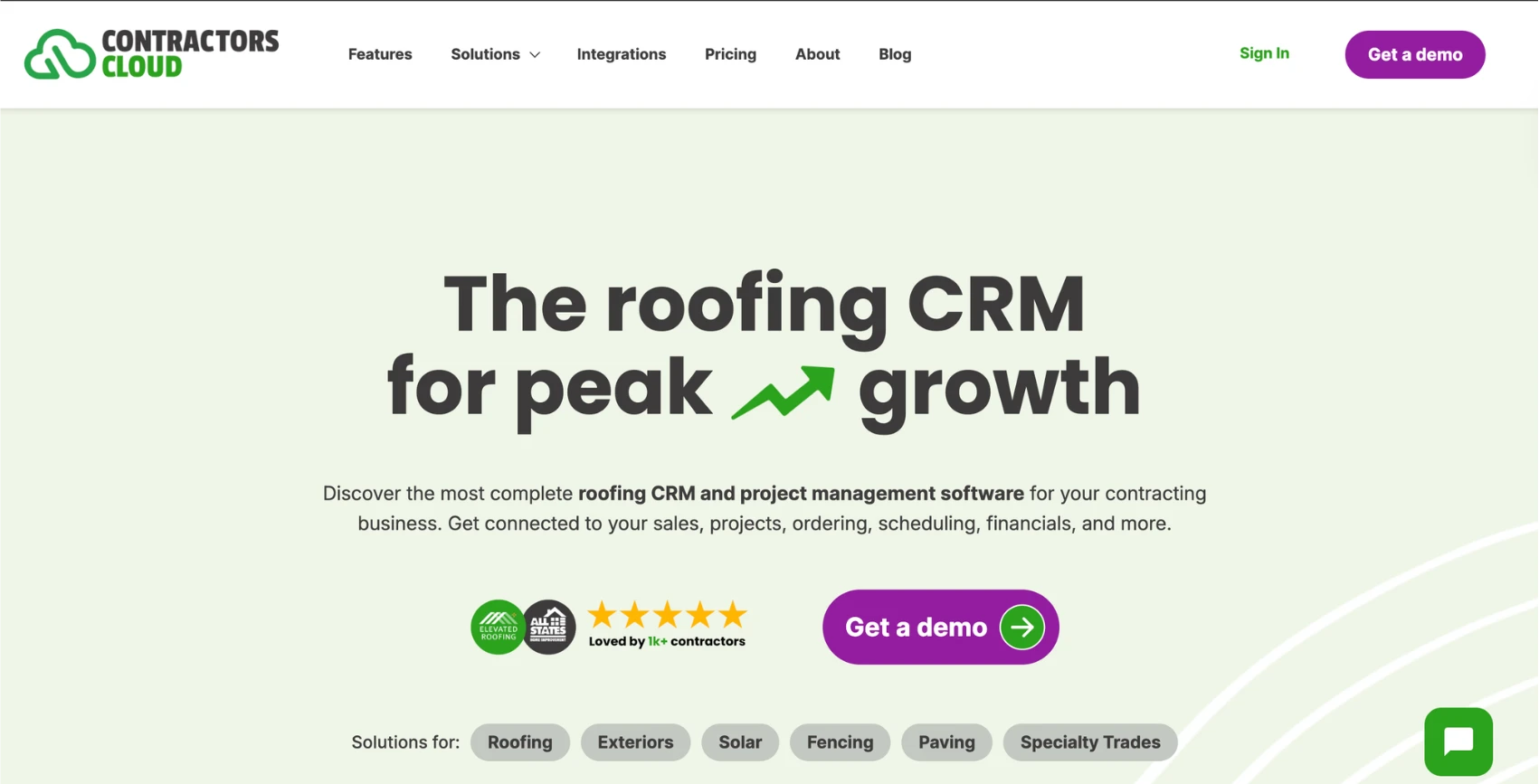
In business since 2011, Contractors Cloud offers CRM and project management tools for roofers, exteriors, solar, fencing, paving/asphalt companies, as well as other specialty trades. Now serving more than 1,000 customers, the platform covers the whole project lifecycle: sales, ordering, scheduling, financials, and more.
Key Features
- Contact management
- Customer portal
- Lead import
- Sales - estimating, proposals, and reports
- Project management - custom workflows, reporting, and completion certificates
- Production - material management, supplier management, and installer scheduling and management
- Financials - accounts receivable, invoicing, and payments
- Documentation - project notes, files/photos + descriptions, and completion certificates
- Communication - project email, real-time messaging, and custom alerts
- Reports - milestone performance reports, profitability/work in progress reports, and sales by rep reports
Best for: Residential solar installers and contractors who need industry-specific CRM features.
Limitations: While Contractors Cloud is one of the best CRMs for solar companies, it lacks the comprehensive marketing and sales features required for lead generation.
Freshsales
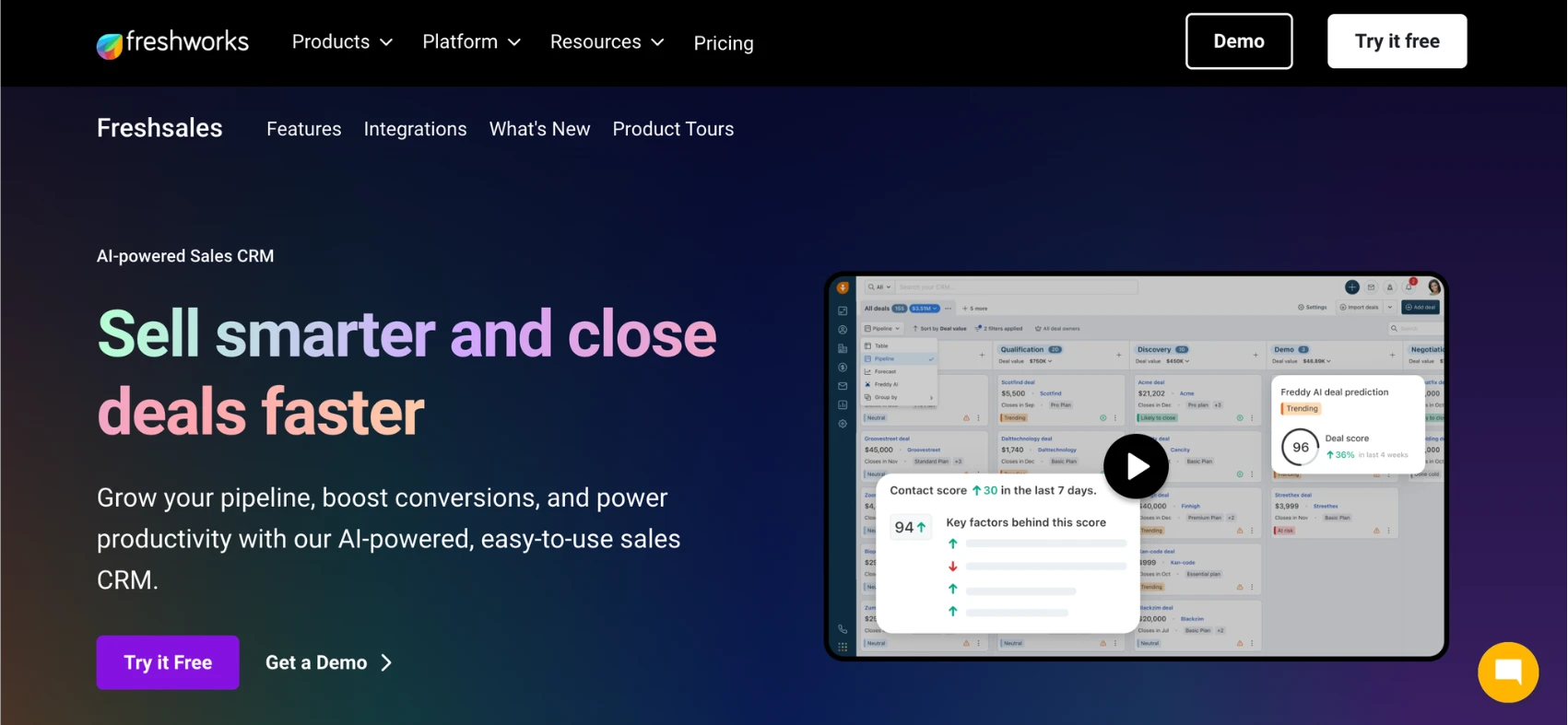
Built by the company Freshworks, Freshsales is an AI-powered CRM platform offering tools for pipeline growth, increased conversions, and improved productivity.
Key Features
- Smarter sales campaigns
- Freddy AI for lead scoring, deal insights, and sales forecasting
- Visual pipeline with deal progress tracking
- Automated follow-ups, assignments, and internal alerts
- AI assistance and insights
- Built-in messaging capabilities
Best for: SMBs looking for a cost-effective CRM solution with a feature-rich platform, built-in communication tools, and AI automation.
Limitations: No solar-specific features. Integration with solar design software often requires configuration.
ServiceTitan
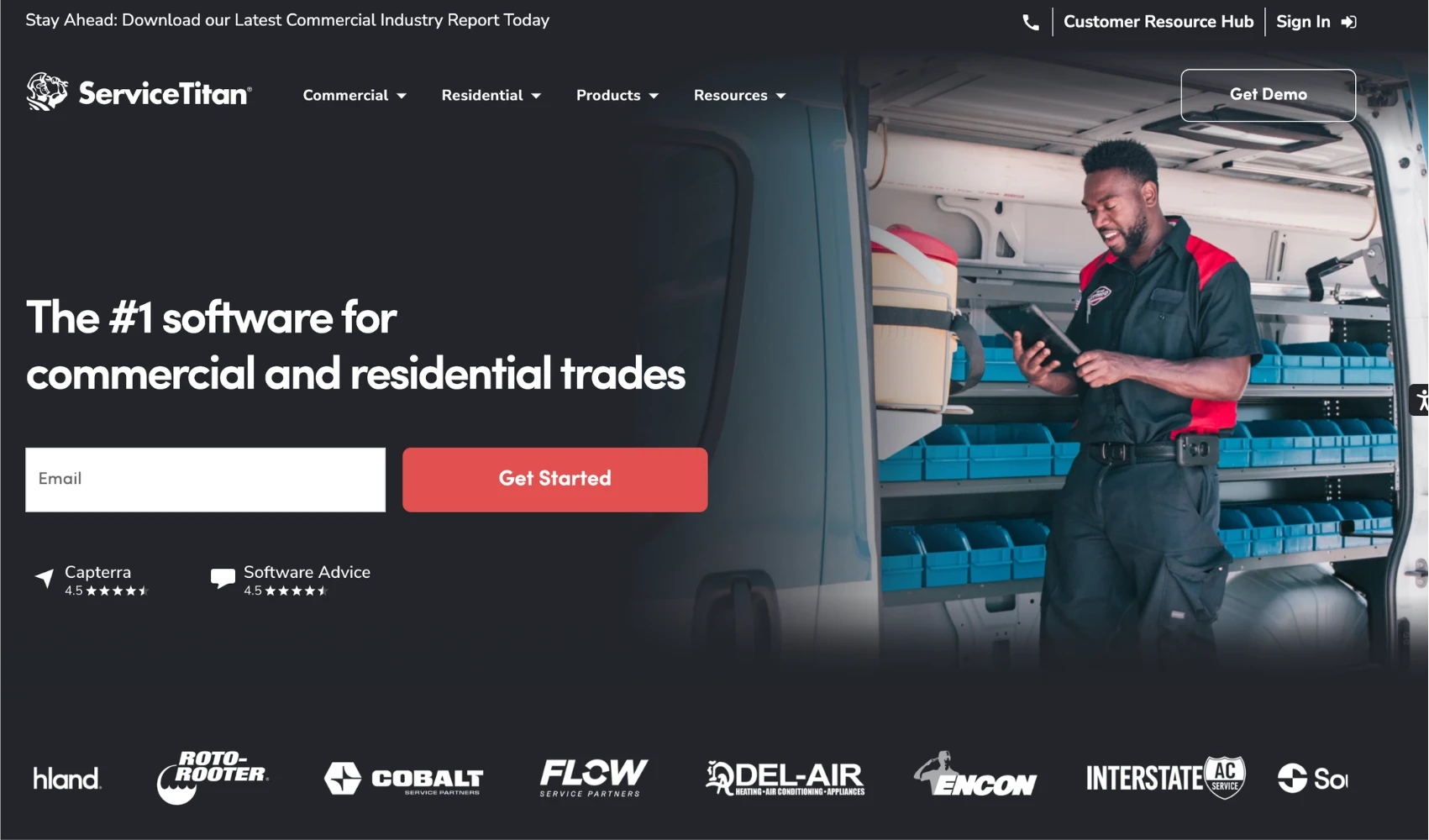
ServiceTitan is a cloud-based, enterprise-grade CRM and FSM (field service management) software designed specifically for residential and commercial trade businesses (HVAC, plumbing, electrical, etc.). It’s one of the most comprehensive platforms for residential service companies, combining CRM, dispatching, project management, and financial reporting in one system.
However, it comes with enterprise pricing and complex implementation.
Key Features
- Dispatching
- Scheduling
- Call booking
- Marketing
- Reporting
- Bookkeeping through Sage Intacct integration
- Accounting and QuickBooks integration
- Field mobile app
- Financing
- Customer experience
- Pro Products for fully automated AI workflows
Best for: Larger solar companies and multi-trade contractors.
Limitations: High costs and complex implementation with the need for dedicated training and onboarding.
Insightly
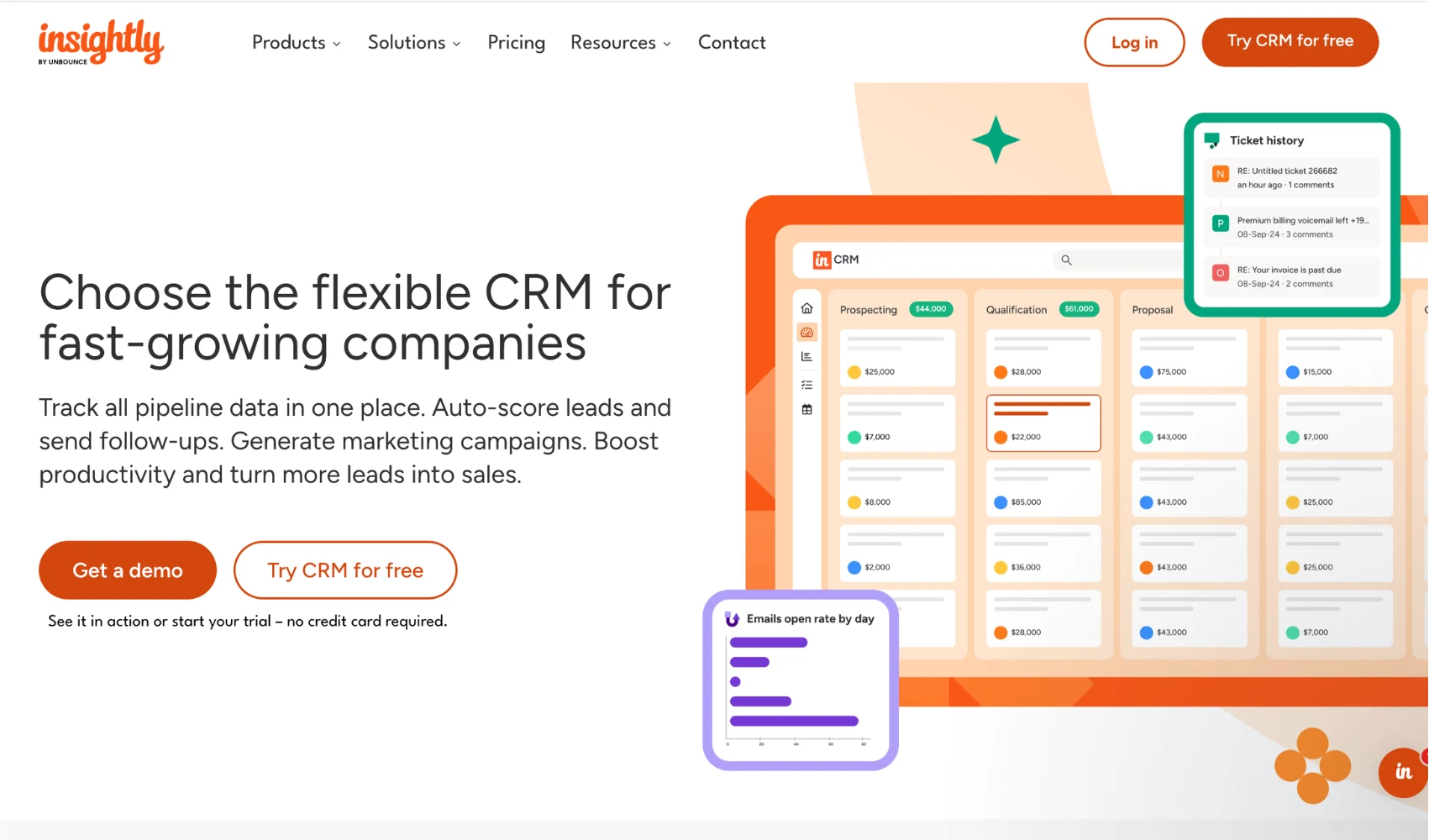
Insightly offers a modern and intuitive CRM platform at an affordable price, allowing you to track all your pipeline data, auto-score leads, send follow-ups, and create marketing campaigns. It is used by thousands of companies across different industries, solar being one of them.
Key Features
- Sales pipeline and lead management
- Lead tracking and opportunity management
- Business workflow and process automation
- Validation rules and advanced permissions
- Project and task management
- Intuitive customization
- Customer email management
- Performance dashboard and reporting
- Marketing automation
- Customer support and ticket management
- AI automation
- Easy integrations through AppConnect
Best for: Small to mid-size solar businesses looking for sales and project management tools in one system.
Limitations: Solar companies with complex needs might find Insightly’s features limited compared to other CRM software solutions.
Copper
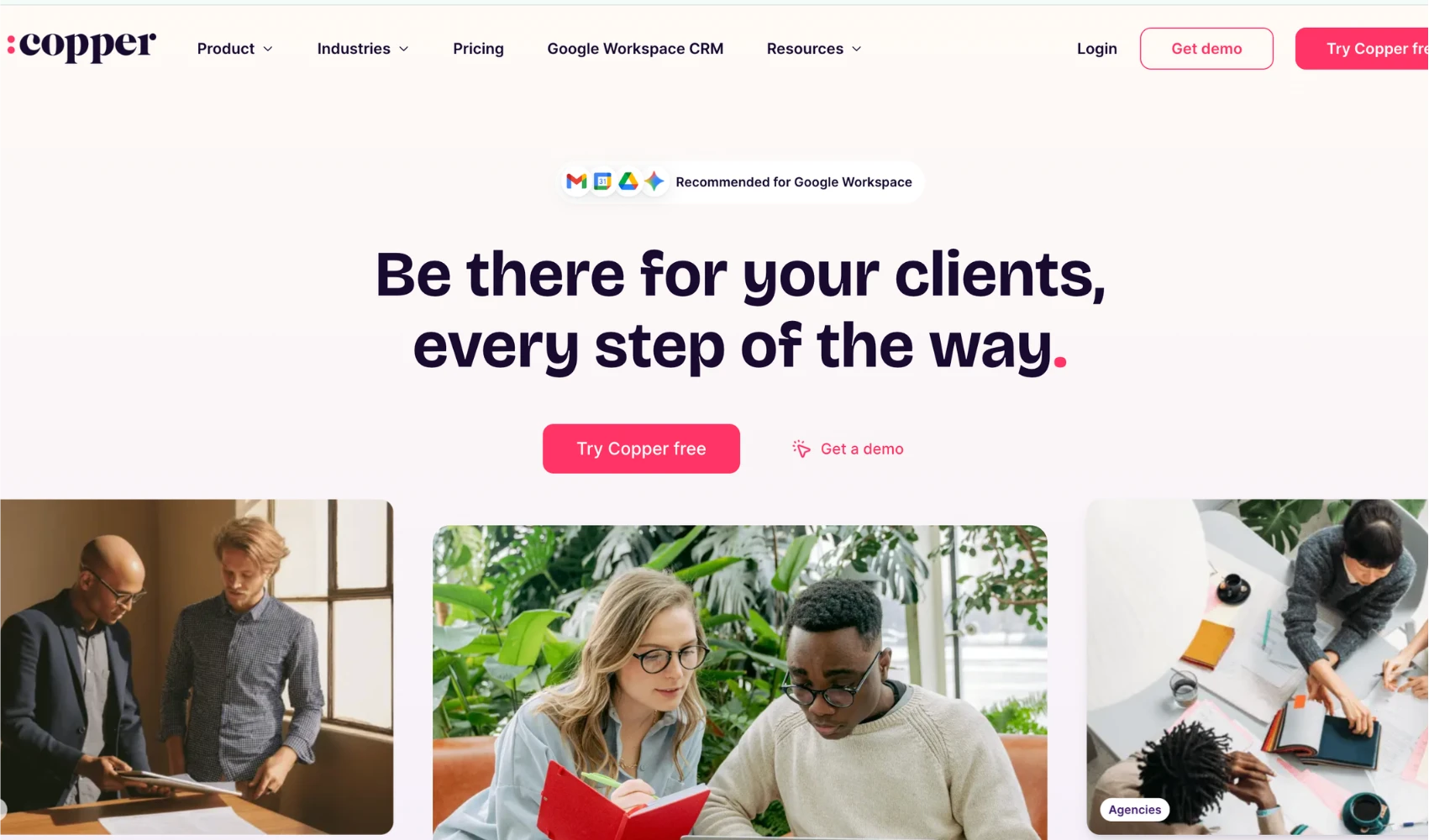
Copper is a CRM built natively inside Google Workspace, making it an ideal choice for solar teams that already run their operations on Gmail, Google Calendar, Google Drive, and Google Meet.
Key Features
- Deep Google integration
- Lead management
- Email automation
- LinkedIn integration
- Drag-and-drop pipelines with AI-powered alerts and flags
- Reporting on revenue, customer trends, team activity, and more
- Generation of contracts and proposals
- Project management
- Task assignment
- Collaboration across sales, project managers, creatives, finance, contractors, and more
- Mobile app
Best for: Solar companies operating mainly with Google Workspace.
Limitations: Copper is tightly linked to Google Workspace and loses its value if your company doesn’t use Google’s tools. Additionally, the platform lacks solar-specific functionality.
Monday Sales CRM
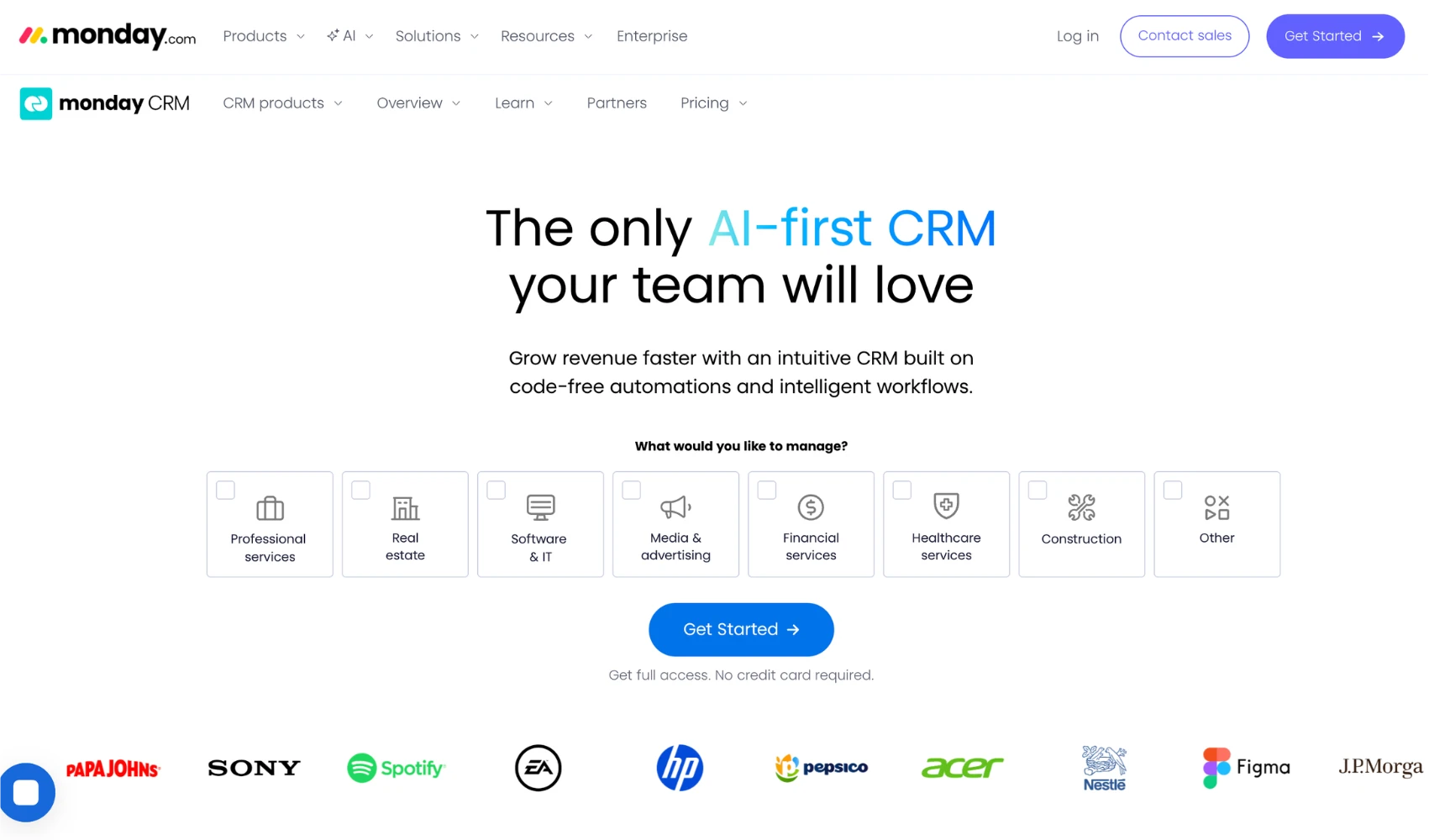
Monday Sales CRM is a CRM solution that offers AI-powered and code-free automations across industries, from real estate and IT to manufacturing and healthcare. Built on the Monday.com work management platform, the software combines CRM functionality with the visual and flexible workflow management of Monday.
If your solar company already uses Monday.com, you could highly benefit from the CRM capabilities of the platform for the optimization of both sales and operations processes.
Key Features
- Automated task generation
- Email composition and rephrasing
- Content generation and summarizing
- Formula building for reporting
- Integration with all major tools
- Lead management
- Deal management
- Account and contact management
- Post-sales management
- Sales teams, attainment, and headcount planning
Best for: Solar businesses that already use Monday.com for project management.
Limitations: Requires heavy customization to meet the needs of solar sales processes. Can be expensive for larger teams.
How We Picked the Best CRM Systems for Solar Businesses
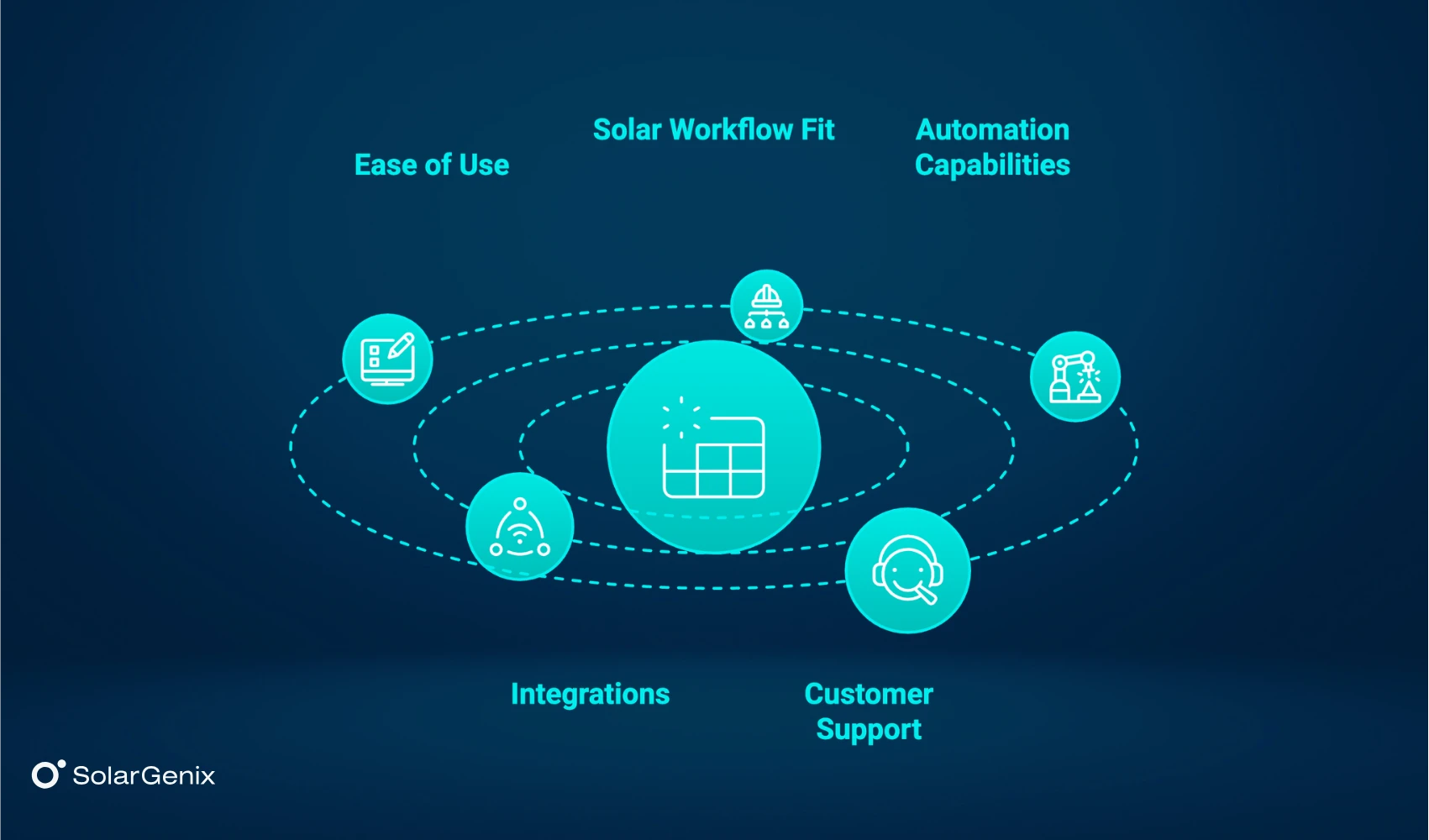
To create the above list of the best CRMs for solar businesses, we took into consideration several important factors:
- Ease of use and adoption. While not all of the CRMs we selected come with a low learning curve, most of them offer something worth the time and effort you’ll spend on the adoption. At the same time, you can still find options that are not difficult to learn and implement, especially if you’re a small company just starting your journey.
- Solar workflow fit. When choosing the best solar CRMs, we assessed how each option fits in the solar-specific workflows. The more generic platforms listed above still offer customization options or are widely used by solar businesses.
- Automation capabilities. What good is a solar CRM if it doesn’t offer automation tools? We’ve chosen those platforms that offer comprehensive AI and automation solutions to reduce tedious manual work and allow your sales reps to focus on things that matter.
- Integrations. Solar companies depend on a range of different tools; that’s why we assessed the integrations offered by each CRM as well as the quality of Zapier/APU connectivity for tools that don’t integrate natively.
- Customer support. Live support availability, documentation and training resources, and assistance in implementation - all of this says a lot about a CRM company.
While not all the solar CRMs in our list meet these criteria strictly, we’ve chosen them based on their overall value and proven performance in real-world applications.
How to Choose the Right CRM for Your Solar Business
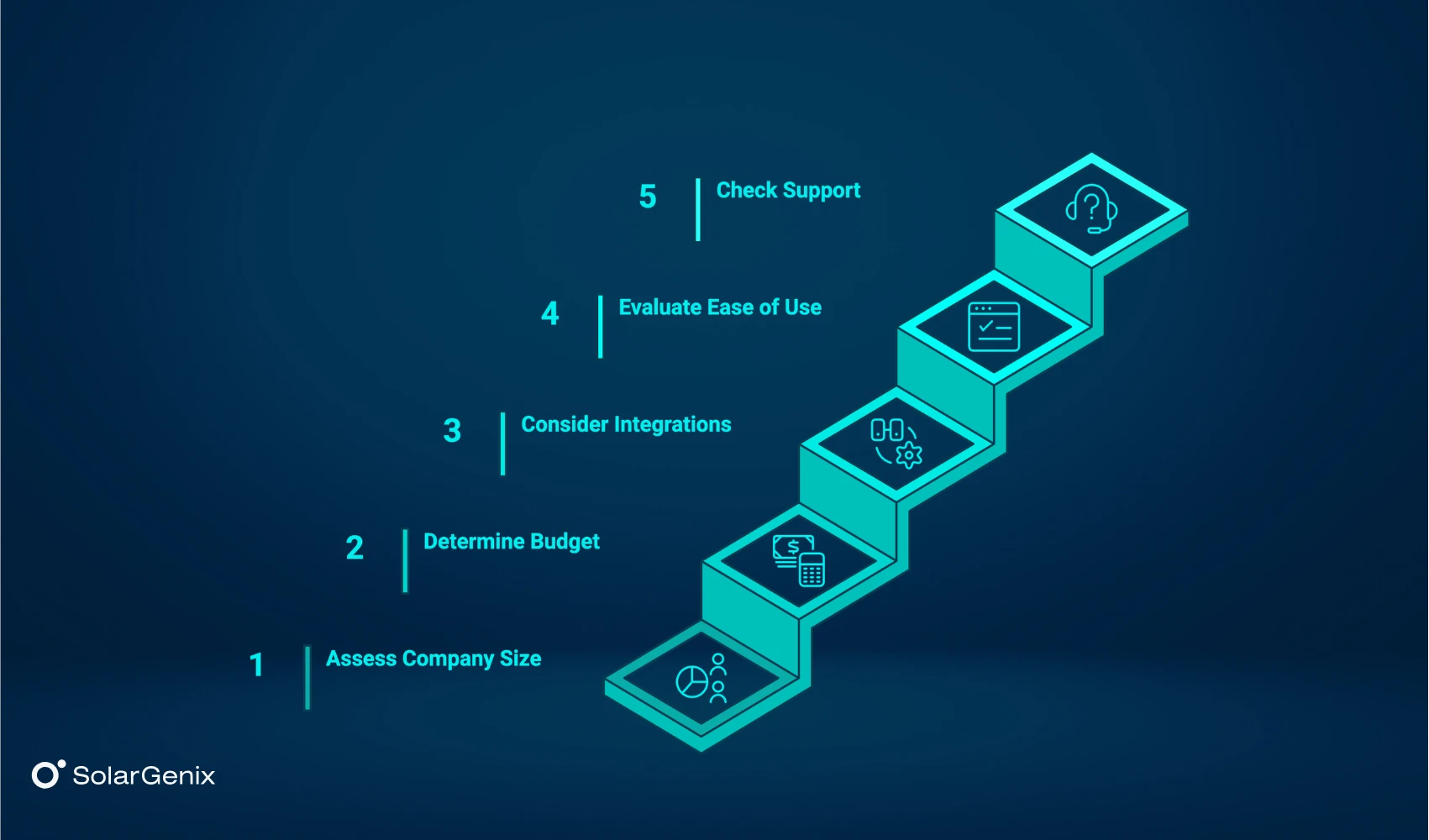
CRMs for solar companies come in different sizes, scales, and feature sets. The right one for your business depends on your growth goals, complexity of operations, company size, and many other factors.
Let’s look at some of the main criteria you should consider when choosing a solar CRM.
Assess Your Company Size and Growth Plans
If your company is small (5-10 people), a simple CRM like Pipedrive or HubSpot’s free tier may be just right for you.
Mid-size teams (10-50 people) can handle slightly higher complexity in exchange for better automation features. Platforms like Shape or Freshsales can deliver the best value in these scenarios.
However, if you’re scaling nationally and have multiple installation crews, ServiceTitan or SalesForce may be the better options for you.
In any case, you need to look at your growth plans. If you’re going to scale and become a bigger team in 2-3 years, choose a platform that can scale alongside you.
Determine Your Budget and Calculate ROI
The monthly subscription fee is not the only cost you’ll have to pay for a solar CRM. There are many others you’ll need to take into account:
- Implementation and setup fees
- Customization costs
- Training and integration costs
- Ongoing admin costs
As for ROI, think of specific outcomes:
- Leads you’re currently losing due to poor follow-up
- Annual worth of a 10% percent improvement in close rates
- The amount of time that would be eliminated through the automation of manual tasks
The answers to these points will give you a clearer ROI prediction.
Consider Integration Requirements
Map out all the tools your solar business is currently using:
- Solar design software
- Financing platforms
- Accounting systems
- Project management software
- Email marketing tools
- Proposal generation software
Choose platforms with native integrations for your most critical tools and ensure that Zapier and API connections exist for custom development.
Each integration reduces context switching, eliminates manual data entry, and keeps your CRM data accurate and complete.
Evaluate Ease of Use and Adoption
Choose a CRM that your team will actually use. Run a pilot with a small group of your actual reps before committing to a full deployment. The feedback will help you choose the best option for your business.
Check Customer Support and Training Resources
Here are a few things to keep in mind when choosing a CRM platform:
- Live chat availability
- Response times
- Onboarding quality: Is assistance included or sold separately?
- Training resources
- Community
A caring and responsible support team will help reduce downtime and frustration.