The renewable energy industry keeps growing, with solar predicted to become a primary source of power by 2030.
While homeowners and businesses are looking for more cost-effective and environmentally friendly energy sources, solar companies are focused on improving their marketing and sales strategies, from implementing tools like solar proposal software to trying out new ways leads can be captured and nurtured.
At the same time, digital marketing costs are climbing, making customer acquisition more and more expensive for solar providers.
This is where solar affiliate programs come in to help balance your marketing spend.
They allow you to scale your lead generation with the help of third-party publishers, contractors, influencers, marketplaces, and existing customers. There are no upfront costs. You pay for the outcomes: qualified leads, booked consultations, and actual sales.
In this guide, we explore how solar companies can build effective affiliate programs: from program details and commission structures to real-world examples of the best solar affiliate programs.
Key Takeaways
- Affiliate programs help you reduce CAC because you pay for the results, not clicks or impressions.
- Lead quality varies from affiliate to affiliate, with contractors, energy auditors, realtors, and existing customers usually bringing higher close rates than general publishers.
- Solar affiliate programs offer multiple payout models, including pay-per-lead (PPL), pay-per-appointment (PPA), and pay-per-sale (PPS), each with different partner appeal and risk factors.
- Strict lead qualification criteria protect your affiliate programs. These include defining geographic service areas, checking homeownership status, credit score, roof condition, electricity use, and setting up the process that verifies them all.
- Solar providers can run multiple affiliate programs simultaneously through partner segmentation and customized payout models.
Why Affiliate Programs Work for Solar Companies
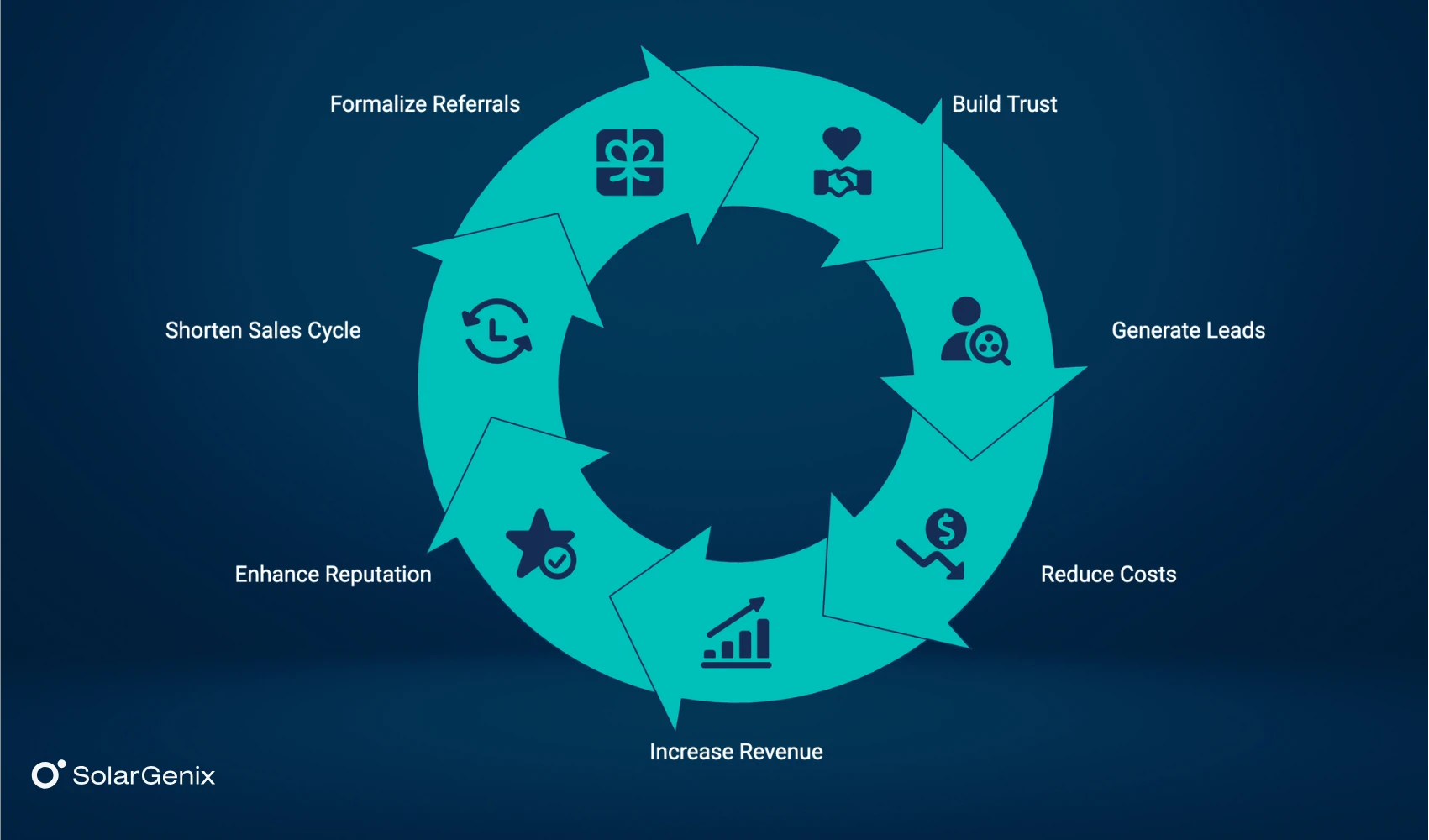
Solar energy affiliate programs use a fundamental truth about high-ticket purchases: people trust recommendations from their family, friends, neighbors, and other familiar faces more than anything.
The essence of affiliate marketing is simple: you only pay when it works. Whether it’s a qualified lead, a scheduled consultation, or a completed installation, solar affiliate programs are based on tangible outcomes.
This performance-based structure dramatically reduces customer acquisition costs compared to traditional digital advertising, where you have to pay for impressions or clicks independent of their quality.
Let’s look at the whole picture through numbers: for an industry with an average customer lifetime value of $20,000-$60,000 per residential installation, investing $500-$1,500 to get a customer through a solar power affiliate program is an exceptional opportunity for revenue growth.
Additionally, affiliate marketing helps your company’s reputation and trustworthiness. When a well-known and respected contractor, energy auditor, or blogger recommends you, their audience starts trusting you automatically. This is incomparable social proof that can potentially shorten sales cycles and increase close rates.
Affiliate referrals bring homeowners who are already further down the solar sales funnel. They have basic education and knowledge about solar, and more realistic expectations about the process.
Finally, affiliate programs help increase the effectiveness of word-of-mouth marketing. They formalize referrals by rewarding people through structured compensation.
Business Benefits and Risks of Affiliate Programs for Solar Companies
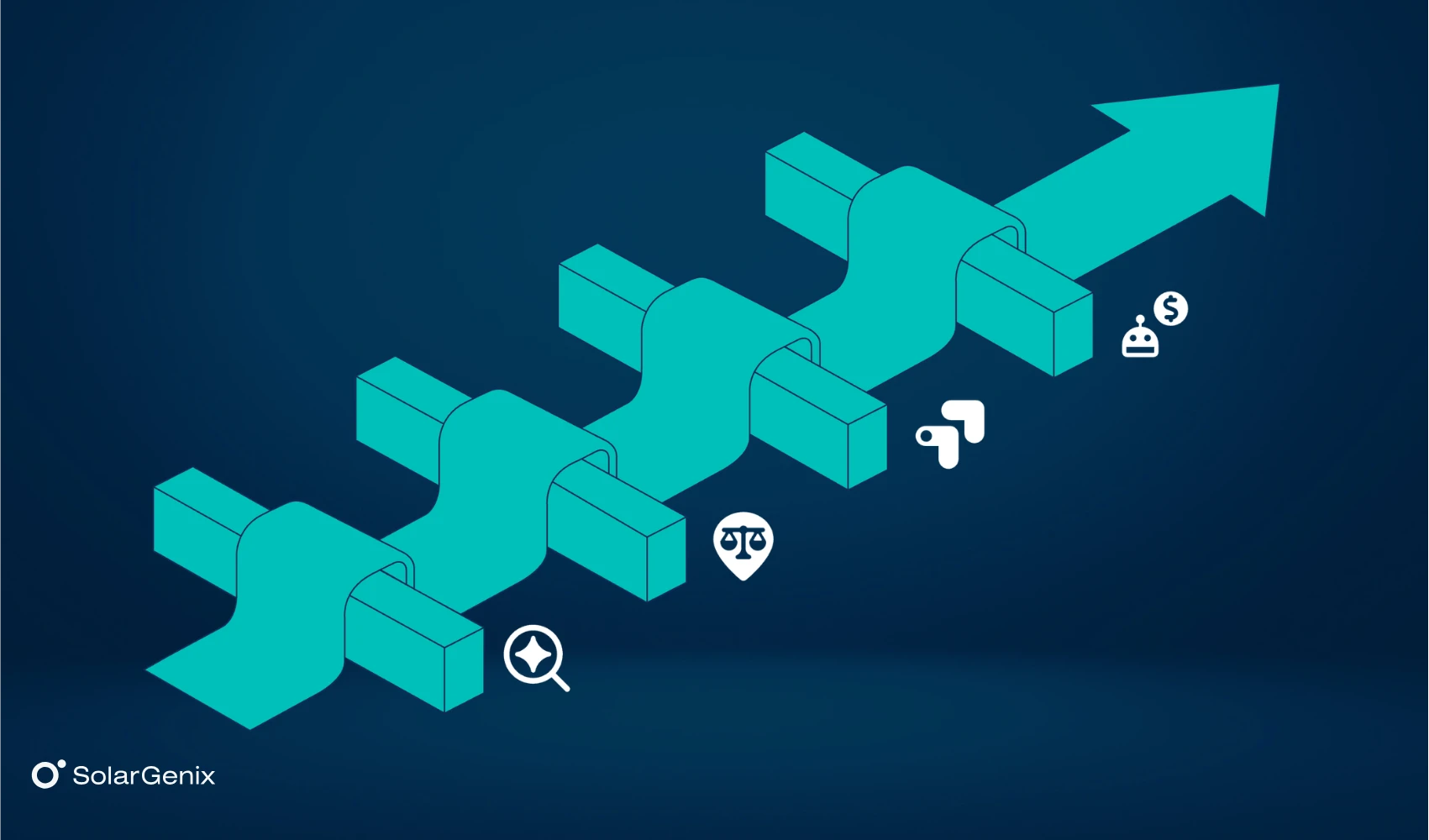
Solar affiliate programs can be a powerful marketing tool, but they require thorough planning and consideration before they bring any value.
Customer Acquisition Costs (CAC)
Affiliate programs shift the risk of spending on customer acquisition without results from your company to your partner. Instead of paying per click (PPC), you pay per result. No wonder they are often referred to as solar pay-per-lead affiliate programs.
However, if you partner with the wrong affiliate or come across a poorly structured solar energy affiliate program, your CAC will essentially increase. This usually happens when:
- Lead quality is low.
- Conversion rates are weak.
- The affiliate’s commission is too high or too low. In other words, it doesn’t match the profit your business makes per sale.
Long story short, just make sure your affiliate CAC is lower than your paid media, door-to-door solar sales, and in-house sales investments.
Lead Quality Control
The primary risk in solar energy affiliate programs revolves around lead quality variability. Not all affiliates necessarily focus on bringing in high-quality leads; some are more concerned with quantity and their own profits.
Before choosing an affiliate partner, think of all the risks that low-quality leads come with:
- Wasted sales time
- Damaged conversion metrics
- Inflated CAC
Make sure your affiliates implement strict lead qualification criteria, such as:
- Geographic restrictions
- Minimum credit scores
- Homeowner verification
- Significant electricity bill
- Roof condition requirements
Nowadays, there are automated lead validation systems that check property records, utility data, and contact information accuracy before any commissions are paid.
Brand and Compliance Risks
Solar is a heavily regulated industry. A single misstep or piece of misinformation can damage your company’s reputation, sometimes with no way back.
And mind you, such mistakes don’t always come directly from your company. A poorly chosen affiliate can do it through:
- False savings claims
- Misleading tax incentive promises
- Trademark bidding without permission
Regular partner audits, mystery shopping programs, and automated monitoring tools can help you detect violations before they turn into serious regulatory issues and irreversibly damage your brand image.
Ideally, set up clear messaging rules in advance - way before you start an official partnership with an affiliate: no income claims, no guaranteed promises, no deceptive statements.
Sales Cycle and Attribution Complexity
On average, it takes 2 to 6 months for a solar prospect to move down the sales funnel and commit to a solar installation. This often creates attribution challenges since multiple touchpoints influence the conversion.
An affiliate might bring you the initial lead, but the sale closes after they visit your website, book a consultation, get a proposal, talk to their neighbors, receive a possible referral from a neighbor, and only after all these (maybe more) steps, the final purchase takes place.
This is why it's crucial to set attribution rules - whether the first or the last touchpoint gets the credit for the sale, or maybe both. Proper CRM integration, along with attribution windows, will protect you and your affiliate and ensure program integrity.
Fraud and Spam Prevention
The implementation of solar pay-per-lead affiliate programs can attract some unwanted attention as well.
The most common issues are:
- Form submissions generated by bots
- Fake contact details
- Incentivized traffic without disclosure
To avoid these issues, you need to apply the following prevention strategies:
- Double opt-in confirmations
- Phone number verification
- Email validation
- Certain pattern monitoring (repetitive IP addresses or unrealistic conversion timing)
- Late initial payouts (30-60 days) until lead quality is confirmed
- Tiered payout structures for proven partners
These precautions will protect you from fraudulent activity without scaring away your legitimate affiliates.
Solar Affiliate/Partner Program Examples
Below, we’ve handpicked a list of the best solar affiliate programs across installers, marketplaces, and solar equipment brands.
Installers and Referral Programs
Regional solar installation companies build the most common affiliate program structure. They recruit local partners who can find solar-ready homeowners and refer them in exchange for a commission.
SunRun Partner Program
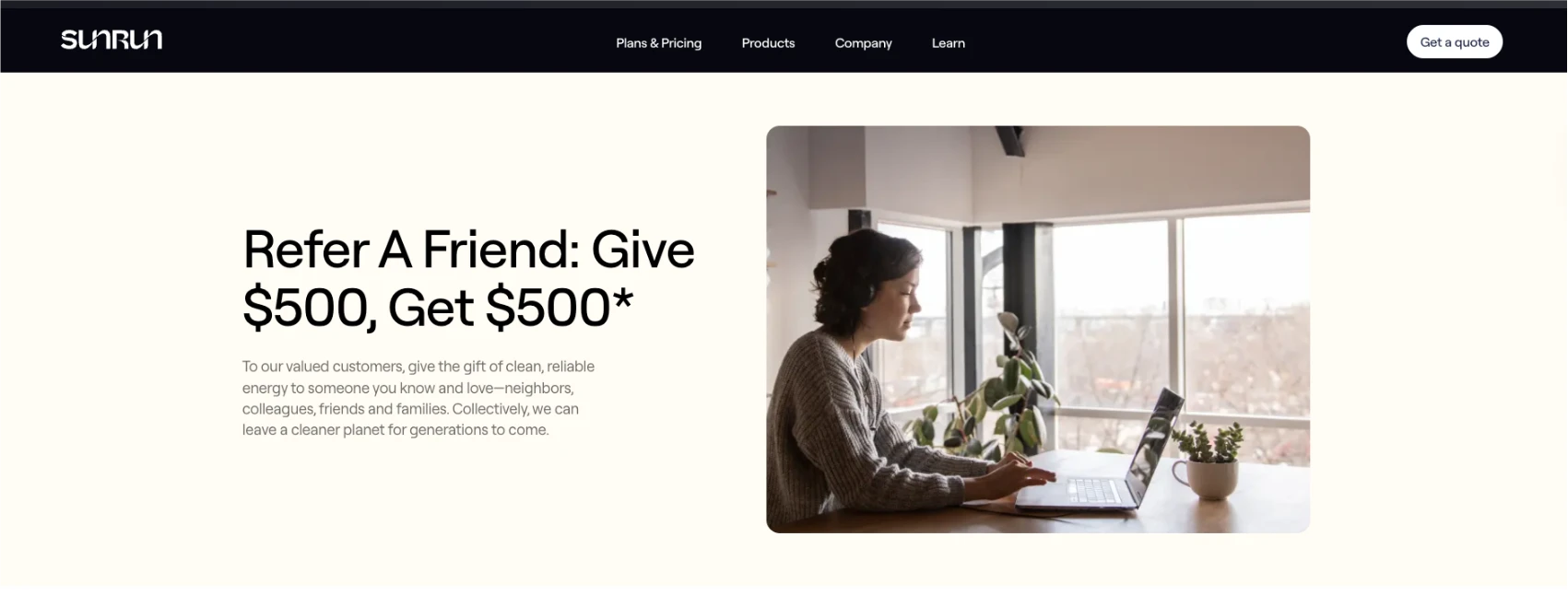
- Ideal Partner Type: Homeowners, realtors, contactors, and influencers.
- Payout Trigger: A qualified sale (an installed project).
- Referral Bonus: $500
- Quality Requirements: Homeownership, adequate roof space and sun exposure, credit check.
- Tracking Method: Call tracking, CRM integration.
- Brand Rules: No savings/income guarantees, only approved marketing materials allowed.
Tesla Solar Referral Program
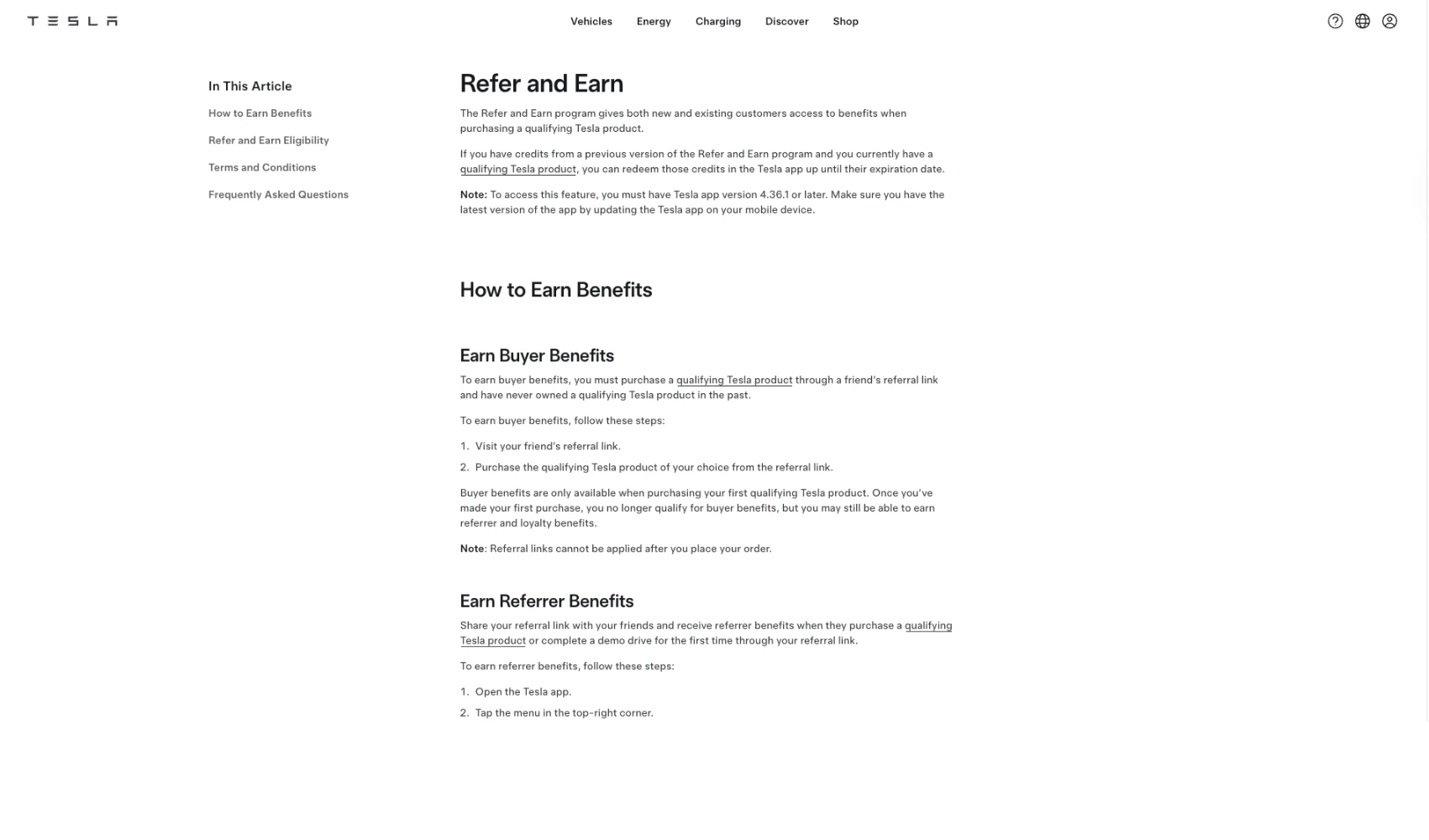
- Ideal Partner Type: Tesla owners, influencers, existing solar customers.
- Payout Trigger: A placed order, solar installation.
- Referral Bonus: $500
- Quality Requirements: Geographic availability, homeownership, proper roof space and sun exposure, and credit check.
- Tracking Method: Referral link system, Tesla app, email confirmations.
- Brand Rules: No trademark bidding, no false savings claims, and compliance with Tesla’s brand guidelines.
Palmetto Solar Affiliate Program
- Ideal Partner Type: Existing customers, environmental advocates, and realtors.
- Payout Trigger: Installed projects.
- Referral Bonus: $500
- Quality Requirements: Geographic availability (the company operates in 20+ states), homeownership verification, and minimum utility bill thresholds.
- Tracking Method: Account dashboard, referral link system.
- Brand Rules: No falseful claims, no spam or deceptive email practices.
SunPower Affiliate Program
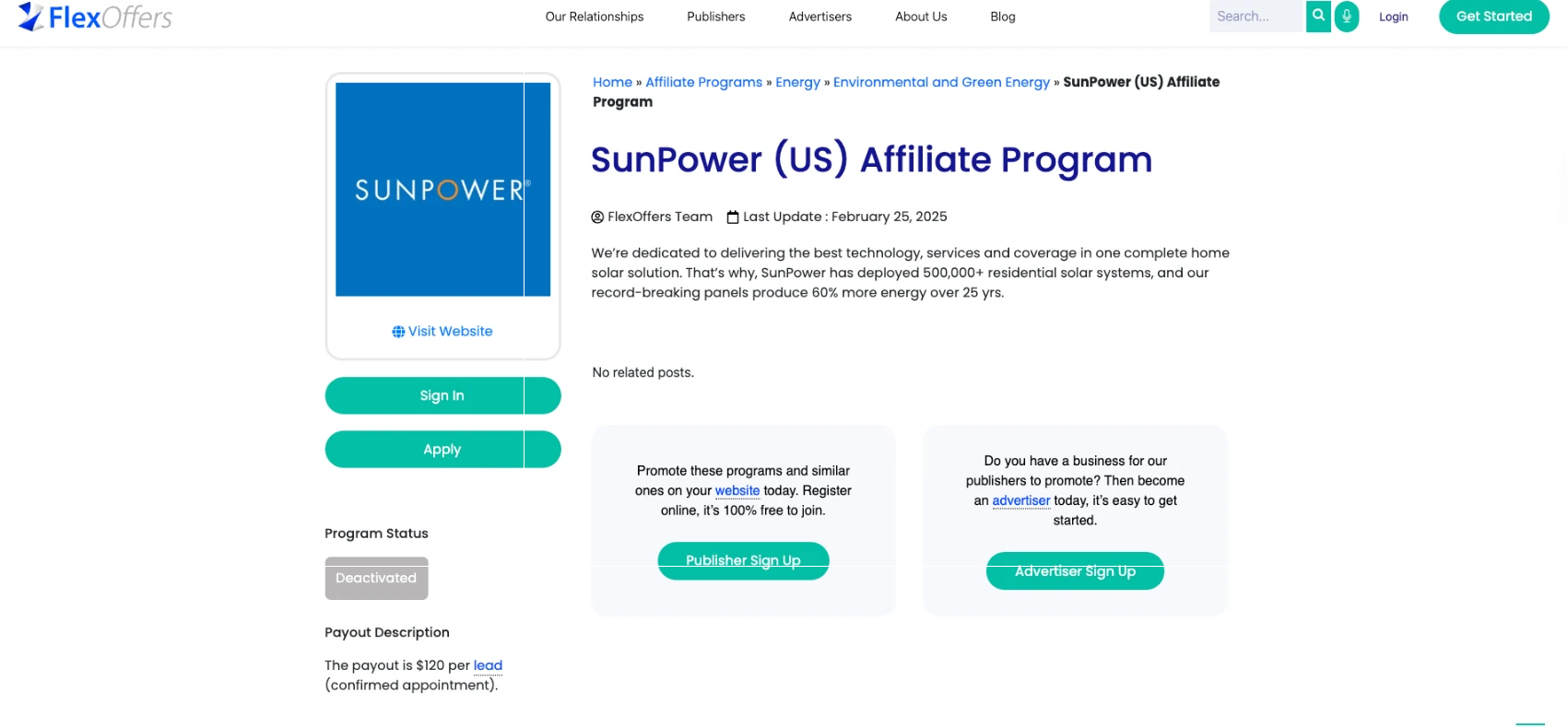
- Ideal Partner Type: Publishers, home improvement bloggers, sustainability advocates, B2B organizations.
- Payout Trigger: Qualified lead (confirmed appointment) or installation.
- Referral Bonus: $120 per lead.
- Quality Requirements: Homeownership confirmation, roof suitability, proper sun exposure, and credit check.
- Tracking Method: Managed via FlexOffers, a performance marketing platform, with the availability of a dedicated affiliate dashboard and unique referral links.
- Brand Rules: No trademark bidding without approval, no savings guarantees, use of SunPower-approved banners, logos, and other relevant creative assets.
Marketplaces and Lead Partners
In this case, the specialized lead generation companies in question generate qualified leads for multiple installers (shared leads) or for single companies (exclusive leads).
EnergySage Solar Marketplace Affiliate Program
- Ideal Partner Type: Publishers, bloggers, environmental websites, financial comparison sites, B2B content platforms, utilities, universities, NGOs, municipalities.
- Payout Trigger: Qualified lead.
- Cost-Per-Lead: $9.60 per lead.
- Quality Requirements: Valid contact details,
- Tracking Method: Tracking links, 45-day cookie duration, managed by FlexOffers.
- Brand Rules: Restricted brand keyword bidding, clear indication of EnergySage as a comparison platform, no guaranteed savings claims, and no branded microsites without approval.
Solar Reviews Partner Program
- Ideal Partner Type: Solar installers, content publishers, and affiliate marketers.
- Payout Trigger: Qualified lead.
- Cost-Per-Lead: $20-$100 per lead
- Quality Requirements: Valid homeowner data, geographic match to installer network, minimum electricity usage thresholds.
- Tracking Method: Cookies (60 days), dashboard, and monthly reporting.
- Brand Rules: No trademark bidding, no false comparison claims, accurate use of information.
Solar.com Partner Program
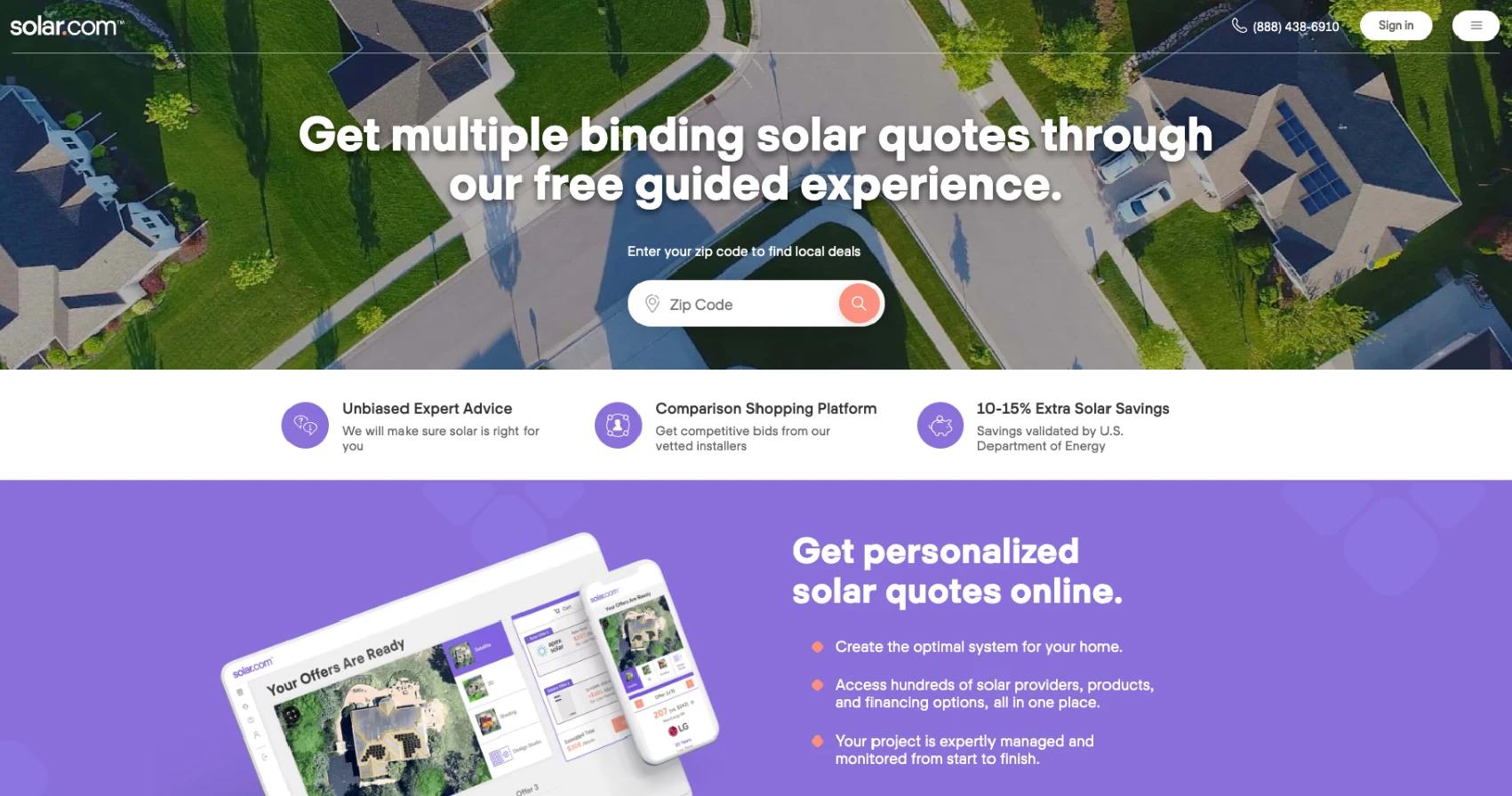
- Ideal Partner Type: Publishers, comparison sites, home improvement creators.
- Payout Trigger: Qualified lead.
- Cost-Per-Lead: Currently not listed.
- Quality Requirements: Homeownership verification, valid contact information, geographic availability, and roof suitability.
- Tracking Method: Real-time tracking.
- Brand Rules: No misleading information, no specific pricing claims, only ranges, no misleading domain names.
Equipment & Solar Kits (E-commerce)
Here we are dealing with companies selling solar panels, inverters, mounting systems, and complete DIY solar kits to homeowners and small contractors through online shops. Partners can earn a commission for referring customers who buy equipment.
Renogy Solar Affiliate Program

- Ideal Partner Type: Individual bloggers, publishers, influencers, content/blogging websites, coupon sites, deal sites, loyalty or reward sites.
- Payout Trigger: A finalized purchase.
- Commission Rate: 6% (average).
- Quality Requirements: Valid purchase, no fraudulent traffic.
- Tracking Method: Cookies, tracking links.
- Brand Rules: No odd or unknown coupon codes, only accurate product specs, no false promises.
GoalZero Affiliate Partner Program
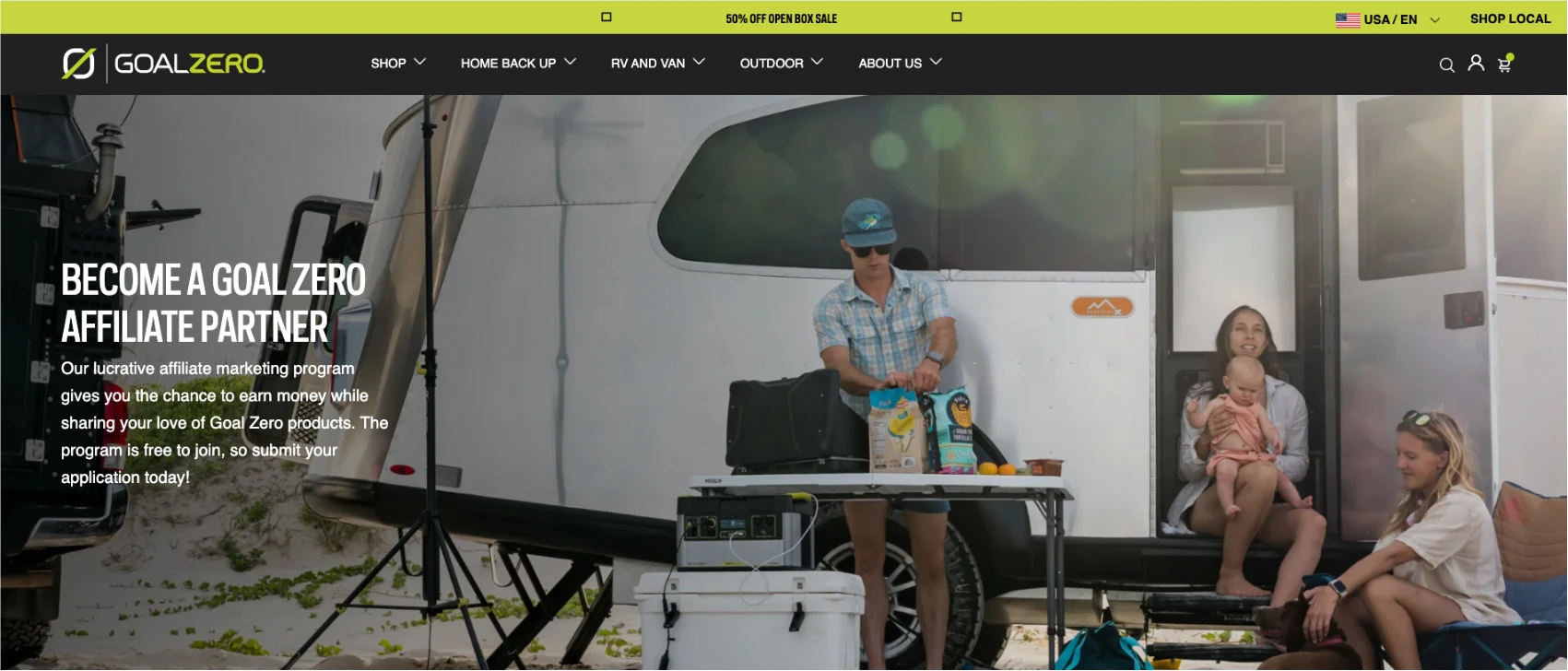
- Ideal Partner Type: Individual creators, businesses.
- Payout Trigger: Completed purchase.
- Commission Rate: Up to 10%.
- Quality Requirements: Valid purchase, no returns within the tracking period, quality traffic, authentic customer orders, and geographic market precision.
- Tracking Method: 30-day cookie duration, access to a dedicated affiliate account manager by Partnerize.
- Brand Rules: No unauthorized coupon distribution, no false product descriptions, access to a wide selection of banners, text links, and automated product feed.
Shop Solar Kits Affiliate Program
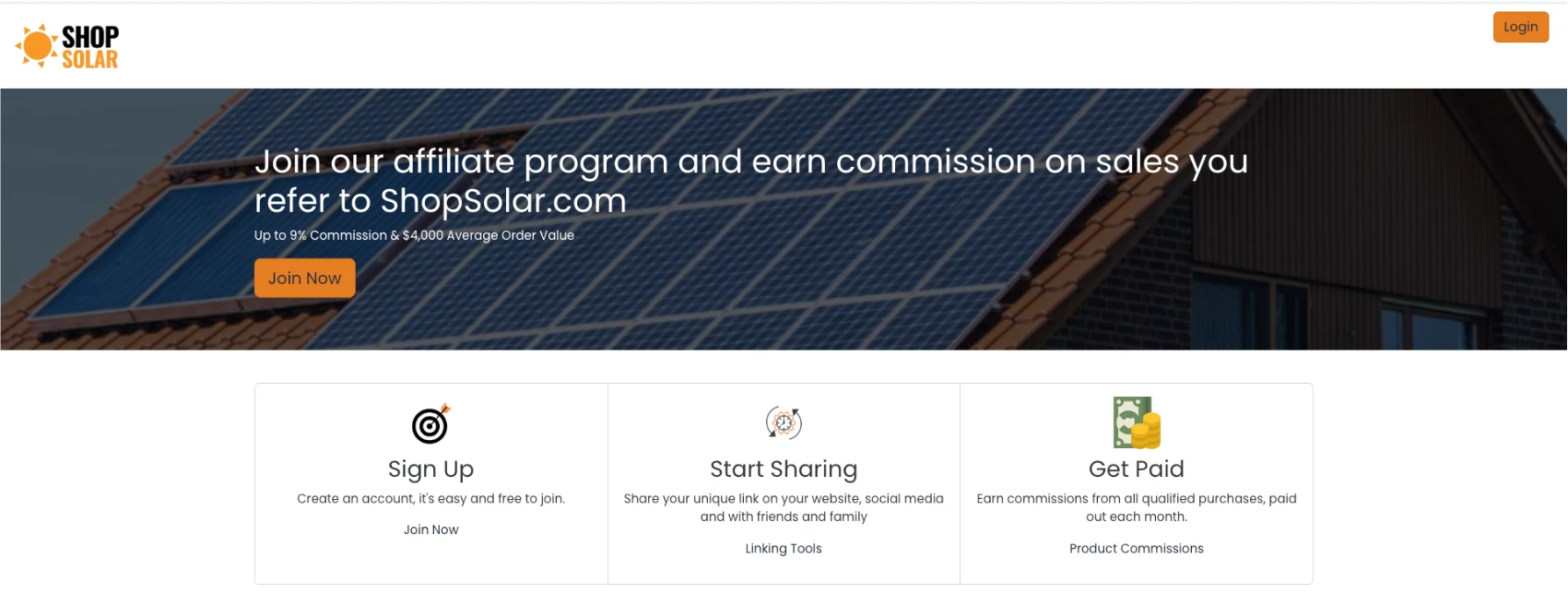
- Ideal Partner Type: Bloggers (RV and van life bloggers specifically), homesteading influencers, DIY publishers, emergency preparedness content creators, off-grid lifestyle vloggers, or YouTubers.
- Payout Trigger: Sale.
- Commission Rate: Up to 9%.
- Quality Requirements: Valid purchase, authentic customer orders, quality traffic, geographic availability.
- Tracking Method: Managed via the affiliate marketing platform Goaffpro, unique linking, and monthly payouts.
- Brand Rules: Accurate presentation of kit specs, wattage, and compatibility, no fake reviews.