“Design is not just what it looks like and feels like. Design is how it works.” - Steve Jobs
This distinction is especially critical for the highly competitive solar industry. Homeowners are now searching for solar services online, from researching to comparing different providers, checking financing opportunities, and requesting quotes.
Before they reach out to your sales team, they’re reading reviews and testimonials, exploring your past projects, and trying to understand your credibility.
As a result, your website becomes their first touchpoint, their first consultation, and the deciding factor between you and your competitors.
That’s why a solid web design for solar companies should go beyond aesthetics. Its main goal should be to create a simple, intuitive experience that will eventually turn visitors into qualified solar leads.
Key Takeaways
- Solar website design is a primary sales and trust-building asset.
- Proper visual hierarchy and the strategic use of size, color, and spacing direct visitors to your most important messages.
- Mobile-first design is a non-negotiable for solar websites.
- Professional and authentic photos of real installations and teams outperform stock images.
- Strategically placed and properly highlighted CTAs increase conversion rates.
- Consistent branding with a unique color scheme and cohesive elements makes your company memorable in a flooded market.
- Social proof and customer testimonials address trust issues around the major solar investment.
- Clean, modern design signals the use of advanced technologies and innovation.
Why You Need a Great Website Design to Power Solar Business Growth
It’s no news that solar is a high-ticket, long-term investment. Customers need time to make such a life-changing decision.
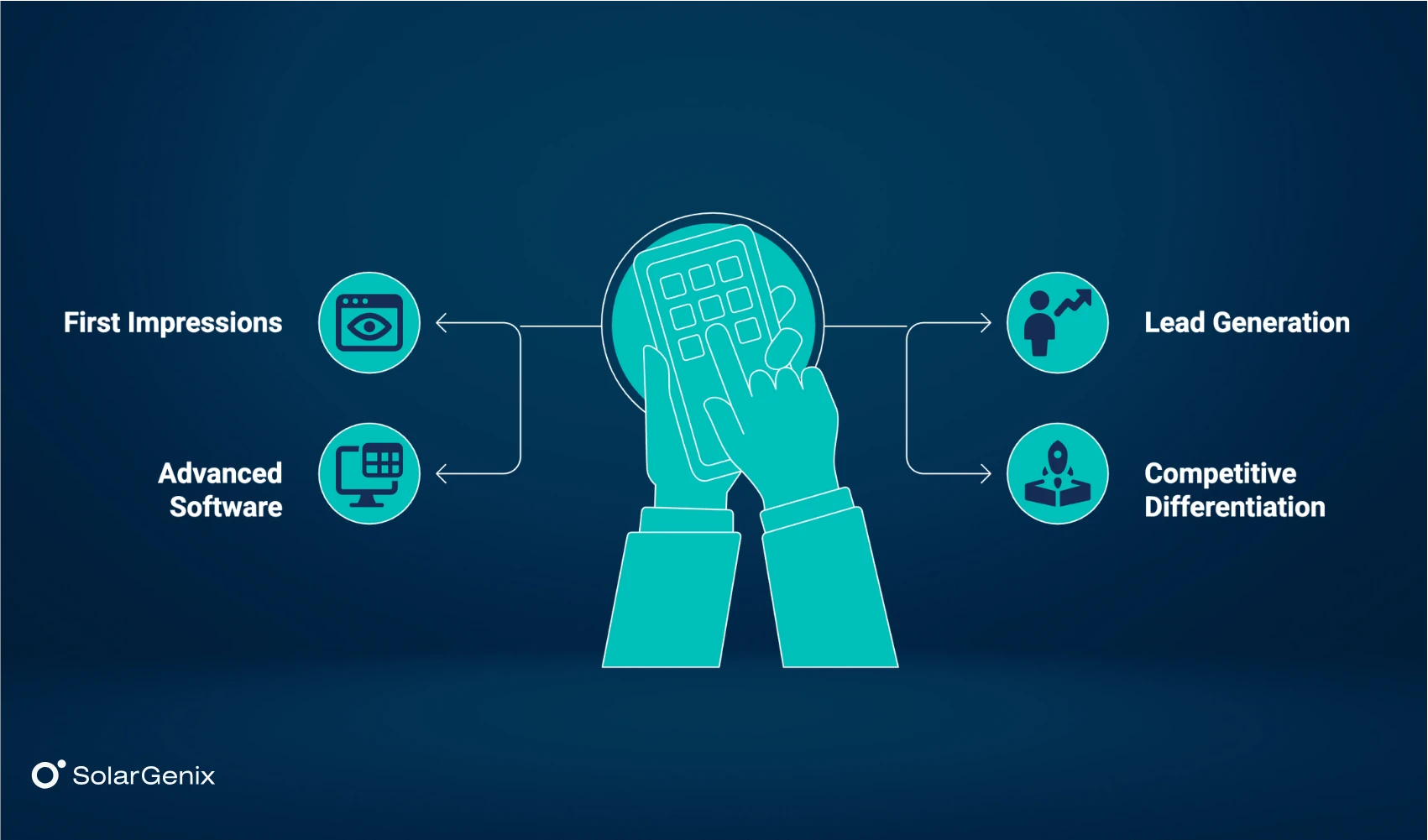
It’s also well-known that 94% of first impressions are related to web design. It takes users 50 milliseconds to form an opinion about your website. This is the time you have to make a visitor want to stay or leave.
A slow and cluttered website won’t do you any good. What you need is a solar web design that signals reliability, innovation, professionalism, and expertise.
Web design has a substantial impact on solar lead generation. The best solar websites convert 3-5 times higher than competitors with poorly designed websites.
You can use advanced solar design software to show real project simulations, production and savings estimates, and system layouts on your website. Giving visitors the opportunity to see what their roof might look like with panels, along with accurate estimations, your website becomes both informational and persuasive. At the same time, you’re able to capture qualified leads that are genuinely interested in your services.
And finally, solar web design is also important for competitive differentiation. The market is currently crowded with solar providers. Your website design is one of the ways that can help you stand out, display your unique value, and create a memorable image that sticks with your potential customers.
Web Design Tips for Developing a Successful Solar Website
Below we’ve gathered a list of proven strategies for creating the best solar energy website design - one that attracts, engages, and converts visitors.
Create a Clear Visual Hierarchy
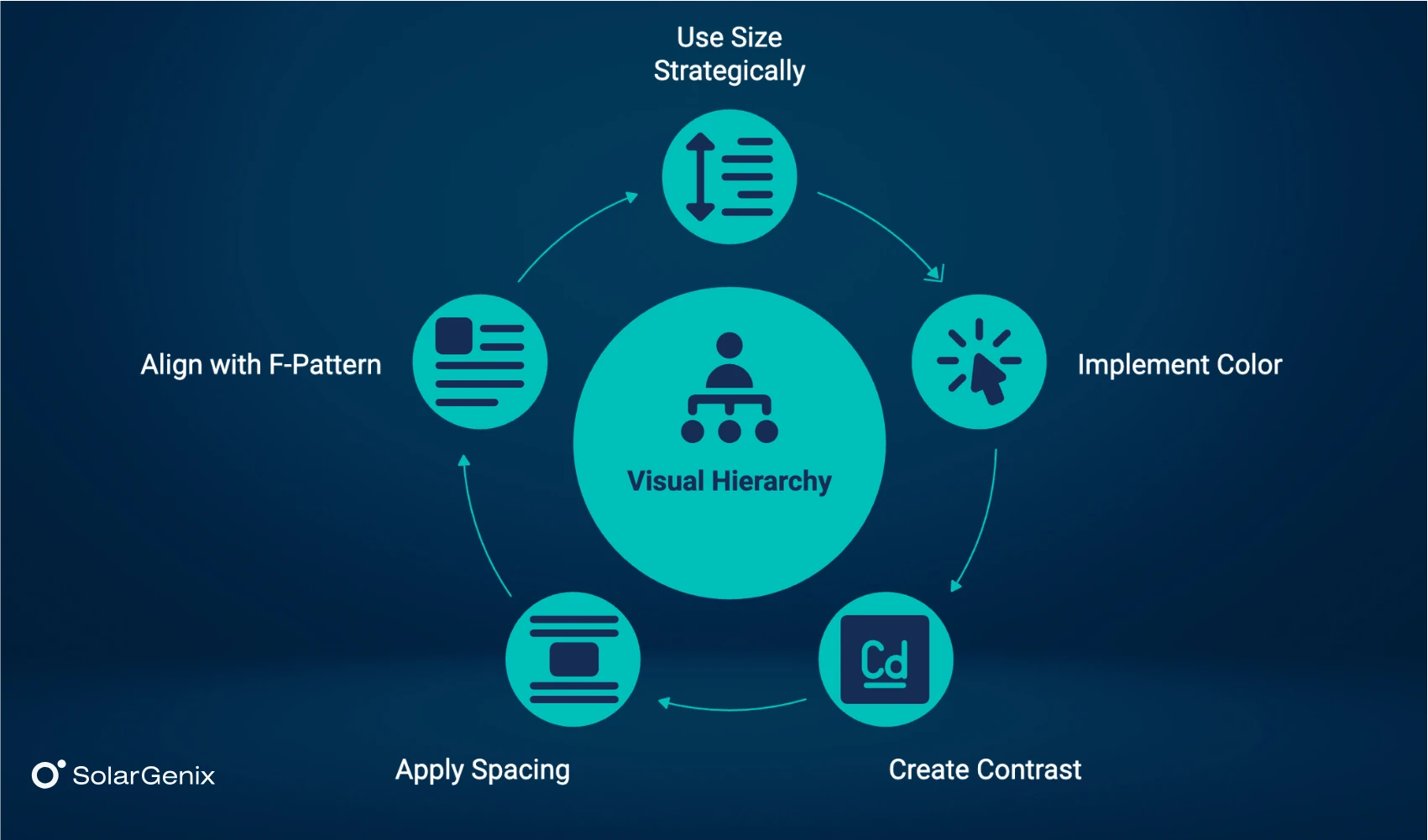
The arrangement and presentation of elements on your website make up its visual hierarchy and guide visitors’ eyes to the most important information.
To create the right visual hierarchy for your solar website, it’s crucial to use size, color, contrast, and spacing strategically in order to build a clear path through your content and highlight what matters most.
The majority of website visitors follow the F-pattern where eyes move across the top of the page, down the left side, and across again partway down. Make sure your solar web design matches this natural pattern: place critical information such as your core services, value proposition, savings benefits, and contact options in places where they’re easiest to notice.
Make your headline your largest element, implement proper subheadings, and body text. Use color on priority buttons, while at the same time, leaving breathing room with white space to separate different sections.
Set Unique Brand Elements and Color Scheme
Branding is what makes you recognizable and sets you apart from your competitors. Make your logo, typography, and color palette feel intentional and consistent across your website and other marketing channels and materials.
Color psychology is especially important in solar website design. Blue shades often mean professionalism and trust, greens convey environmental impact and sustainability, bright colors like orange and yellow represent solar energy itself, and can be great in making your CTAs stand out.
Don’t use pre-made solar templates (unless you’re on a tight budget) that everyone else is already using. They don’t reflect your company’s uniqueness.
Design a Clean, Modern Website that Reflects Your Brand
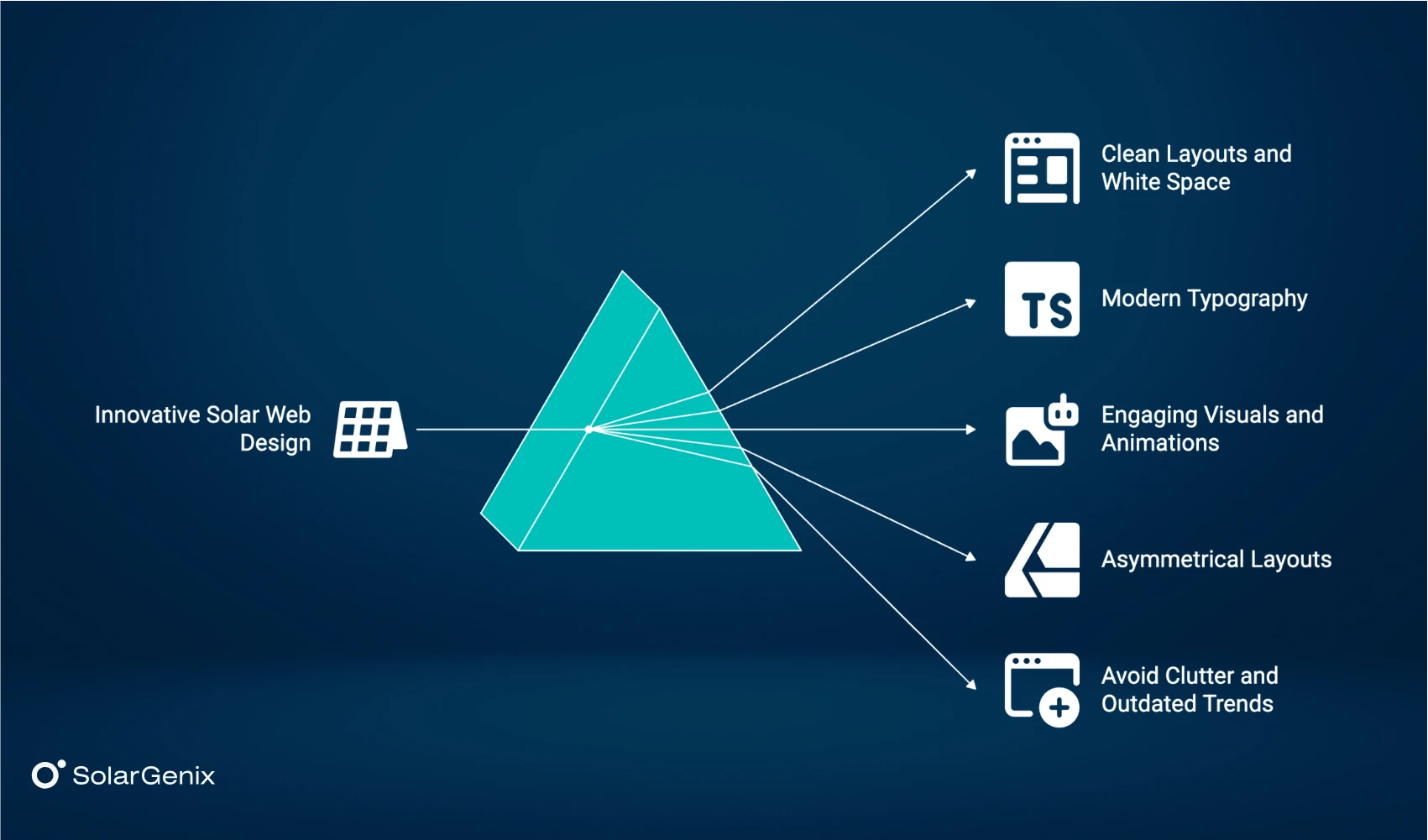
Web design for solar companies should feel innovative - just like the technology you install. Keep your layouts clean and leave just enough white space for your content to breathe instead of being overwhelming.
Use modern typography, like sans-serif fonts for body text and distinctive choices for your headlines, for better readability.
Don’t distract visitors with too many elements. Let every detail serve a purpose. Go for bold, high-quality hero images or videos that display your work, card-based layouts built around easily scannable content blocks, and subtle animations that engage users without any tricks.
Modern websites sometimes use asymmetrical layouts to add visual interest without going over the top.
There are a few things that can easily harm your solar web design, and we highly recommend avoiding them:
- Cluttered pages
- Outdated design trends, e.g., excessive gradients or drop shadows
- Auto-playing background videos that slow down load times
- Too much use of stock images of solar panels
Your website design should feel fresh and engaging, not overloaded and difficult to navigate.
Adapt the Design for the Mobile
Mobile devices account for 62.54% of global website traffic. This number is expected to grow steadily in the coming years, making it imperative for businesses to adapt their website design for smartphones and tablets.
Many solar providers use responsive design, which automatically adapts their websites to different screen sizes.
However, the best solar websites go beyond technical responsiveness. They also include:
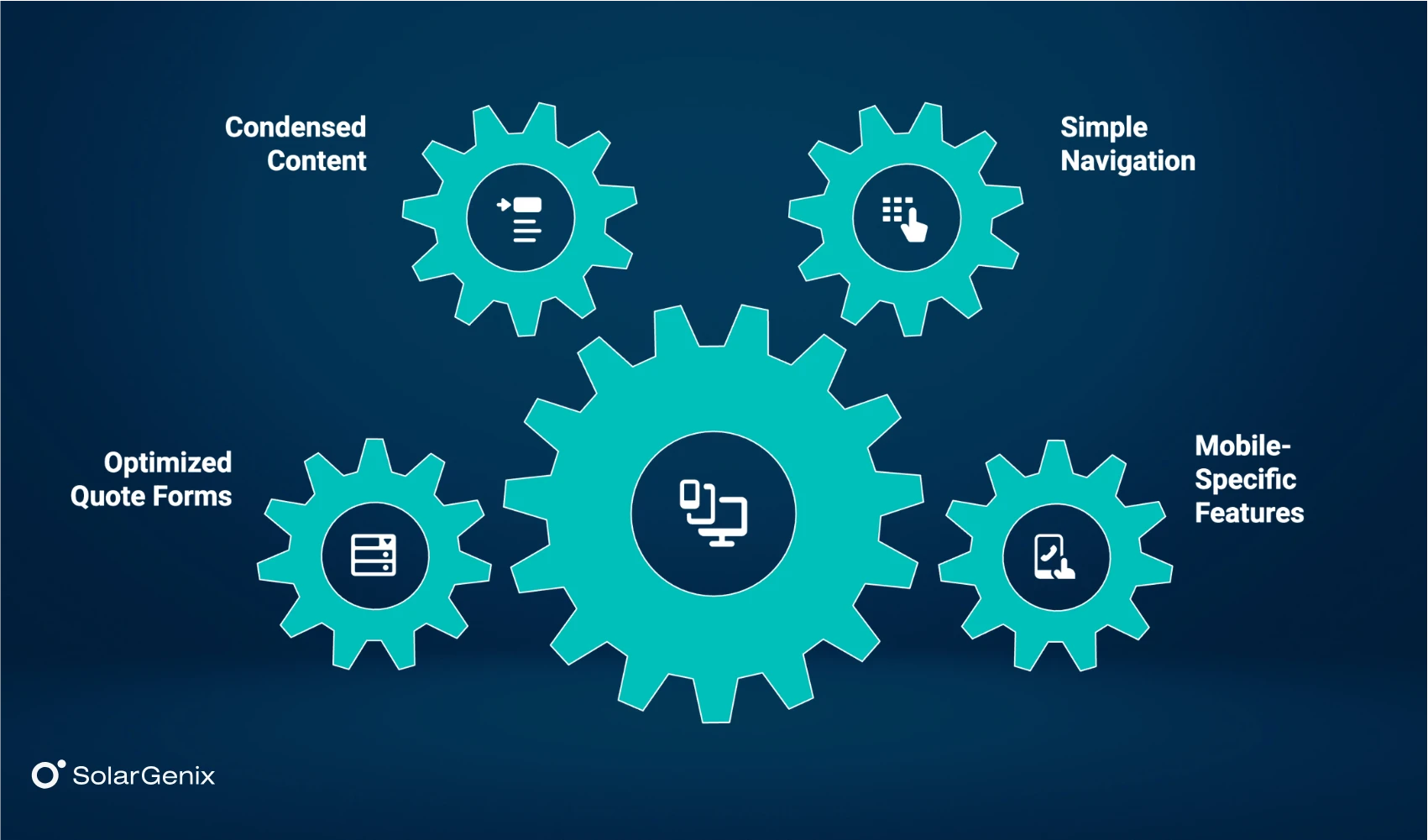
- Mobile-specific features like click-to-call buttons are displayed prominently for quick contact.
- Simple navigation menus that work with thumbs.
- Condensed content that delivers the most important information without the need for endless scrolling.
- Mobile-optimized quote forms with large, touch-friendly input fields, minimal information requirements, and auto-fill capabilities.
To achieve the best quality, test your solar energy website design on actual mobile devices and make sure that buttons are easily tappable, text is readable, images don’t take ages to load, and that the overall experience feels simple and smooth.
Converting mobile traffic should be your priority because mobile users usually have higher intent.
Use Professional Photography
Real-life, authentic visuals of your installations and your team build trust and create connection and credibility that stock images cannot achieve.
Here are a few types of photos that can essentially enhance web design for solar companies:
- Completed installations that show different roof types and angles
- Before-and-after comparisons
- Aerial or drone shots
- Installation teams in action
- In-house staff
- Satisfied customers with their new systems (only with permission)
When you display local project photos in familiar environments and surroundings, your visitors see that you serve their area and are familiar with all the regional nuances, from weather patterns, architectural styles, to permitting regulations. Stock photography cannot match this level of relevance.
Invest in professional photoshoots or use high-resolution images that have proper lighting, composition, and editing. Blurry images done from your smartphone will damage your company's credibility.
Include photos that show your company's differentiators: equipment, installation techniques, or premium products.
Add Customer Testimonials
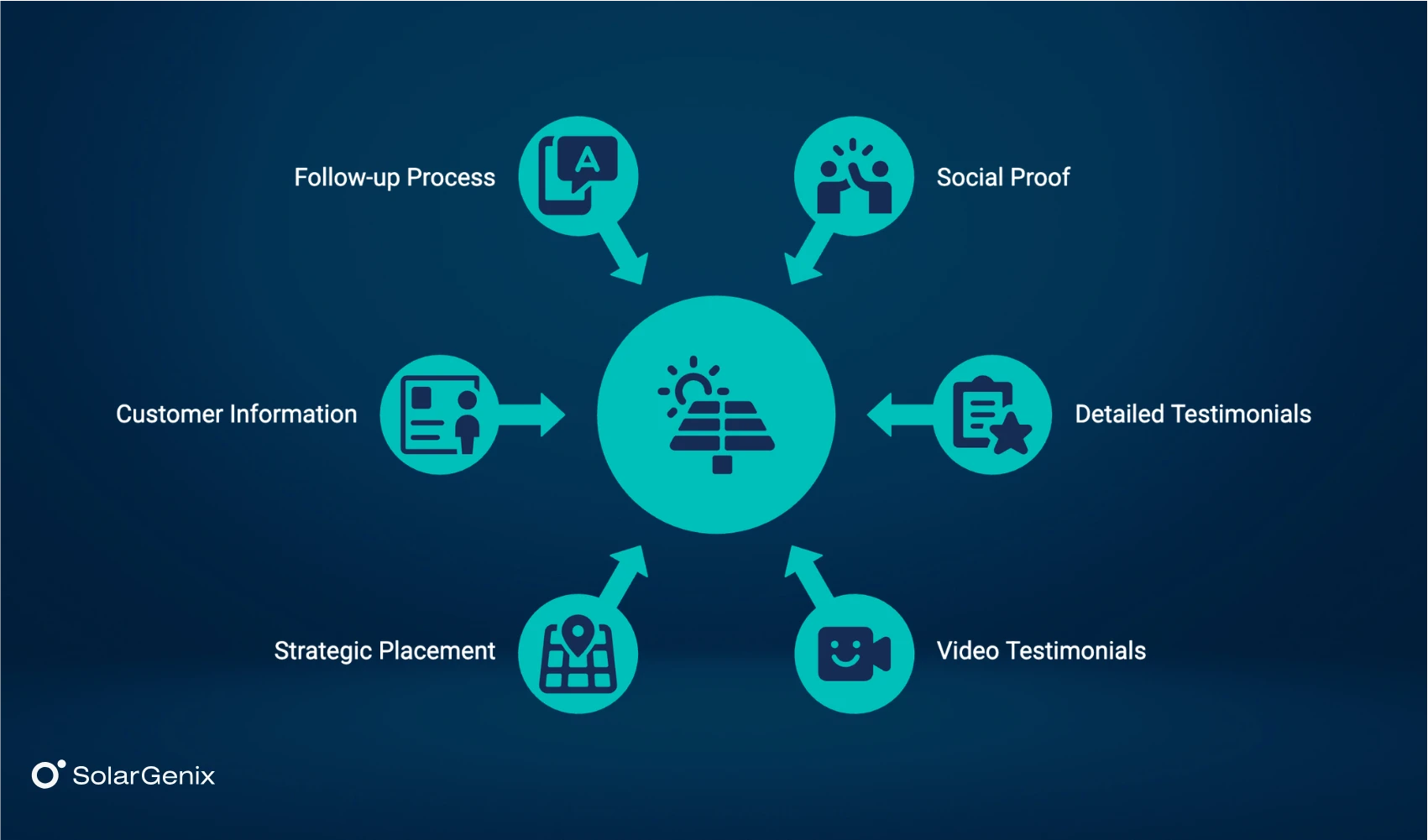
Social proof is of utmost importance when it comes to solar. Customer testimonials reassure your visitors that your company is real and that others have used your services and had positive outcomes.
When gathering testimonials and reviews, try to get as many details as possible:
- Actual savings amounts
- Installation process experience
- How long they had the system
- What they liked while working with your company
Video testimonials can have a bigger impact because they are difficult to fake and build a stronger emotional connection.
Keep in mind to place your testimonials strategically. Make them visible on your homepage, have them integrated into your services pages, and include them near quote forms.
Remember that the best solar websites incorporate social proof throughout the entire user journey.
Include customer names, locations, and photos when possible.
Follow up with every completed project to collect testimonials. Make the process easy for happy customers to share their experiences via simple forms or video calls.
Use Strategic Placement of Quote Forms
Lead capture forms should be easy to find without overwhelming visitors who need more information first.
The most common high-performing locations for lead capture forms are:
- Hero section
- Mid-page (after value explanations)
- Near the footer
When designing forms, make sure to:
- Use clear labels
- Provide context for why you need the required information
- Include trust signals like “We value your privacy” or security badges
- Use action-focused button language, e.g., “Get My Free Quote”
As already mentioned, don’t forget to optimize your lead capture forms for mobile devices to improve form completion rates.
Incorporate CTAs into Layouts to Direct Visitors Toward Actions
CTAs are what urge users to take action and engage with your content. They can help you move your prospects through the lengthy solar sales funnel.
Effective CTAs for solar web design use action-oriented language with a focus on benefits instead of processes, such as “Start Saving on Energy Bills” rather than “Contact Us”, or “See Your
Potential Savings” rather than “Submit Form.” These CTAs work because they align with your customers’ goals.
We’ve made a quick list of best practices for solar CTAs:
- Use contrasting colors to make them stand out from other texts.
- Keep consistent CTA styling across your website.
- Include CTAs at decision points in longer pages so users don’t have to scroll back to find them.
- Use different types of CTAs for different visitors, e.g., “Get Your Free Quote”, “Download a Free Solar Guide,” or “Calculate My Savings.”
- Test CTA language, colors, and placement regularly.
Best Solar Website Examples and What They Do Well
Let’s now look at a couple of examples that illustrate strong web design for solar companies and can provide inspiration for your website.
Sunrun: Website Design for a Local Residential Installer
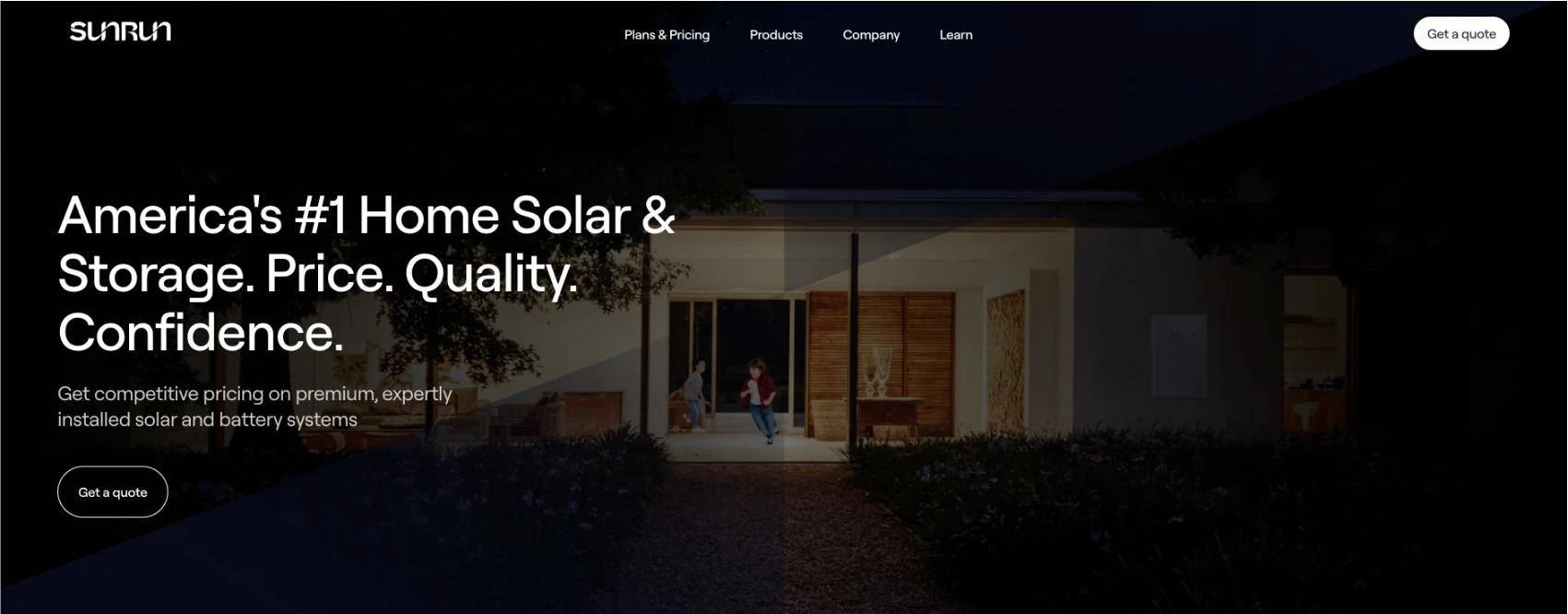
With 19 years in business, Sunrun is an American provider of PV systems and battery energy storage systems for residential customers.
The company’s website features effective solar web design with its smart use of visual hierarchy, mobile optimization, and a minimalistic approach.
Here’s what catches the eye right away:
- The homepage clearly reflects the company’s primary offering: home solar and battery systems.
- Right after, we can see the prominently placed CTA button - “Get a Quote” - and a simple form that guides users toward action.
- The page is structured with clear headings and short, scannable sections that represent the subscription plan overview, unique value propositions, the company’s mobile app, testimonials, and awards.
- The page also includes supporting content, such as the FAQ section and links to other important pages.
- The layout is mobile-friendly and easy to navigate.
The rest of the pages follow a similar logic: clear messaging, conversion-focused quote forms, trust elements, and educational content.
Sunrun is a solid example of what a solar website design should look like and how it should work.
TRC Companies: Website Design for a Commercial Installer
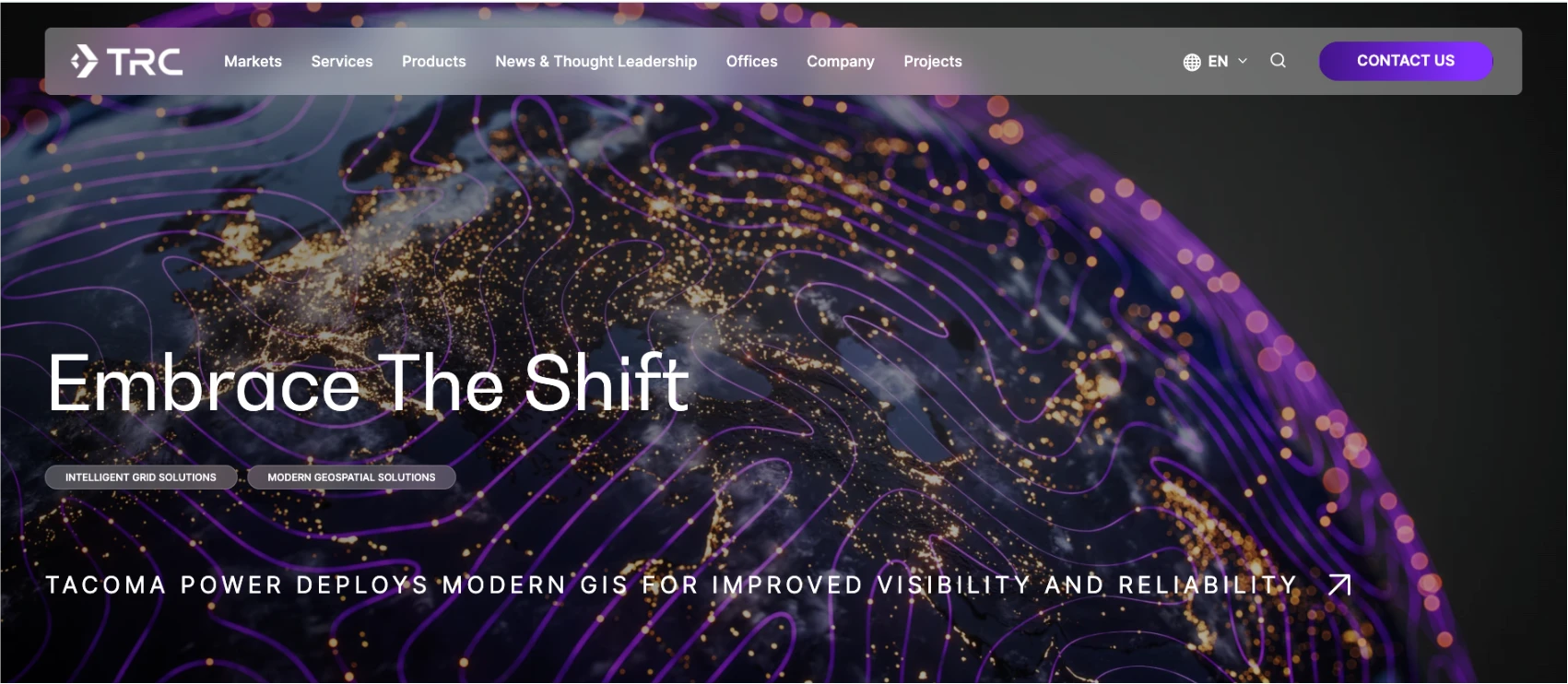
TRC Companies is a leading national engineering and consulting company providing services across the environmental, power, infrastructure, and energy sectors.
The company has been in business since 1969 and provides end-to-end PV system design and engineering services with an emphasis on commercial and utility-scale solar projects.
- The website has a well-structured top navigation with a clear distinction between Markets and Services.
- The main banner uses compelling language (“Embrace The Shift”) and aligns with the company’s brand identity.
- The homepage offers several types of CTAs: “Explore All Services”, “View Our Full Gallery”, and “Contact Us.”
- TRC provides a plethora of services, and it can get quite overwhelming if you don’t know what you’re looking for. This is why the company uses engaging images and condensed labels to make the lengthy list feel manageable.
- The use of industry-relevant photos supports the website design.
The website might come across as too technical with lots of information; however, since it's targeting commercial clients, that level of detail only reinforces the company's credibility and proves their extensive expertise.
EDF Renewables: Website Design for an Industrial Installer
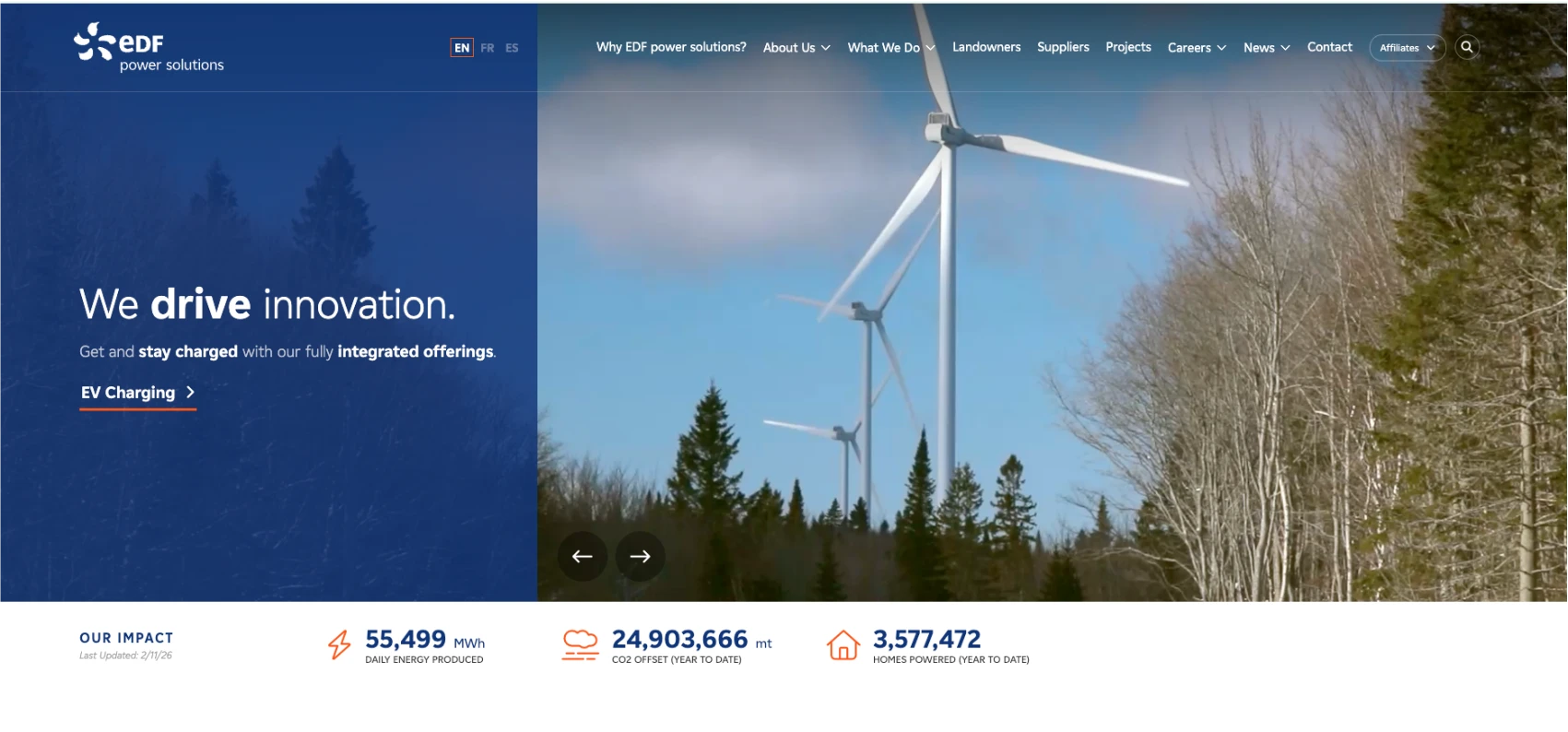
EDF Renewables is a major industrial-scale solar company that’s been leading the renewable energy sector since 1987.
They provide solar, onshore and offshore wind, storage, EV charging, and asset optimization services for large-scale projects.
The company’s website stands out thanks to several factors:
- The homepage communicates the company’s mission right away, mentioning sustainable and low-carbon energy solutions.
- The high-quality video strikes the eye and makes the website look professional and attractive.
- The menu is structured clearly: About, What We Do, Projects, Contact Us, etc.
- The main services are displayed on the homepage along with professional photos that make you want to learn more.
- The display of real data (energy produced, CO2 offset) builds trust and credibility.
- The content is easy to scan thanks to the clean and modern layout and consistent typography.
- And again, it offers mobile friendliness that’s so important in solar website design.
SunShare Community Solar: Website Design for a Community Solar Installer
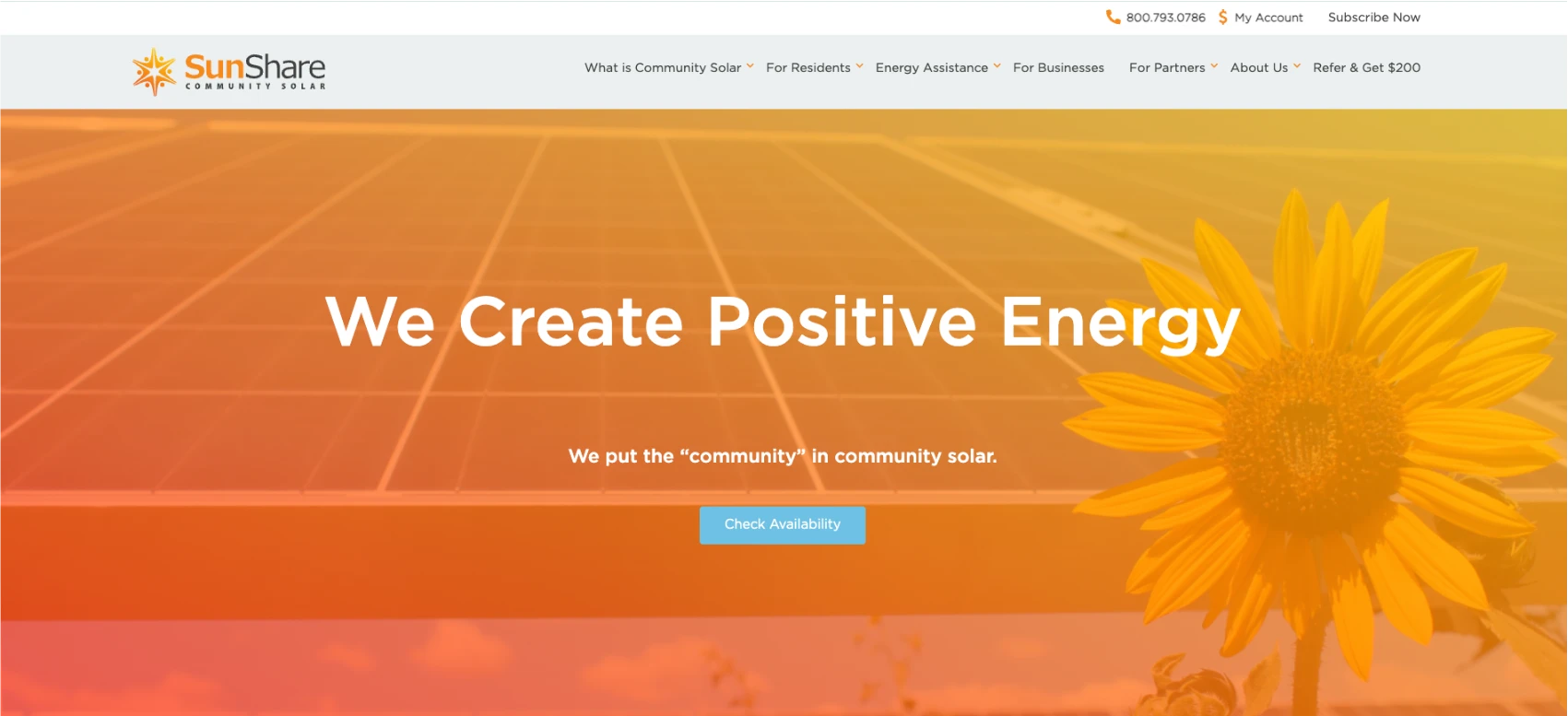
SunShare Community Solar develops, owns, and operates community solar gardens. Founded in 2011, the company aims to provide renewable energy solutions to everyone who can’t or doesn’t want to install solar panels on their roof.
SunShare buys or leases land from local farmers, builds community solar gardens, and allows its customers to subscribe to a portion of the energy produced by these gardens.
The company offers a simple and minimalistic website design:
- Clear mission right at the top of the homepage.
- A CTA button (“Check Availability”) that takes the user to a simple form with minimal fields to check whether they qualify for a community solar energy plan.
- Organized content sections: Who We Are, What We Do, Who We Serve, etc.
- A clear navigation menu with separate pages for residents, businesses, and partners.
- Testimonials and supporting content for different audiences, from renters to homeowners and landowners.