Did you know that the global capacity of renewable energy sources is predicted to increase by over 100% by 2030? And solar PV is responsible for nearly 80% of this global increase.
Moreover, in over 80% of countries, the clean energy capacity will increase much faster between 2025 and 2030 than it did in the past 5 years.
This means that solar companies are in for a competitive, yet promising ride - one which cannot be a success without a solid solar marketing strategy. Homeowners are now more informed than ever. They expect a simple and transparent journey, from the first time they click on your offering to the final proposal.
With the fast development of digital marketing channels, tools like solar design software have become almost a lifesaver for solar providers. They help create accurate system layouts and fast proposals with branded designs that build immediate trust with your clients.
All you need is a smart marketing approach to attract qualified leads and stand out in today’s competitive environment.
In this article, we’ve collected some of the most effective solar marketing strategies that will help you grow your business sustainability in 2026 and beyond.
Key Takeaways
- Solar providers depend on a clear, data-focused marketing strategy to stand out in today’s competitive landscape.
- Local SEO and online visibility help solar companies capture high-intent leads.
- Reviews, testimonials, and transparent pricing play an important role in increased conversions.
- Paid ads, content marketing, and social media should be used in combination to reach customers at different stages of their buying journey.
- Free consultations and educational content offer exceptional lead-nurturing opportunities.
- Marketing performance can be improved through tracking important metrics, like cost per lead, conversion rates, and customer lifetime value.
- Traditional marketing is still relevant when done strategically.
Why is Marketing Essential for the Growth of Solar Companies?
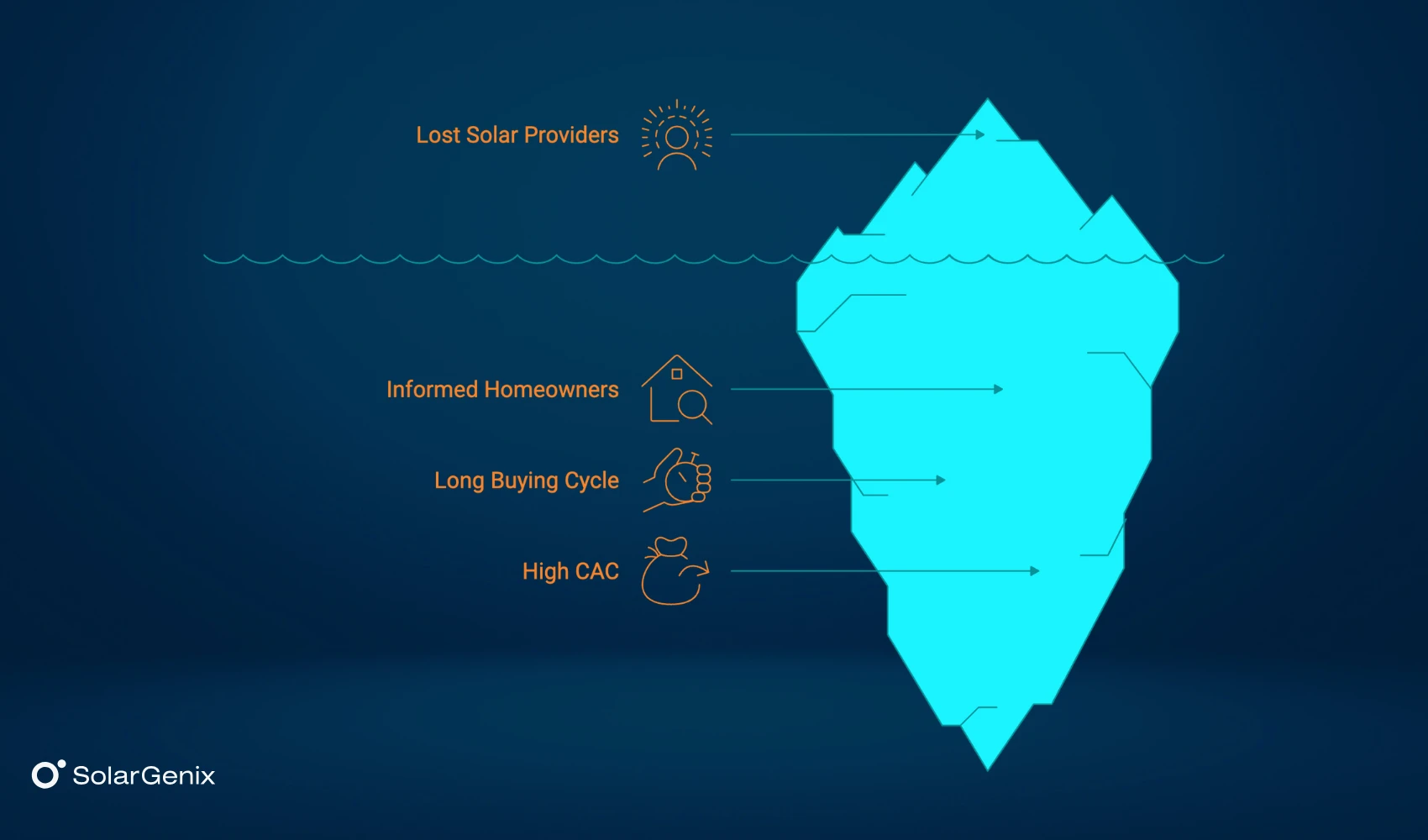
The solar industry is currently experiencing explosive growth, with residential solar installations becoming more commonplace than ever. With the rise of environmental awareness, along with government incentives and net metering policies, solar has become more accessible than ever.
At the same time, this growth has also brought along new challenges, which make it critical for solar companies to learn how to market solar panels properly.
- Tougher Competition: From national and regional installers to local contractors, they are all targeting the same customers. Without an effective solar marketing strategy, even the most experienced solar providers will get lost.
- More Informed Homeowners: Homeowners are now researching multiple solar companies before they come to a final decision. On average, they contact 3-5 providers, compare prices, read reviews, research equipment options, and financing opportunities. If you have a poor online presence, they won’t even consider you at this stage.
- Long Buying Cycle: The solar sales cycle usually lasts from 3 to 18 months. It’s not an impulse buy and requires careful planning. And if you want a potential customer to eventually buy your product, you need to be there for them all along and maintain communication throughout the whole period.
- High CAC: Customer acquisition costs (CAC) in solar fall somewhere between $2000 to $4000 per customer. No one wants to pour this much money down the drain. Effective solar panel marketing can essentially reduce CAC. It helps you target the right audiences, improve conversion rates, and boost your ROI.
On a different note, customer preferences regarding sales approaches are also changing. While the traditional door-to-door sales still have a place in solar marketing, younger homeowners prefer to research and contact providers online.
Top 13 Marketing Strategies for Solar Companies to Successfully Market Their Products and Services
First, Understand Your Product
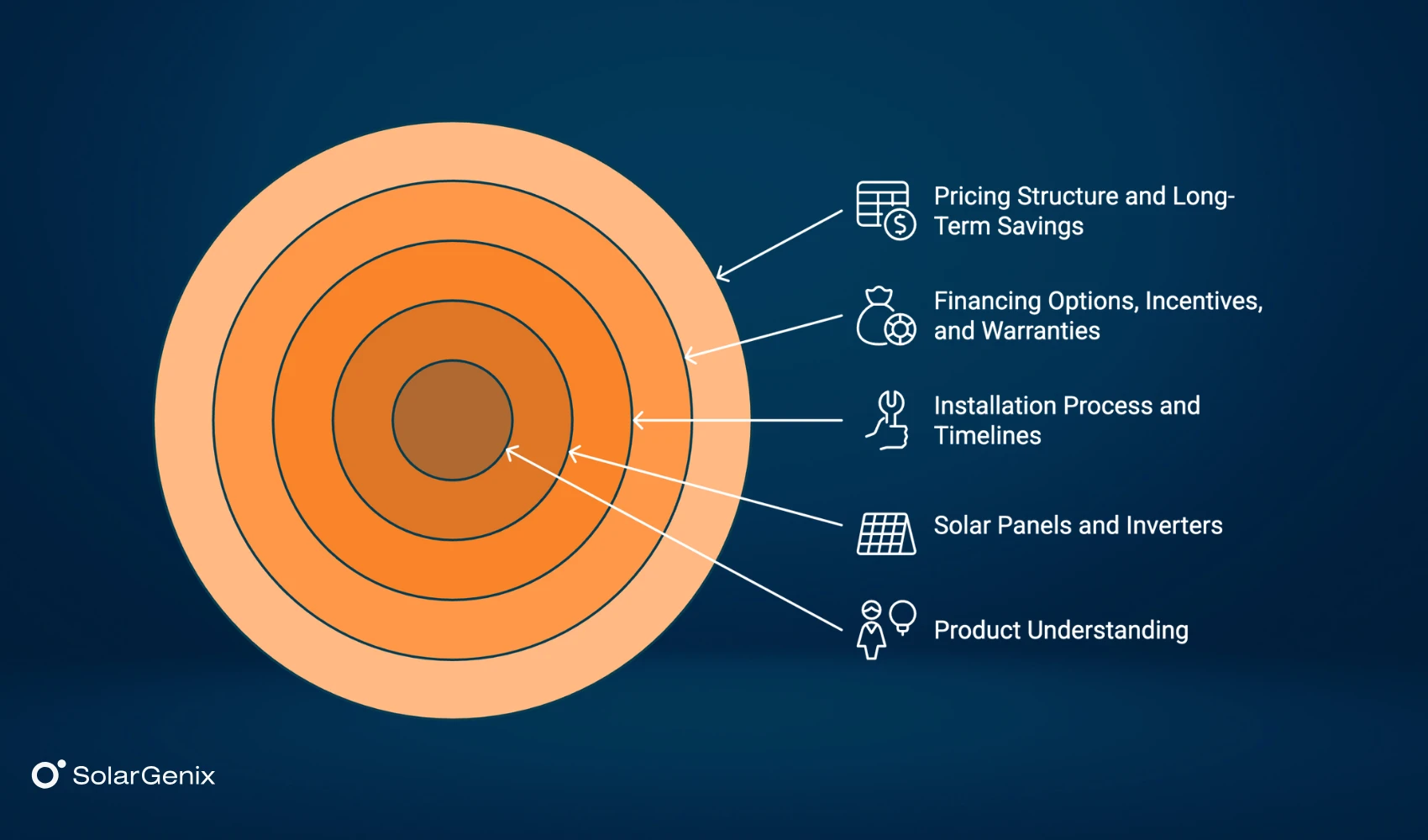
Before anything, you need to fully understand your product; otherwise, you can’t explain how it works to your customers.
Understanding your product includes:
- Types of solar panels and inverters you offer
- Installation process and timelines
- Financing options, incentives, and warranties
- Pricing structure and long-term savings
- Possible collaborations your company offers, e.g., with roofing contractors
When you know your product, you are able to build a solar marketing strategy that is accurate, educational, and persuasive.
Conduct Thorough Market Research to Know Your Competitors
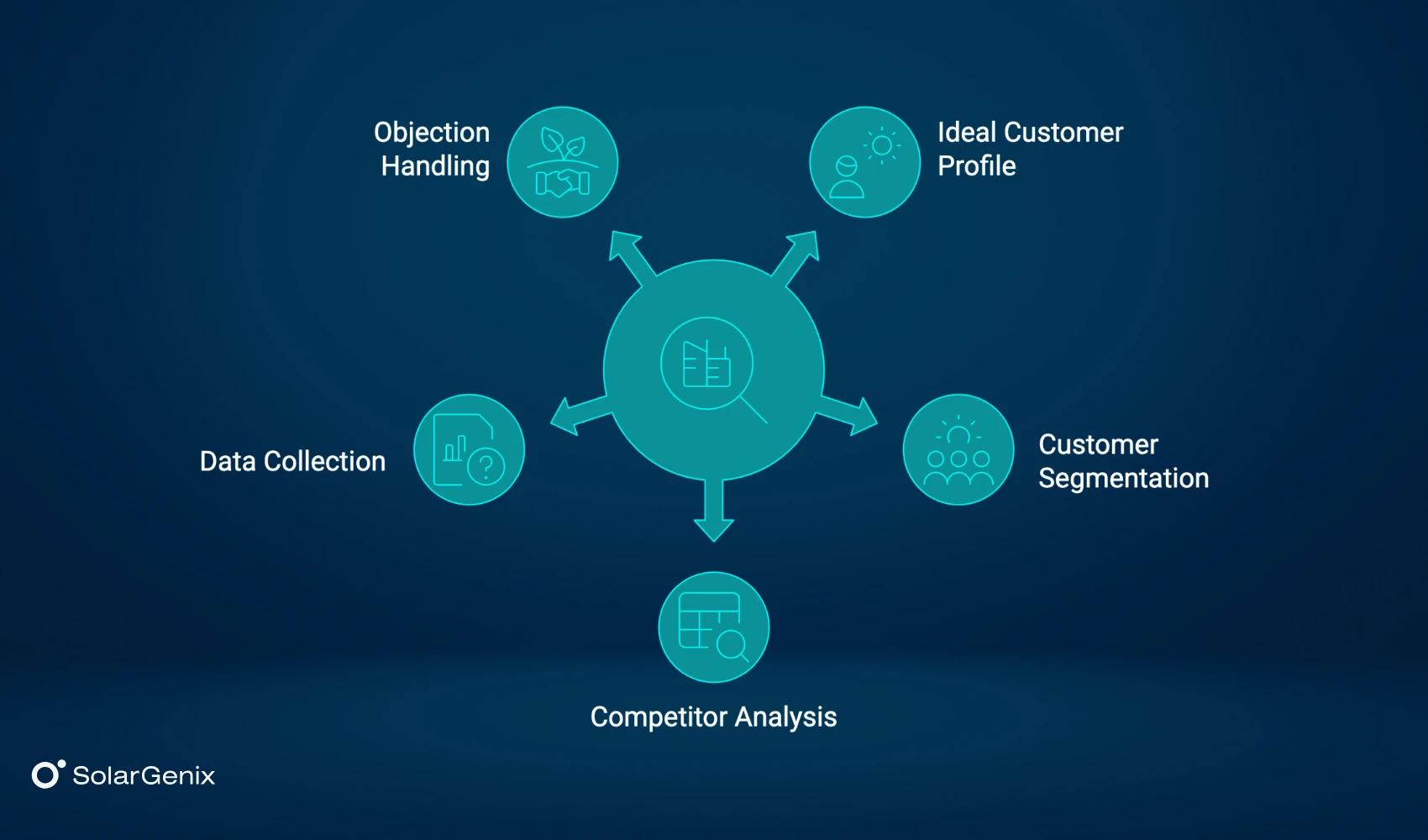
Marketing for solar companies starts with research. You need to know your target audience and your competitors.
First, research your ideal customer. Who are they? Identify your ideal customer profile. As a rule of thumb, solar customers are homeowners with essential roof space, significant electric bills that can justify investing in solar, and the needed finances to buy the system.
Another thing to consider is that there are different types of solar customers: environmentally conscious millennials, cost-focused retirees, or high-income families who want to increase home value. Each type requires a different approach.
To better understand how to target these different groups of prospects, conduct surveys, analyze your existing customer base, and evaluate demographic data for your service area. Learn how to address objections regarding costs, roof compatibility, and aesthetic considerations.
Afterwards, study your competitors. See who else is marketing solar panels in your area. Check their websites, social media, and try to even contact them as a customer to understand their sales process. Where do you see gaps in your solar marketing strategies in comparison to theirs?
From pricing to customer reviews and unique selling propositions, analyze it all. Use SEMrush or Ahrefs to determine the keywords they are targeting and the paid ads they are running. Collecting such competitive intelligence helps you improve and be able to differentiate your company in the market, as well as to find underserved customer segments.
Identify Your Unique Selling Points
What is it that makes you stand out? Your unique selling points (USPs) are the benefits and characteristic features that make your solar company better than others. These are the reasons potential customers want to choose you over your competitors.
There are several common differentiators you can use in your solar marketing strategy:
- Competitive pricing or flexible financing opportunities
- Faster installation
- Exceptional and human-centered customer service and post-installation support
- Premium equipment or longer warranties
- Handling of complex roofs, other companies choose to bypass
You can also add USPs related to your company values and story. Maybe you have deep community roots, or you employ only certified electricians who have solar training. Use every string you can to show the best sides of your company.
Once you know your USPs clearly, you can go ahead and incorporate them into your solar marketing strategies. Show them on your website, in your ads, social media posts, and in your sales pitches.
When communicating your USPs to prospects, make them relevant. “We use comprehensive CRM tools” doesn’t really interest a homeowner. On the other hand, you can say: “We respond to every inquiry within 15 minutes.” This way, you address a pain point and position yourself as a responsible and trustworthy company.
Use Digital Advertising to Reach Your Target Audience
Online paid advertising is one of the most powerful tools in digital marketing for solar companies. Digital ads allow you to target specific audiences, track real-time performance, and improve based on the results.
There are plenty of digital advertising methods you can choose from.
Google Ads come first. When people search for “solar installation near me” or “how much does solar cost,” you want your company to appear at the top.
An important note: create campaigns that target both short- and long-tail keywords, e.g., “solar panels” and “solar panel installation in [your state/city].” Make sure your phone number, location, and links to important pages are all clearly included in the ad.
Facebook and Instagram ads help you reach people who are not yet looking for solar but still meet your ICP features. Create ads via targeting based on demographics, interests, behaviors, homeownership status, and even major life events, such as a home purchase.
It should be noted that these targeting options are also available for Google Ads.
In case of Facebook and Instagram ads, make sure to create visually strong ads that include your past installations, customer testimonials, and special offers. You can even use Facebook’s Lead Ads tool to gather contact details right on the platform.
Additionally, run retargeting campaigns to stay top of mind with people who have visited your website but haven’t converted.
LinkedIn advertising is also an important marketing tool for solar companies. However, it’s mostly for targeting commercial solar audiences. It’s also a great way to partner with roofers, electricians, and other companies who could connect you with homeowners.
Regardless of the advertising channel you use, make sure to test your ad copy, from messaging to images and CTAs. This will help you improve performance over time. Set clear goals so as to be able to track and measure the effectiveness of your ads.
Optimize Your Website with Local SEO to Attract Nearby Customers
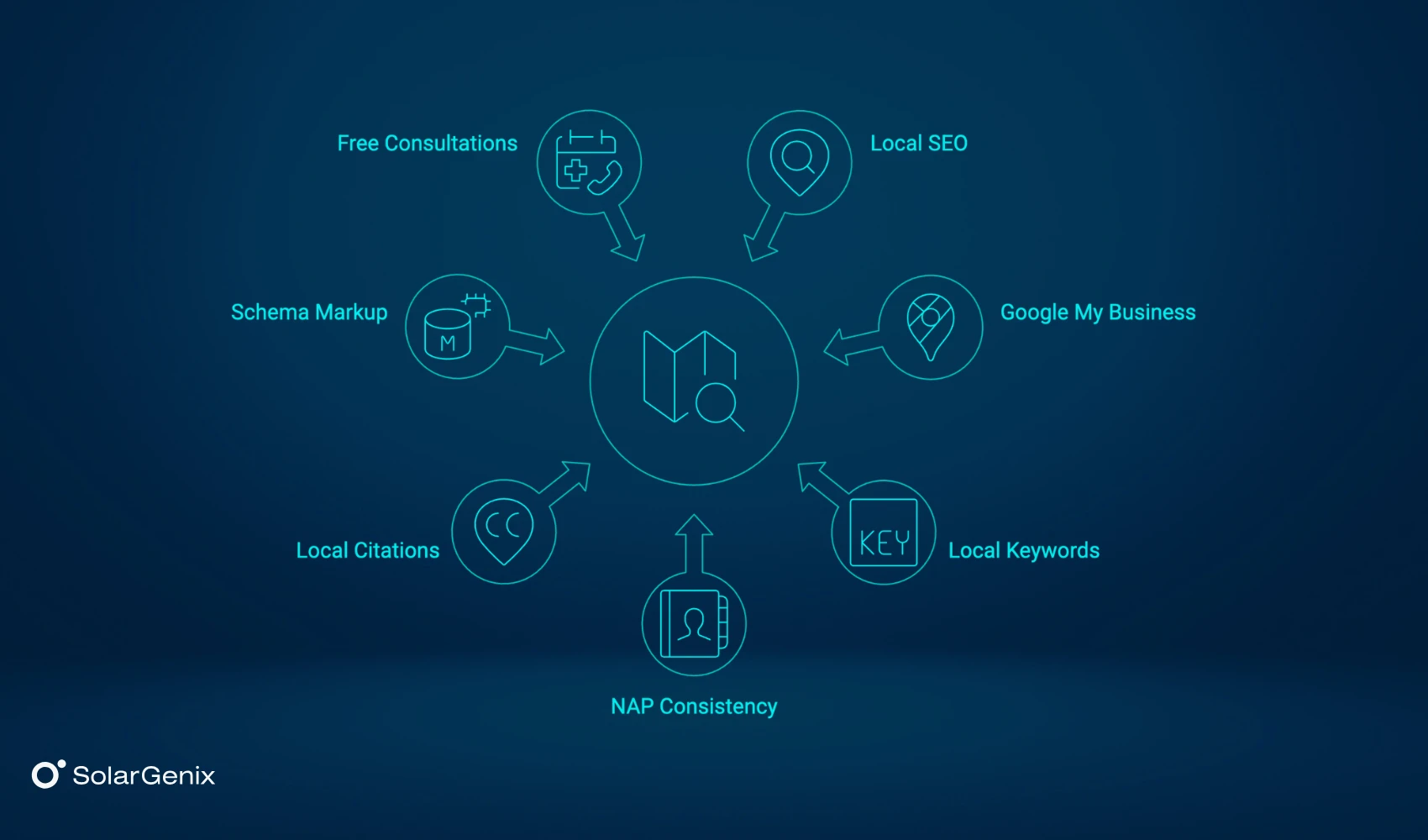
SEO for solar companies is basically the foundation of any digital marketing strategy. Local SEO is especially important for solar providers because the majority of solar customers are local to each company.
Local SEO strategies ensure you appear at the top of search results when homeowners use such keywords, such as “solar companies near me” or “solar companies in [city name]”, or “how much is solar installation in [city name].”
One way to improve your online visibility locally is by claiming and optimizing your Google My Business profile. Include accurate information about your company: name, address, phone number, website, working hours, and service areas. Add pictures of past installations, your team, and the office, to help people put a face to the name. Update your profile regularly with company news, promotions, and other relevant information.
If possible, ask your customers to leave reviews on Google and respond to all of them. Don’t ignore the negative ones.
Include local keywords across your website, especially on services pages. Create dedicated landing pages for every location you serve.
Keep a consistent NAP (Name, Address, Phone number) on all the channels you use - website, social media, Google My Business, and other directories.
Get local citations through relevant directories like Yelp, HomeAdvisor, EnergySage, and SolarReviews. This makes search engines see you as an authoritative website.
Don’t forget to implement schema markup. This is structured data that helps search engines understand the meaning of your content, i.e., your business type, customer reviews, and areas you serve.
Offer Free Solar Consultations to Engage and Educate Leads
Lower the friction in engagement by offering free consultations to potential customers.
Free consultations allow you to:
- Assess the homeowners’ energy needs and the solar potential of their property
- Educate them on savings and incentives
- Address concerns and objections early in the process
- Build trust before the actual sales pitch
- Offer or provide a customized sales proposal on the spot
A free consultation immediately removes the purchase pressure risk from the customer’s perspective and gives you a chance to make an impression.
Don’t try to aggressively sell during the consultation. Focus on education and nurturing.
Promote your free consultations on your website, in your advertising, and across other marketing channels. Make scheduling easy. Use online booking forms, phone calls, and text messaging.
Make sure to follow up after consultations. Set up a nurturing sequence, delicately providing additional information so that they don’t forget your company.
Build Strong Social Proof Through Customer Testimonials and Reviews
To make a life-altering decision to go solar, homeowners need to trust your company. Make it a priority to include social proof in your solar marketing strategies.
There are multiple ways you can do this:
- Display reviews on your website - homepage, landing pages for ads, and a dedicated testimonial page.
- Share testimonials on social media.
- Ask happy customers to leave reviews on Google.
- Create and share video testimonials.
- Show before-and-after installation photos.
- Write detailed case studies about your successful installations.
The best time to request reviews from customers is right after the installation, when they are still excited about the new change. Send emails or texts with direct links to your review profiles.
You can even offer gift cards to those who agree to write reviews.
And finally, respond to all reviews, both positive and negative. Handle criticism professionally, without becoming defensive.
Implement Referral Programs to Encourage Word-of-Mouth Marketing
Word of mouth has always been one of the most effective ways of gaining qualified solar leads. The concept is simple - you reward customers who refer you to others and bring in new buyers. The reward can be cash, bill credits, equipment upgrades, extended warranties, or even donations to charities made in their name.
Let’s look at a few important points that make for successful referral programs:
- Structure your program clearly. Customers should know what they are getting in exchange for referrals and when they will receive the reward.
- Promote the program to existing customers via email, invoices, follow-ups, on your website, and social media.
- Make referring as easy and simple as possible. Give customers referral cards they can hand out to their friends and family, or create a link for sharing via email or social media.
- Offer dual incentives, i.e., benefits to both the referring customer and the new one.
In order for your referral program to be a success, you need to offer high-quality services and provide remarkable experiences to your customers. This is the only way they will genuinely want to recommend you to others.
Use Email Marketing to Nurture Leads and Build Long-Term Relationships
Email marketing is another important solar marketing strategy. It helps you maintain contact with your prospects throughout the lengthy solar sales cycle.
We’ve gathered a few tips that can improve your email marketing process:
- Build your email list. Use website opt-ins, consultation requests, content downloads, and event registrations.
- Segment the list. Send different types of content to new and mid-funnel leads, and completely different emails to past customers.
- Create email nurture sequences, from welcome and educational emails to social proof, objection handling, and special offers.
- Personalize emails when possible, with names, interests, and property characteristics.
- Monitor email metrics, such as open rates, CTRs, and conversion rates.
- Include CTAs.
- Make sure you comply with the CAN-SPAM and GDPR regulations.
Build Trust with Transparency in Your Solar Pricing and Installation Process
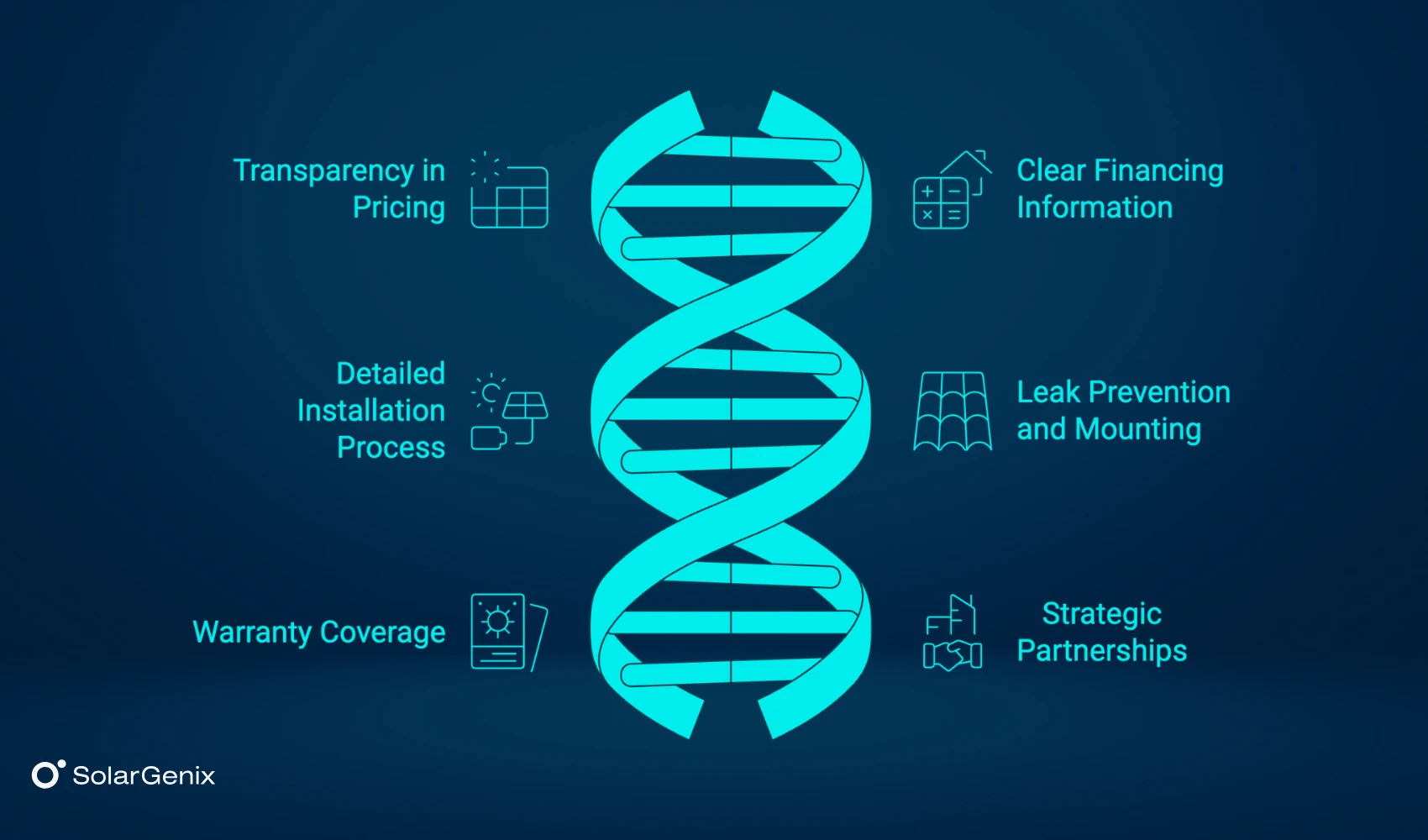
Be upfront about pricing, installation timelines, and potential challenges to build credibility and trust.
You don’t have to publish precise pricing on your website because we all know that solar prices are quite complex. However, you can still provide pricing ranges, cost-per-watt benchmarks, and sample quotes for common solar systems.
Do a pricing breakdown. Let customers know what they’re paying for: equipment, labor, permitting, warranties, etc.
Provide clear information about financing costs, such as loan or leasing terms, interest rates, and total cost over time. Don’t leave out any hidden fees.
Explain the installation process clearly, from the first consultation to the final installation. Be honest about timelines and challenges.
Inform customers about your leak prevention measures and mounting techniques.
And lastly, keep in mind to let homeowners know about warranties - what they cover, for how long, and who is responsible for each warranty, the manufacturer or the installer.
Partner with Related Local Businesses
Build strategic partnerships with local businesses to create opportunities for referrals and co-marketing.
- Electricians already work in your potential customers’ homes. You can create a referral agreement where you give a commission or electrical work to electricians in exchange for solar leads.
- Roofers also work for homeowners who need new roofs and possibly solar panels in the future. You can offer roof-and-solar packages through such partnerships, or you can exchange referrals.
- Partner with builders who focus on green and sustainable construction. Offer builder incentives so they actually consider including solar in their projects as beneficial.
- HVAC companies can refer homeowners who are interested in solar; in return, you refer customers who need HVAC systems.
- Energy auditors and efficiency consultants help homeowners find ways to reduce energy consumption. What could be a better way to achieve this than solar panel installation?
Enhance your partnerships through co-marketing materials, such as joint flyers, shared blog articles, or co-hosted educational events.
Leverage Traditional Offline Marketing
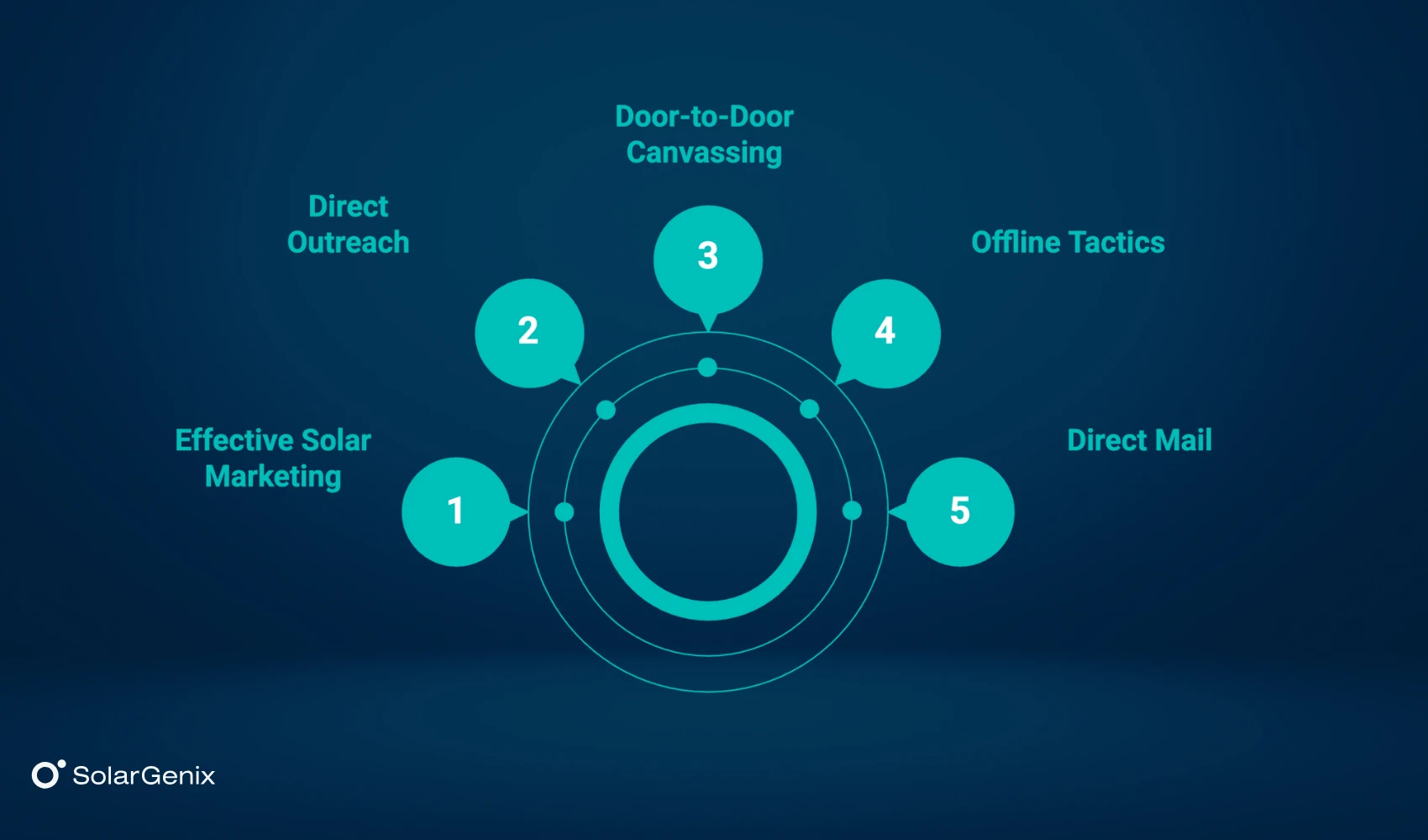
On your path to mastering how to market solar panels, offline tactics can be quite effective as well, especially in local markets.
You have a wide selection of offline solar marketing strategies:
- Direct mail campaigns
- Billboards and yard signs
- Flyers and community sponsorships
Measure which method works the best and improve as you go.
Direct Outreach and Door-to-Door Engagement
Despite the digitalization of solar marketing strategies, direct outreach and door-to-door canvassing are still very much in the game.
Have well-trained and professional sales reps do the door knocking. They should be able to start conversations and qualify leads instead of aggressive selling on doorsteps.
Areas where you’ve already done installations are a great place to start since they come with the advantage of social proof. Go for neighborhoods with high energy bills and older homes.
As for direct outreach, you can do this by hosting neighborhood events, solar open houses, community education workshops, and neighborhood-specific promotions.
Measure and Optimize the Performance of Marketing Campaigns
Solar panel marketing works only if you track performance and adjust your strategies accordingly.
We recommend that you monitor the following key metrics:
- Cost per lead (CPL)
- Conversion rates
- Customer acquisition cost (CAC)
- Lead response time
- Return on ad spend (ROAS)
- Website metrics - traffic, bounce rate, and time spent on site
- Pipeline velocity
Optimize campaigns that are not performing well: fix issues rather than abandoning them right away.
Do regular reporting, use customer feedback, keep experimenting, and do A/B testing to make the most of your marketing efforts.
Common Solar Marketing Mistakes to Avoid
Avoid costly errors in your solar marketing strategy by learning from these common mistakes that many solar providers often deal with:
- Not defining a clear target audience
- Being too sales-focused too soon
- Ignoring the long buying cycle
- Not tracking marketing performance
- Inconsistent marketing efforts
- Not responding quickly to leads
- Overlooking customer pain points
- Not asking for referrals and reviews
- Relying on incentive deadlines alone
- Not educating customers enough
- Copying competitors instead of innovating
- Investing in paid ads without optimizing landing pages
What Marketing Budget Solar Companies Should Have
Most solar companies invest about 5-15% of their annual revenue into marketing.
There are a few factors that can influence your budget allocation:
- Market competitiveness
- Growth goals
- Geographic coverage
- Dependence on paid ads as compared to organic channels
Aim for a balance between SEO, paid ads, referrals, and content marketing.