From supply chain management and financial reporting to CRM and field service management, running a solar business is far from being a walk in the park. Solar companies nowadays have to juggle inventory, quoting, project management, financing, compliance issues, a complex solar sales funnel, and everything in between.
To properly handle all of these processes, you need to have a solid system in place - one that works consistently across different channels and touchpoints. This is where solar ERP software comes in.
In this article, we’ll explore what a solar ERP is, why it is important, and go over the best ERP software solutions available for the solar industry, helping you choose the right system with ease.
What is Solar ERP Software?
Enterprise Resource Planning (ERP) software is an integrated platform that offers centralized management for a company’s core business processes, such as operations, finance, projects, inventory, and reporting.
ERP for the solar industry specifically helps in solving unique operational challenges that solar installers face on a daily basis.
- A solar ERP incorporates many different industry-specific features:
- Customer lifecycle management
- Permit tracking
- Financing
- Material and inventory management
- Warehouse and stock management
- Project management and installation scheduling
- Quality assurance and compliance checks
- Performance monitoring and maintenance
Solar ERP vs. Solar Design Software
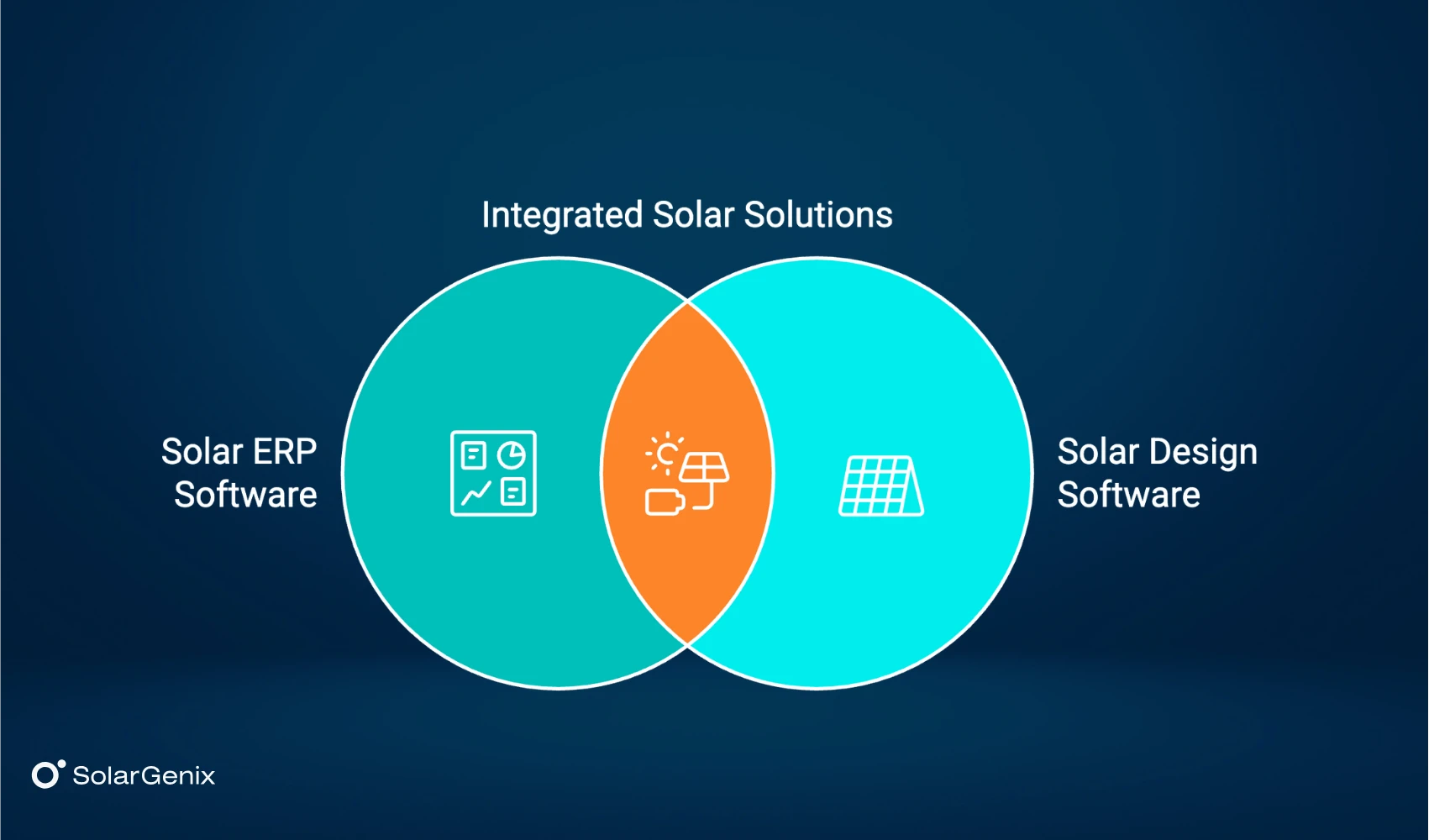
While solar ERP software is about boosting operational efficiency across inventory, project management, and finances, solar design software is more about ensuring engineering accuracy.
The goal of solar design software is to create technical PV layouts, do shading analyses, provide accurate energy production and savings predictions, and generate personalized proposals for solar clients.
Some solar ERP platforms often come with built-in design tools, while most of them can integrate easily with prominent third-party solar design software solutions.
Cloud-Based vs. On-Premise ERP
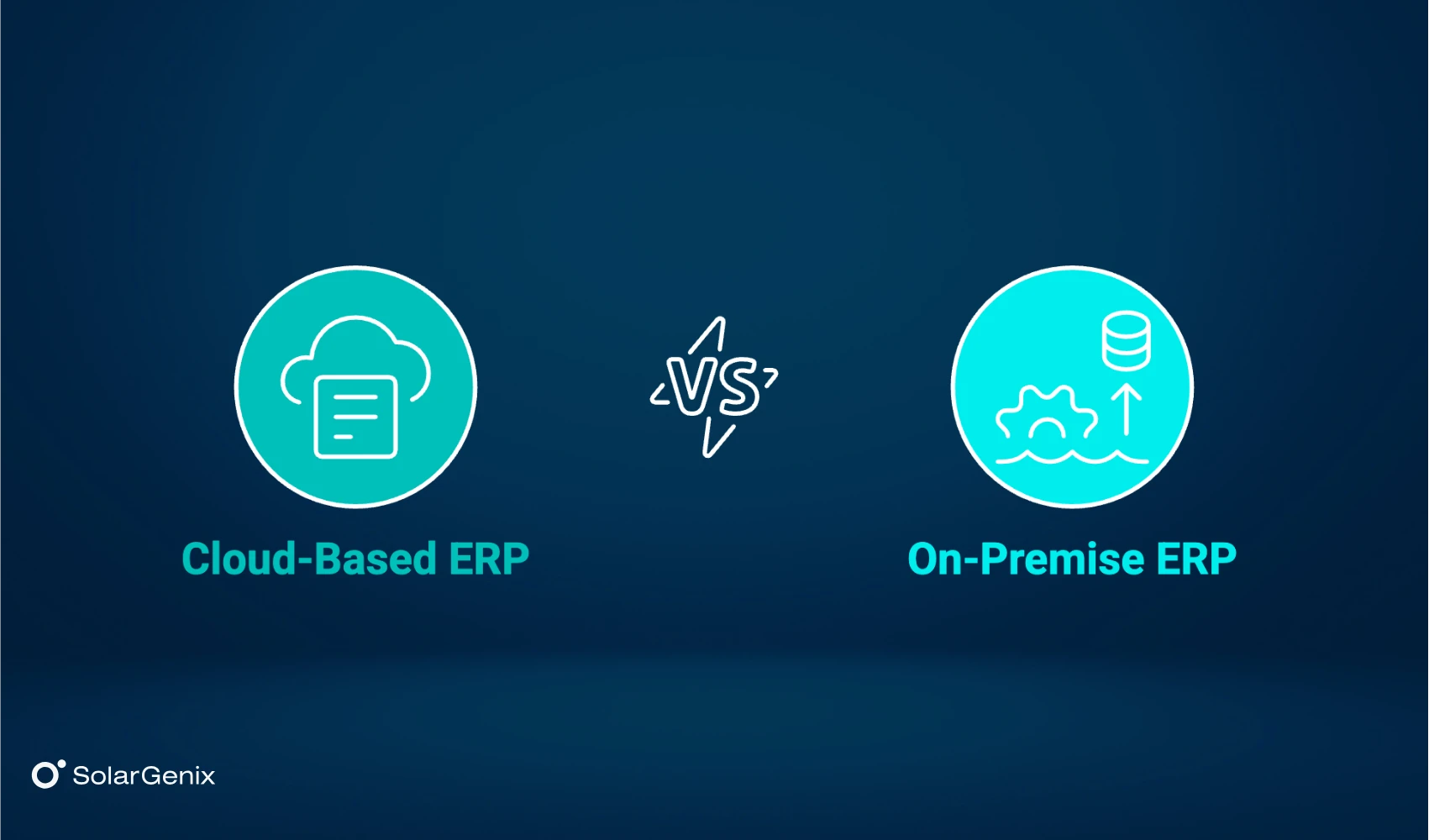
On another note, it’s important to mention that most modern ERPs for solar businesses are cloud-based. This means that you can access your business processes from anywhere and get regular automatic updates. Besides, cloud-based solar ERP requires lower upfront costs and scales with your business.
On the other hand, on-premise ERP systems offer greater control over your data but call for significant IT infrastructure and constant maintenance.
Most solar companies nowadays go for cloud-based ERP solutions since they are flexible and more affordable.
Why Do Solar Businesses Need ERP Software?
As you start growing and getting more projects, you might find yourself in a bit of chaos. Solar ERP can help you contain this chaos and build a system that can handle complex solar business operations across departments.
There are several ways that ERP for solar businesses supports day-to-day operations and long-term growth.
Complex Project Management
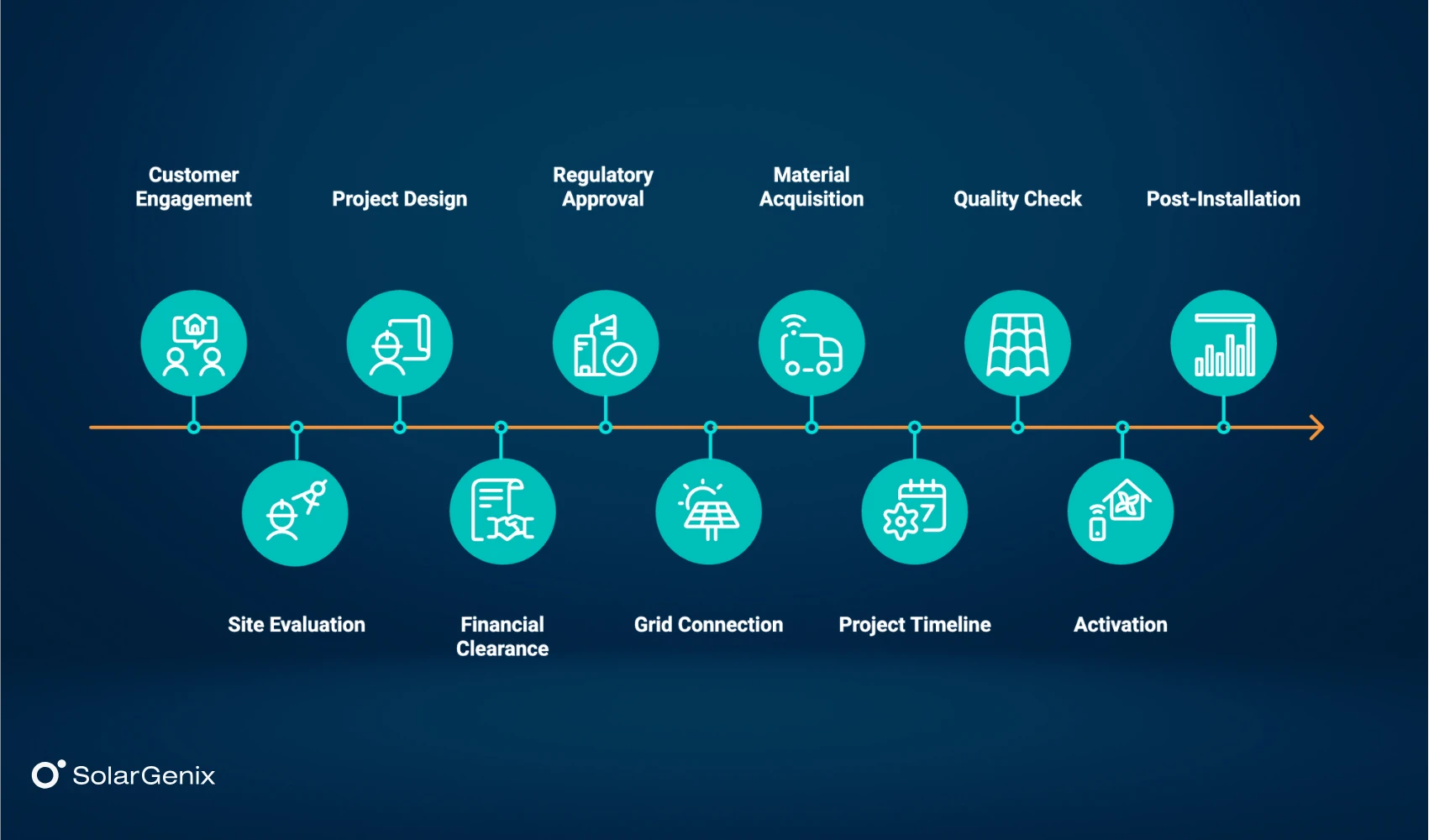
From quote to installation to maintenance, a residential solar project is made of multiple stages and touchpoints. To break them down in more detail, you have to go through:
- Initial consultation
- Site assessment
- Proposal creation
- Financing approval
- Permit applications
- Utility interconnection
- Equipment procurement
- Installation scheduling
- Inspection coordination
- System commissioning
- Ongoing monitoring and support
Solar ERP software can help you handle these processes in a more structured manner, preventing data and process silos, delays, communication issues, and errors that can harm your bottom line.
Inventory Tracking
ERP for the solar industry essentially streamlines inventory tracking across multiple job sites. It offers real-time visibility into inventory levels, eliminates stockout events, and helps improve purchasing while reducing carrying costs.
Ordering, receiving, storing, and allocating panels, inverters, racking systems, and electrical components to specific projects, and tracking them all through the installation process, becomes less of a logistical nightmare.
Coordinating Installation Crews and Subcontractors
Solar ERP software helps you stay on top of your installation crews and subcontractors, organize timely scheduling, labor time tracking, manage agreements and payments, and make sure you have the right people at each job site.
Handling Financing
Power purchase agreements (PPAs), solar leases, and cash purchases - solar financing can be quite challenging to manage. Solar ERP systems support billing and revenue tracking, and understand industry nuances when it comes to finance management.
Compliance and Permit Documentation Management
Here’s another time-consuming process for solar installers. From building and electrical permits to fire marshal approvals and utility interconnection agreements, a robust ERP system will help you keep organized records and track approval status.
Revenue Recognition Challenges
Revenue recognition can be quite tricky. In case of PPAs and leases, a 20-25-year recognition is usually required. For projects that qualify for production-based incentives, the process is more tangled.
Luckily, ERP for solar businesses helps in this matter as well, automating calculations and ensuring compliance with the required accounting standards.
Scaling Operations
Finally, ERP software helps you scale without losing control or slowing down. It provides you with the infrastructure you need to manage dozens and even hundreds of simultaneous projects efficiently.
Top ERP Software for Solar Businesses
We’ve done the digging and selected the top five solar ERP software solutions out there. Keep in mind that these systems cover different company sizes, budgets, and operational needs.
Each of them offers specific advantages depending on your goals and growth trajectory.
Acumatica Cloud ERP
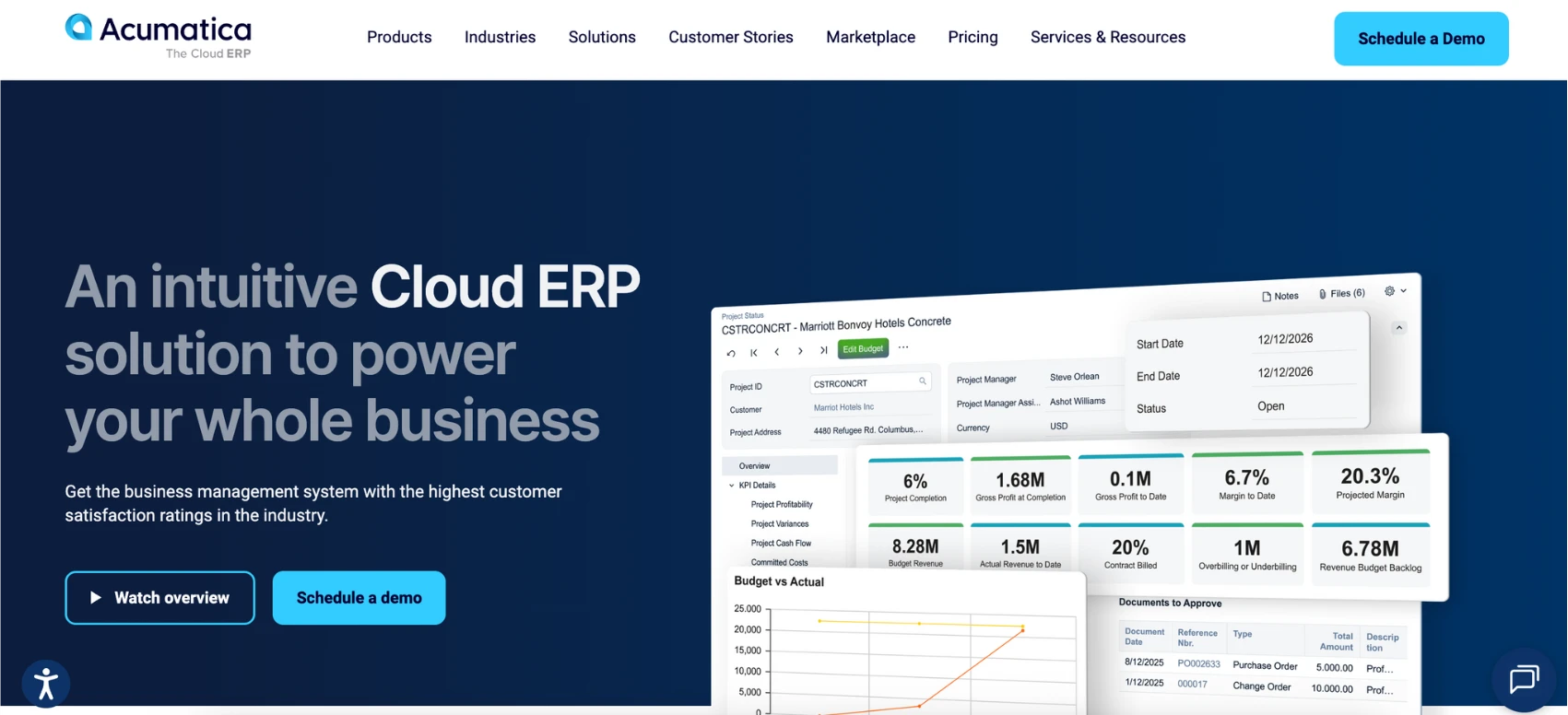
Acumatica Cloud ERP is a comprehensive business management solution that offers services across different industries, solar included. It’s a cloud-based resource planning platform known for its flexibility, scalability, real-time insights, and customizable workflows.
Key Features
- Cloud-native platform
- Modular architecture for finance, CRM, manufacturing, IT, Sales and Marketing, and Operations
- Multi-entity and intercompany accounting
- Payroll
- AI-based automation tools
- Real-time reporting
- Usage-based pricing
- Third-party software integrations
Best suited for: mid-size to growing solar businesses looking to scale and needing high customizability and integrations.
Dynamics 365
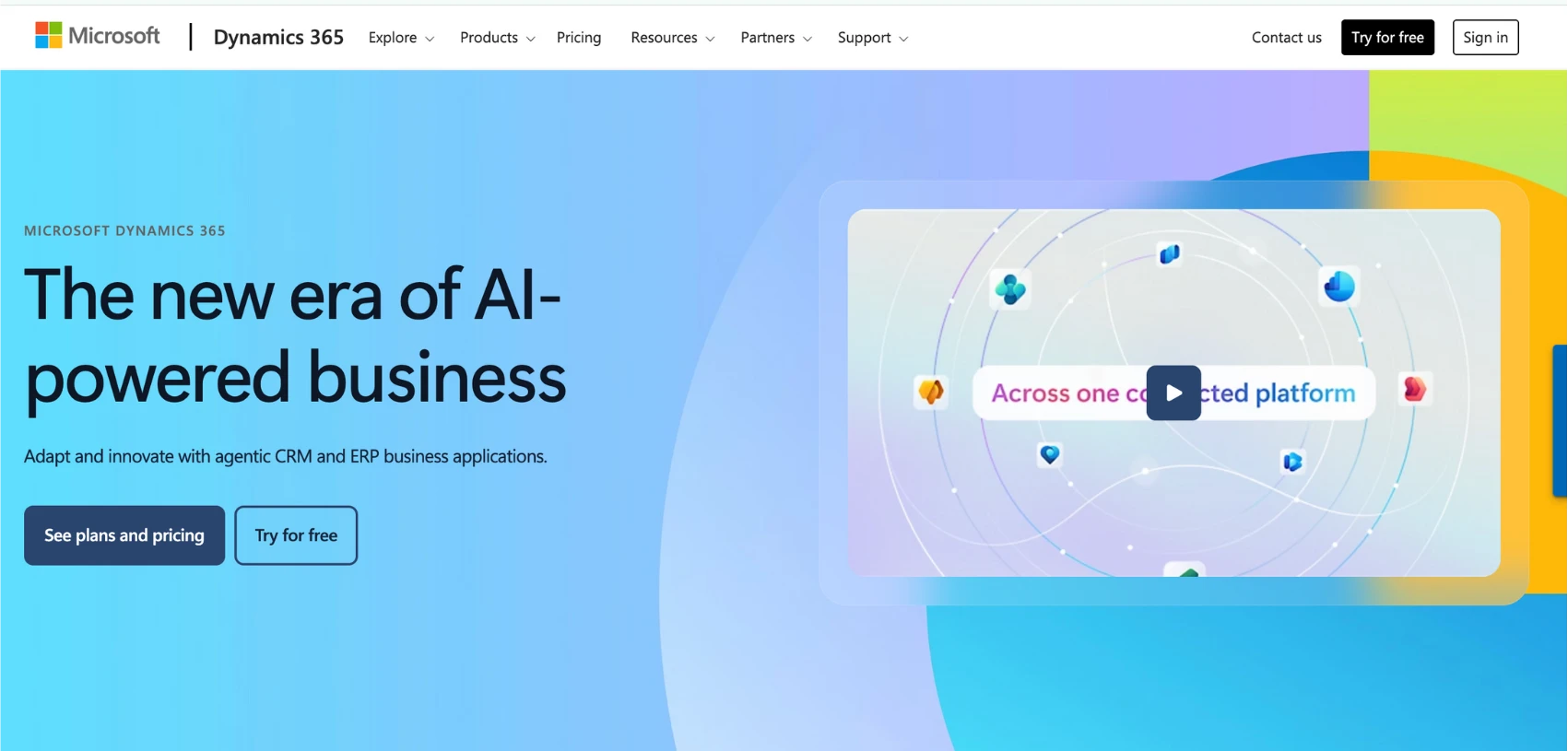
Microsoft Dynamics 365 is a cloud-based, AI-powered suite of business applications, blending CRM and ERP capabilities in a single system. It helps businesses unify data, automate processes, and improve productivity, while offering integration with Microsoft 365, Azure, and Power Platform.
Key Features
- Sales automation and customer management tools
- Modular applications - Dynamics 365 Sales, Customer Service, Field Service, Finance, and Supply Chain Management
- Marketing insights
- Human resources and commerce apps
- Personalized customer experiences
Best suited for: SMBs as well as large solar enterprises with complex business needs and organizations that already use other Microsoft tools.
SAP S/4HANA Cloud
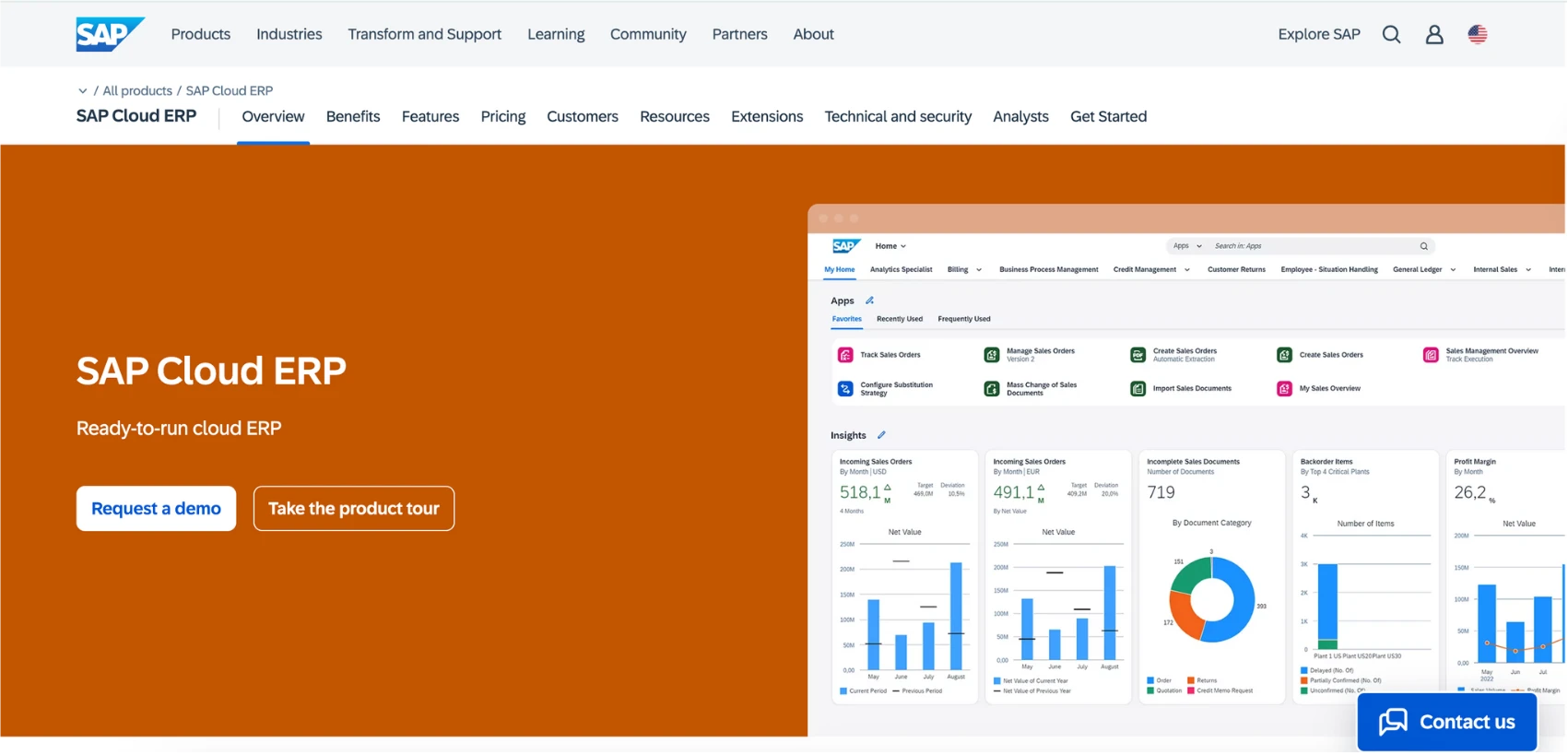
SAP S/4HANA Cloud is SAP’s latest ERP suite that offers preconfigured processes along with expert guidance to help you achieve speed and agility. SAP Cloud ERP has been recognized as top rated and buyer’s choice by TrustRadius for its commitment to customer satisfaction, high-quality product functionalities, and value.
Key Features
- Finance management
- Procurement
- Supply chain management
- Manufacturing operations
- Sales automation
- Improved project delivery and client experience
- Asset management
- Human capital management
- Multi-currency and multi-language support
- Compliance with country-specific regulations
Best suited for: medium to large solar companies and multinational energy businesses.
Katana
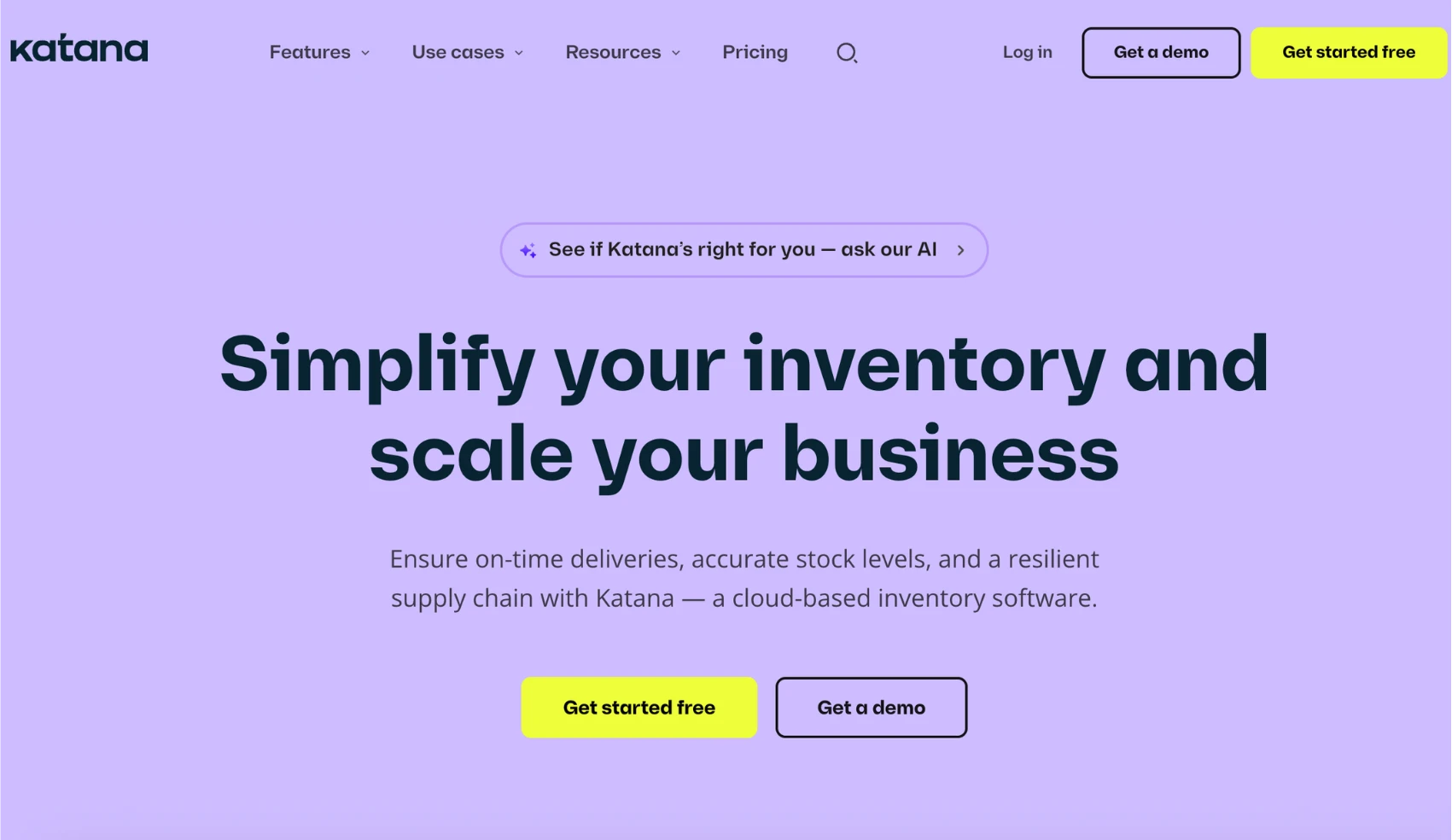
Next up on our ERP for the solar industry list is Katana, a cloud-based manufacturing ERP/MRP (Manufacturing Resource Management) solution offering a single platform for managing production, sales orders, purchasing, and supply chain operations.
With Katana, you get real-time visibility into your stock levels and production schedules, ensuring timely deliveries and improving your solar (and not only) business’s cash flow.
Key Features
- Live shop floor updates
- Manufacturing cost calculations
- Barcode scanning
- BOM (Bill of Materials) and subassemblies
- Material requirements planning
- Omnichannel sales order syncing
- Multicurrency and multilocation support
- Purchasing insights
- Smart order recommendations
- Warehouse app
- Return management
- AI assistant
- Integration with e-commerce and accounting tools (Shopify, QuickBooks Online, Xero)
Best suited for: small- and medium-sized solar installers looking for alternatives to expensive and complex ERP systems.
Scoop Solar
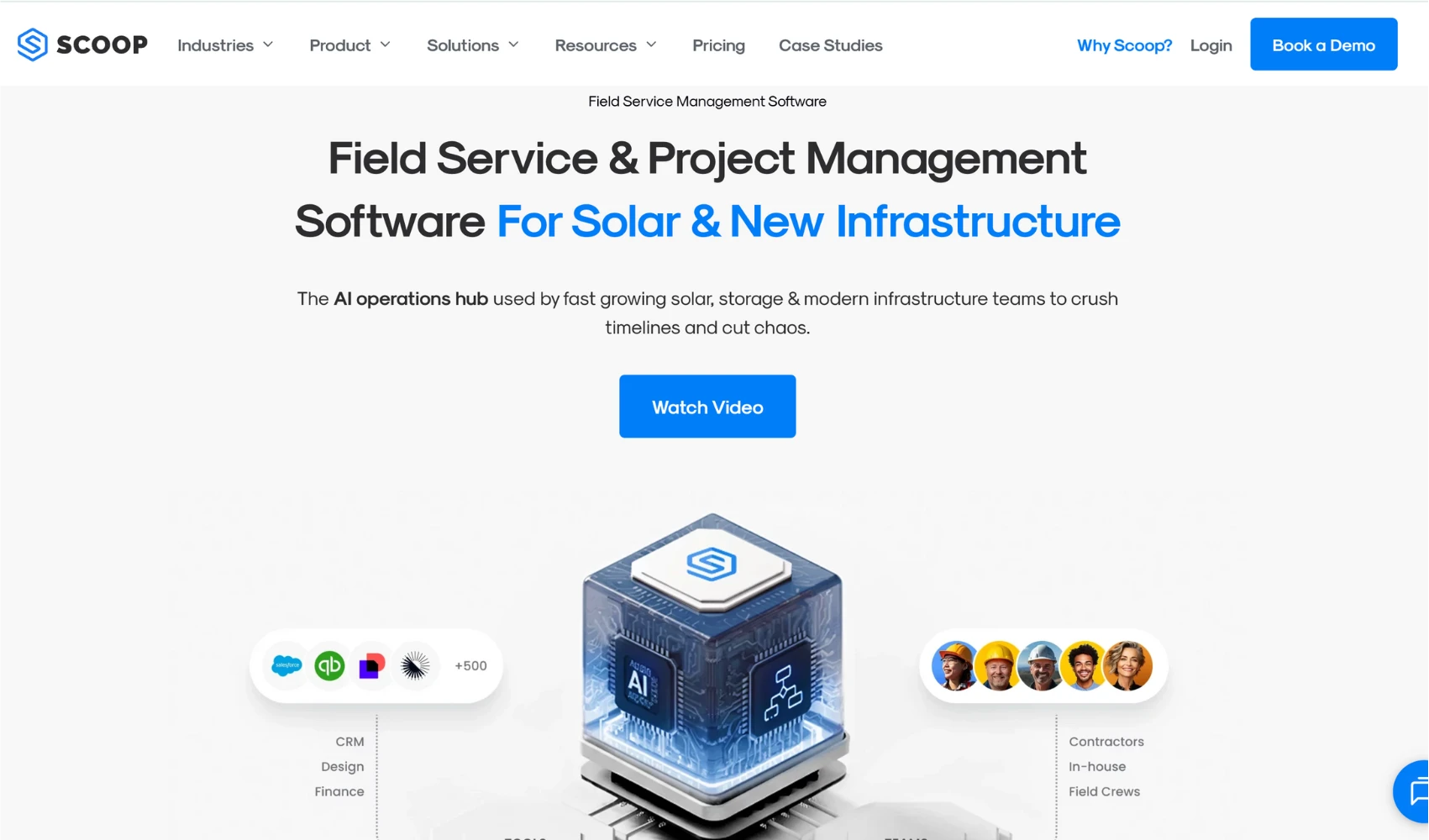
Scoop Solar is a purpose-built ERP for solar businesses. It’s an AI- and cloud-based field service and project management platform serving the solar, renewable energy, and electrification sectors. From commercial and residential solar projects to HVAC, telecom, and wind turbine companies, Scoop Solar offers automation and real-time data access for them all.
Key Features
- Project management and automation
- Software integration
- Field work execution and data capture
- Reporting, dashboards, and analytics
- Document and data centralization
- Operations and Maintenance (O&M)
Best suited for: solar and renewable energy companies (whether residential or commercial) of all sizes, looking for solar-native ERP experience.
How We Chose the Best Solar ERP Systems
Industry research, vendor analysis, user feedback, and assessment of various success stories: choosing the best solar ERP software was quite the challenge, but we handled it with utmost responsibility.
After singling out about 20 ERP vendors, we applied important evaluation criteria that are central to solar business success, specifically:
- Solar industry functionality came first in our list of factors for choosing an ERP for solar companies. We opted for those platforms that supported solar-specific workflows, such as permit tracking, O&M management, PPA and lease accounting, performance monitoring, etc.
- Next, we evaluated the scalability and flexibility of each ERP system to make sure they can grow naturally with your business. We checked how each platform deals with increasing project numbers or expansion into new solar segments (residential to commercial) or new geographic locations.
- Solar companies often rely on different specialized tools for design, financing, and more. That’s why it was important for us to choose ERP solutions that offer a flexible ecosystem for third-party integrations.
- We also considered the implementation process and time-to-value of each ERP software. Platforms that required 12+ months and dedicated IT teams scored lower.
- Total cost of ownership was also taken into account, including implementation costs, customization expenses, ongoing support, training requirements, and integration development. We compared pricing models and chose the ones that offered the best balance of affordability and long-term value.
- And finally, we went over customer reviews and case studies, and evaluated vendor stability and expertise to ensure we were choosing companies you can rely on for years to come.
Our final list includes 5 distinct solutions representing different tiers so that you can find the right fit for your business based on size and scaling plans.